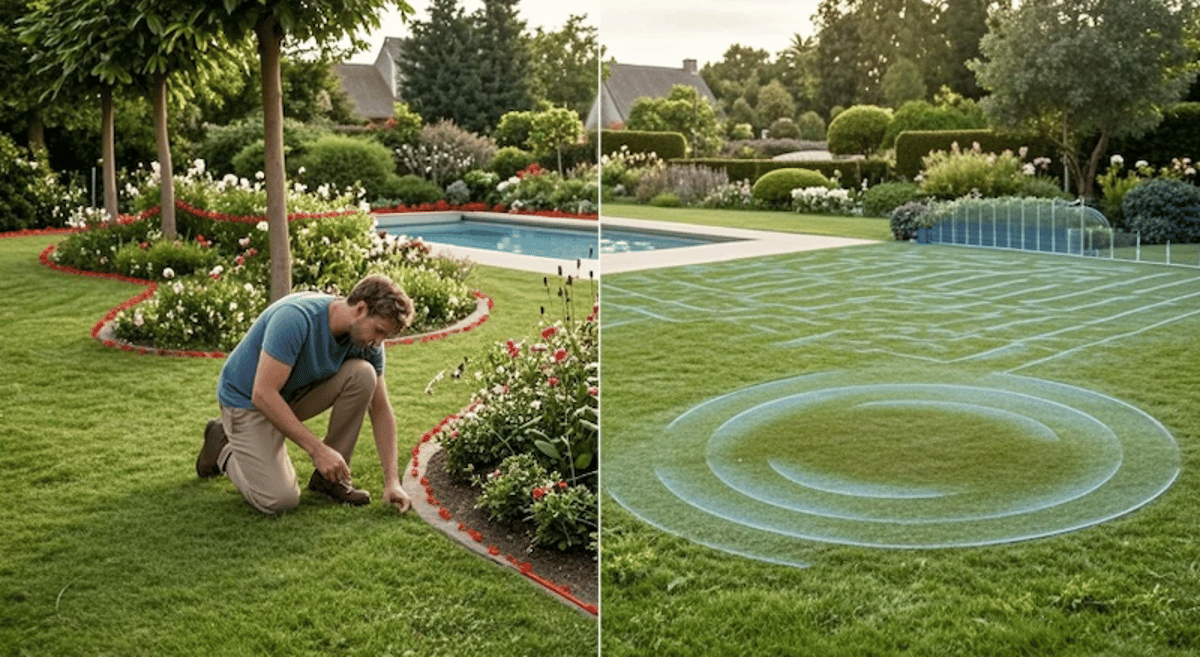
Why Wire-Free Robotic Lawn Mowers Are Becoming the Industry Standard?
Why It Matters
Boundary‑free mowers lower installation and maintenance expenses while meeting rising consumer demand for smart, autonomous home devices, accelerating adoption across residential and commercial landscaping markets.
Key Takeaways
- •Boundary wires add installation cost and limit garden flexibility.
- •AI vision, RTK, and SLAM enable plug‑and‑play deployment.
- •Multi‑sensor fusion improves navigation stability in complex terrains.
- •Commercial users gain lower labor costs and scalable mowing.
- •Challenges remain: sensor cost, obstacle detection, and industry standards.
Pulse Analysis
The push toward wire‑free robotic lawn mowers reflects a convergence of consumer expectations and advances in perception technology. Homeowners now prioritize devices that require minimal setup, mirroring the broader smart‑home trend of seamless integration. By removing the need for buried perimeter wires, manufacturers can offer a faster, more intuitive onboarding experience, which reduces labor costs and eliminates a common source of user frustration. This shift also opens the market to renters and multi‑unit dwellings where permanent wiring is impractical.
At the core of this transformation are high‑precision RTK modules, AI‑driven visual systems, and SLAM‑based spatial mapping. RTK delivers centimeter‑level accuracy, essential for avoiding missed patches and redundant mowing, while AI vision classifies obstacles ranging from pets to garden tools. SLAM continuously builds a 3D map of the terrain, allowing the mower to navigate dynamic environments without predefined boundaries. When these sensors are fused with inertial measurement units and ultrasonic rangefinders, the robot achieves robust performance even under canopy cover or adverse weather, a critical advantage for large‑scale commercial deployments.
Despite rapid progress, several challenges temper the rollout of fully autonomous mowers. The integration of multiple high‑end sensors raises unit costs, potentially slowing mass‑market penetration until economies of scale materialize. Additionally, inconsistent communication protocols and navigation standards hinder interoperability across brands and fleet‑management platforms. Addressing these issues through industry consortia and cost‑effective chip designs will be pivotal for scaling the technology. As standards coalesce and component prices drop, boundary‑free robotic mowers are poised to become the default solution for both residential lawns and expansive commercial landscapes, driving long‑term growth in the smart‑garden sector.
Why Wire-Free Robotic Lawn Mowers Are Becoming the Industry Standard?
Comments
Want to join the conversation?
Loading comments...