With a Swipe of a Magnet, Microscopic 'Magno-Bots' Perform Complex Maneuvers
Why It Matters
By granting precise, on‑demand magnetic control at the micron scale, the method expands the design space for minimally invasive medical tools and micro‑fluidic devices, accelerating soft‑robotics applications.
Key Takeaways
- •New double‑dip process adds magnetic particles after 3D printing.
- •Enables sub‑millimeter soft robots actuated by simple magnets.
- •Spatially tunable magnetism allows complex motions like gripping and switching.
- •Overcomes light‑scattering issues that limited prior magnetic micro‑printing.
- •Potential for targeted drug delivery, biopsies, and microfluidic valves.
Pulse Analysis
The MIT team’s breakthrough hinges on a two‑step ‘double‑dip’ technique that sidesteps the long‑standing obstacle of embedding magnetic nanoparticles directly into two‑photon lithography resins. By first printing a pure polymer gel and subsequently soaking it in iron‑ion and hydroxide solutions, iron‑oxide nanoparticles form in situ, granting precise magnetic loading without compromising optical clarity or structural fidelity. This approach restores the high‑resolution capabilities of laser‑based micro‑printing while delivering spatially varied magnetic properties, a combination previously thought incompatible. The result is a soft hydrogel that can be sculpted into intricate three‑dimensional architectures smaller than a millimeter and magnetized on demand.
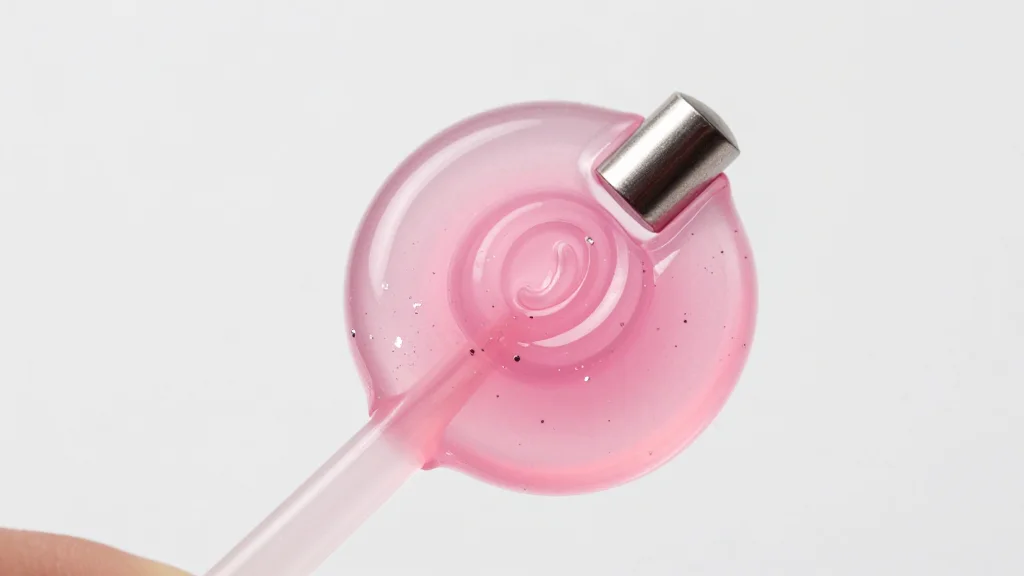
From a biomedical perspective, the ability to steer sub‑millimeter devices with an external magnet opens new avenues for minimally invasive interventions. The demonstrated lollipop‑shaped gripper can latch onto tissue or encapsulated drug reservoirs, suggesting future platforms for on‑demand biopsy extraction or localized therapy release. Likewise, the bistable magnetic switch functions as a micro‑valve that could regulate fluid flow in lab‑on‑a‑chip systems without electrical wiring, reducing power consumption and heat generation. Compared with existing magnetic micro‑swimmers that rely on uniform particle dispersions, these magno‑bots offer programmable deformation and selective actuation, enhancing precision in confined biological environments.
Beyond medicine, the technology positions soft robotics firms to explore market segments such as micro‑assembly, environmental sensing, and smart materials. The modular nature of the double‑dip process means existing 3D‑printing pipelines can be retrofitted, accelerating commercialization. Investors are likely to view the method as a platform technology that mitigates the trade‑off between magnetic functionality and mechanical robustness, a key barrier to scaling microscopic actuation. As research progresses toward biocompatible formulations and wireless magnetic field control, we can anticipate a new class of programmable, magnetically responsive nanocomposites that could reshape drug delivery, diagnostics, and micro‑fluidic device design.
With a swipe of a magnet, microscopic 'magno-bots' perform complex maneuvers
Comments
Want to join the conversation?
Loading comments...