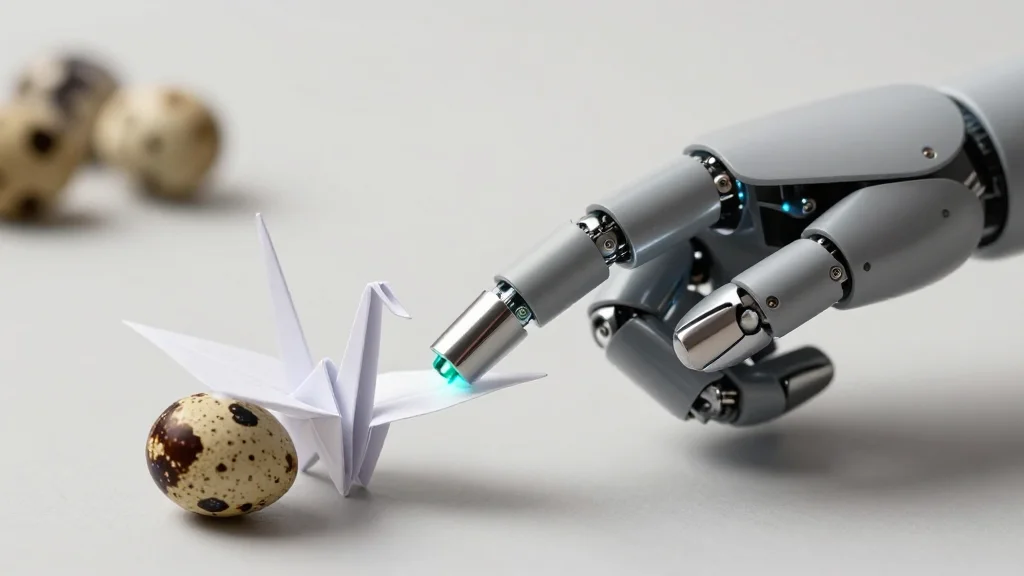
XELA Robotics to Unveil New Major Tactile Sensor Capabilities at Automate 2026
Companies Mentioned
Why It Matters
The new uSkin capabilities give manufacturers and robotics integrators a more human‑like sense of touch, unlocking finer manipulation tasks and reducing downtime from sensor interference. This positions XELA as a key enabler for advanced automation in sectors ranging from consumer goods to heavy‑industry metal handling.
Key Takeaways
- •Robotic fingertip adds six‑axis force‑sensitive nail for thin‑object handling
- •uSkin integrates force vectors into open‑source UMI for skill transfer
- •Magnetic interference compensation enables reliable metal handling in factories
- •Automatic weight and hardness detection adds object profiling to robot grippers
Pulse Analysis
Tactile sensing is rapidly becoming the differentiator that separates next‑generation robots from their predecessors. While vision and force control have matured, the ability to feel subtle variations in pressure, texture, and weight remains scarce. XELA Robotics, a spin‑out from Tokyo’s Waseda University, has leveraged over 70 years of combined expertise to push uSkin sensors toward human‑level perception, a move that resonates with manufacturers seeking higher throughput and lower defect rates.
At Automate 2026, XELA will unveil a suite of upgrades that address long‑standing pain points. The six‑axis, force‑sensitive nail on a robotic fingertip expands the reachable envelope for ultra‑thin items, while magnetic‑interference compensation clears the path for reliable handling of ferrous components in crowded factory floors. Coupled with automatic weight and hardness detection, these sensors enable robots to classify objects on the fly, reducing the need for separate weighing stations and improving adaptive grasp strategies. Integration with the open‑source Universal Manipulation Interface further streamlines AI‑driven skill transfer, allowing data captured from human demonstrations to be directly mapped onto tactile‑enhanced grippers.
The broader market impact is significant. As supply chains demand faster, more flexible automation, tactile‑rich robots can perform delicate assembly, quality inspection, and even food handling tasks that previously required human intervention. Competitors will need to match XELA’s blend of hardware precision and software openness or risk losing market share in high‑value niches. Looking ahead, the convergence of tactile sensing with advanced machine‑vision and reinforcement learning promises a new era of collaborative robots that can both see and feel, reshaping expectations for industrial productivity and safety.
XELA Robotics to Unveil New Major Tactile Sensor Capabilities at Automate 2026
Comments
Want to join the conversation?
Loading comments...