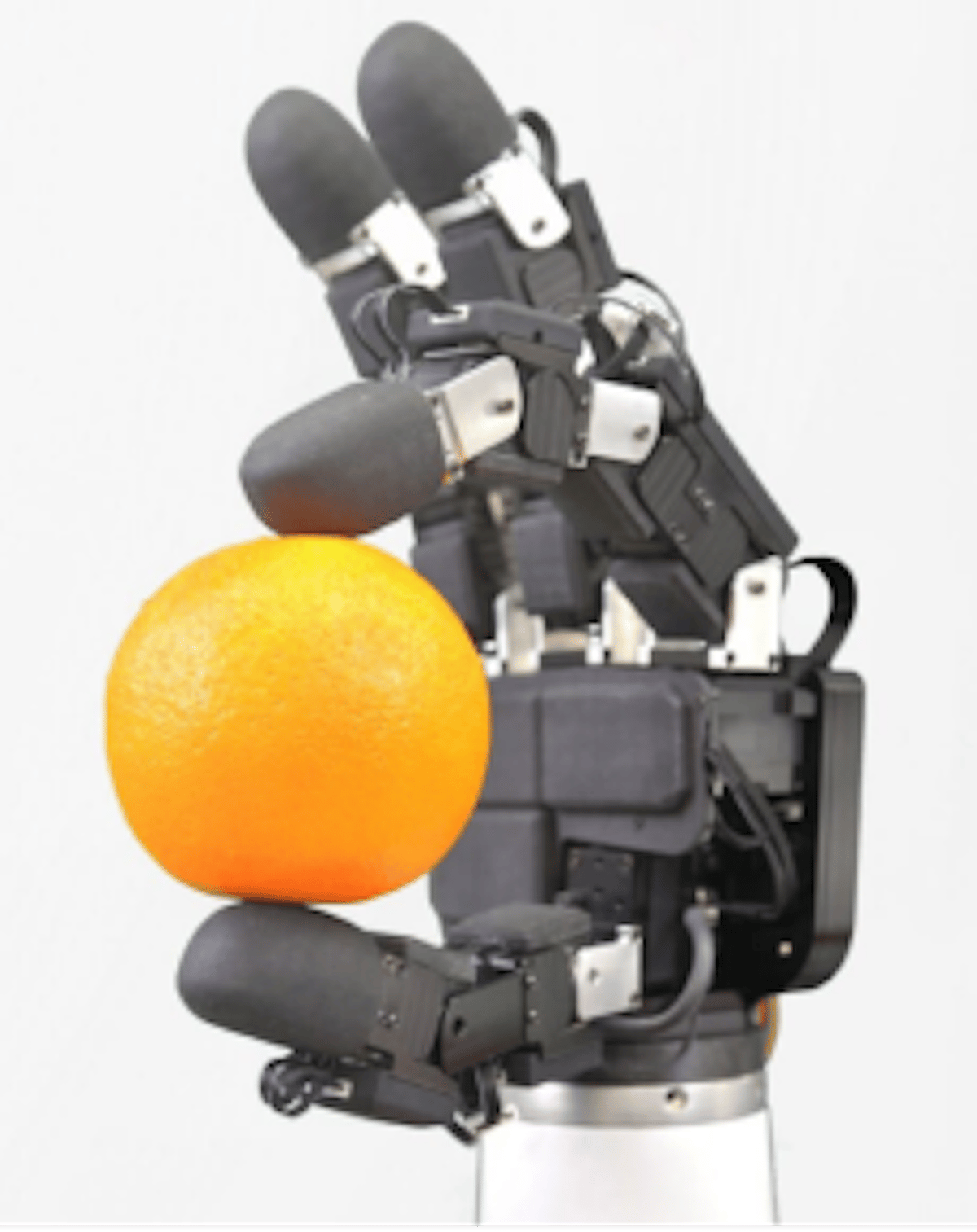
XELA Robotics Unlocks Enhanced Automation for Humanoid and Industrial Robots
•January 25, 2026
0
Why It Matters
Enhanced tactile feedback enables robots to handle delicate, irregular items reliably, expanding automation into less structured environments and accelerating adoption across manufacturing, logistics, and agriculture.
Key Takeaways
- •uSkin adds full‑hand tactile sensing to robot manipulators
- •Sensors detect force, shape, and motion within a grasp
- •Integration demonstrated on Tesollo five‑finger hand, orders start Q1 2026
- •Flexible elastomer design enables coverage of fingertips, phalanges, palms
- •Agnostic approach lets any robot platform add tactile capability
Pulse Analysis
Tactile perception has long been a missing link in robotic automation, limiting machines to vision or single‑point force feedback. XELA Robotics' uSkin technology fills this gap by embedding a flexible elastomer sensor matrix across an entire robot hand, delivering continuous, high‑resolution data on contact forces, object geometry, and micro‑movements. This richer sensory input mirrors the human sense of touch, allowing robots to adjust grip pressure in real time and manipulate objects that were previously too fragile or irregular for conventional grippers.
The practical impact of uSkin is evident in its rapid integration into existing platforms. By partnering with Tesollo, XELA demonstrated a fully functional five‑finger hand equipped with full‑hand tactile coverage, and commercial orders are expected to commence in the first quarter of 2026. The system’s modular design also supports parallel and adaptive grippers, reducing engineering effort for manufacturers seeking to retrofit tactile capabilities. Early adopters in academia and pilot programs report more stable grasping and faster cycle times, especially in sectors like logistics and agriculture where product variability is high.
From a market perspective, XELA’s agnostic approach positions it as a foundational supplier for the next wave of intelligent automation. As manufacturers aim to increase flexibility and reduce downtime, the ability to reliably handle diverse items without extensive re‑tooling becomes a competitive advantage. uSkin’s scalability and ease of integration could accelerate the deployment of humanoid robots in collaborative settings, driving broader adoption of advanced automation across the supply chain.
XELA Robotics unlocks enhanced automation for humanoid and industrial robots
0
Comments
Want to join the conversation?
Loading comments...