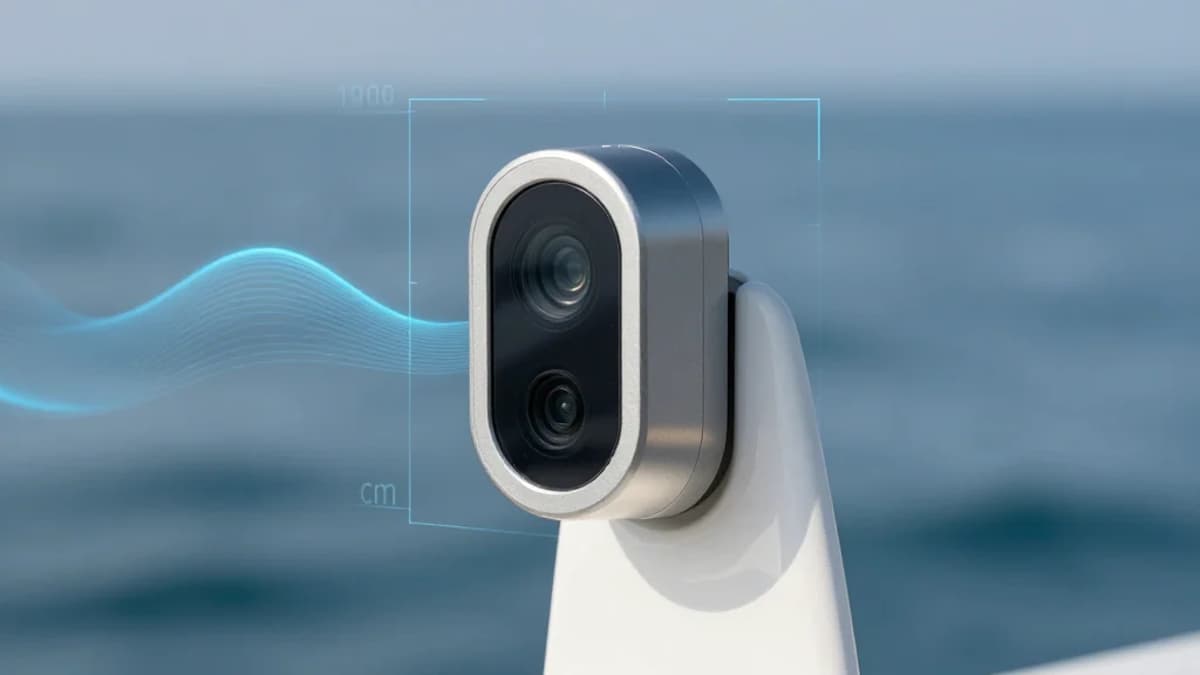
Xsens IMUs Deliver Sub-5 Cm Real-Time Heave Accuracy for Precise Wave Motion Compensation.
•January 13, 2026
0
Companies Mentioned


Why It Matters
Accurate, low‑latency Heave data enables real‑time vessel stabilization and wave‑compensation, reducing system size and integration cost for offshore and autonomous marine platforms.
Key Takeaways
- •Sub‑5 cm Heave accuracy up to 29‑second wave periods.
- •Real‑time 100 Hz output eliminates external processing latency.
- •Firmware upgrade adds Heave to existing Sirius/Avior units.
- •Supports RS‑422, CAN, UART; integrates with C/C++, Python, ROS.
- •Enables precise stabilization for offshore platforms and marine robots.
Pulse Analysis
Marine motion measurement has long relied on bulky tactical sensors or complex post‑processing pipelines to capture vertical displacement, known as Heave. Xsens’ latest firmware upgrade transforms its compact Sirius and Avior IMUs into full‑motion reference units, delivering centimeter‑level Heave accuracy directly on‑device. By fusing proprietary phase‑correction and bias‑estimation algorithms, the sensors maintain sub‑5 cm precision across typical wave periods, while a 100 Hz output ensures the data is fresh enough for active control loops. This on‑board capability eliminates the latency and integration overhead that have historically limited real‑time stabilization solutions.
From a technical perspective, the Heave feature extends the sensor’s data envelope without any hardware changes. Existing deployments can receive the upgrade via a simple firmware flash, and new units ship with Heave enabled out of the box. The solution supports industry‑standard interfaces—RS‑422, CAN, UART—and offers SDKs for C/C++, Python, ROS 1/2, and MATLAB, allowing developers to embed vertical motion data into existing control architectures with minimal effort. The ability to define custom offset points, such as Center of Rotation and Point of Interest, ensures that measured Heave reflects the true motion of the vessel or payload, even when the sensor is mounted off‑center.
The market implications are significant. Precise, low‑latency Heave data empowers offshore platforms, autonomous surface vessels, and marine robots to implement tighter stabilization loops, improving safety, payload handling, and survey accuracy. By reducing the need for separate tactical MRUs, operators can lower capital expenditures and simplify certification pathways. As the maritime industry pushes toward greater autonomy and higher operational tempos, Xsens’ integrated Heave capability positions it as a critical enabler for next‑generation marine navigation and control systems.
Xsens IMUs deliver sub-5 cm real-time Heave accuracy for precise wave motion compensation.
0
Comments
Want to join the conversation?
Loading comments...