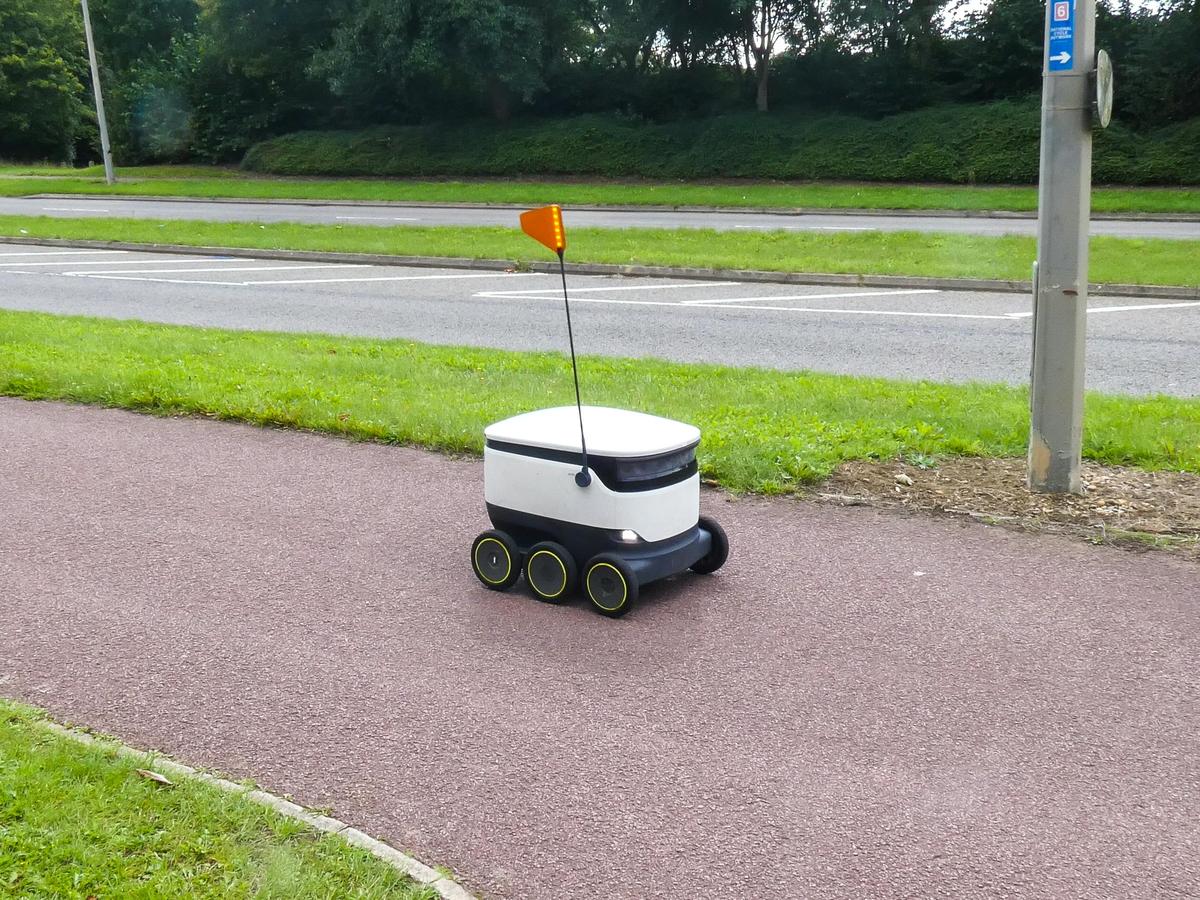
Your Burrito Robot Might Be Mapping the Future of City Sidewalks
Companies Mentioned
Why It Matters
The robots turn routine food deliveries into a continuous, low‑cost street‑level audit, giving cities actionable insight into infrastructure gaps. Their widespread adoption could reshape how municipalities monitor and prioritize sidewalk repairs, influencing urban mobility policy.
Key Takeaways
- •Serve Robotics logged over 100,000 deliveries and millions of navigation miles
- •Robots detect curb‑ramp damage, uneven pavement, and blocked pathways
- •Cities see robots as a cheap, continuous sidewalk‑condition sensor
- •Critics cite congestion, wheelchair accessibility, and privacy risks
Pulse Analysis
Delivery robots have moved beyond novelty to become mobile data collectors, feeding city planners a stream of street‑level observations that would otherwise require costly field surveys. Serve Robotics, operating more than 1,000 units in cities like Los Angeles, Miami, and Chicago, equips each robot with lidar, cameras, and AI‑driven navigation that flags obstacles such as cracked pavement or missing curb ramps. By aggregating millions of miles of travel data, municipalities can pinpoint recurring problem spots, prioritize repairs, and even model pedestrian flow patterns, accelerating the shift toward data‑driven urban design.
Researchers are already leveraging this trove of information to study walkability and accessibility. A recent arXiv paper demonstrated that robot navigation mirrors human movement, allowing analysts to infer high‑traffic corridors and identify barriers that disproportionately affect people with mobility impairments. Transportation agencies, which traditionally rely on periodic manual inspections, now have a near‑real‑time sensor network that can alert officials to emerging hazards before accidents occur. This capability aligns with broader smart‑city initiatives that aim to integrate IoT devices for more responsive infrastructure management.
Nevertheless, the proliferation of delivery bots raises legitimate concerns. In Chicago, incidents of robots colliding with bus shelters and pedestrians have sparked debates over sidewalk congestion and the safety of wheelchair users. Privacy advocates question the extent of video and sensor data captured in public spaces, urging clear governance frameworks. As regulators grapple with these issues, the industry must balance operational efficiency with equitable, safe sidewalk access, ensuring that the promise of robot‑generated mapping does not come at the expense of public trust.
Your Burrito Robot Might Be Mapping the Future of City Sidewalks
Comments
Want to join the conversation?
Loading comments...