People Behind the Science
860: Making a Mechatronic Tremor Suppression Glove for People with Parkinson's Disease - Dr. Ana Luisa Trejos
Why It Matters
Tremor‑related disability severely limits daily activities for millions of Parkinson’s patients, and current solutions are bulky and impractical. A comfortable, intelligent glove could dramatically improve independence and quality of life, making this research a timely advance in wearable medical technology.
Key Takeaways
- •Wearable glove suppresses Parkinson's hand tremor using mechatronics.
- •Personalized control separates tremor from voluntary motion in real time.
- •New twisted‑coiled actuators aim to reduce glove weight.
- •Multidisciplinary team integrates sensors, software, and custom fit design.
- •Research bridges industry experience and academic innovation for mobility aid.
Pulse Analysis
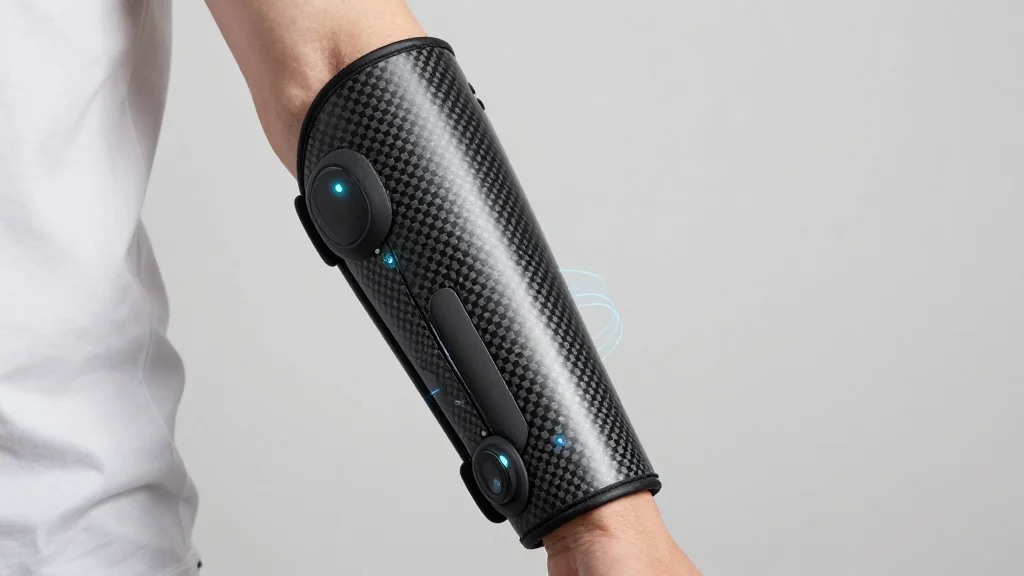
In this episode, Dr. Ana Luisa Trejos explains how her team at Western University is creating a wearable tremor‑suppression glove for people with Parkinson's disease. By merging mechanical, electrical, computer, and software engineering, the mechatronic system perceives hand motion, distinguishes unwanted tremor, and applies corrective forces. The approach moves beyond bulky, hospital‑grade devices, offering a garment‑like solution that can be worn throughout daily activities, potentially restoring independence for millions affected by upper‑body movement disorders.
The core technical challenge lies in separating tremor from intentional movement in real time. Sensors on each finger capture high‑frequency data, while custom algorithms predict the onset of tremor milliseconds before it manifests. This predictive control enables motors to counteract only the involuntary component, preserving natural motion. Personalization is critical: the glove adapts to each user’s tremor frequency, amplitude, and transition patterns—resting, postural, or action tremor—ensuring effective suppression across diverse disease stages.
Looking ahead, the research pivots to lighter actuation technologies. Traditional electric motors add bulk, so the team is prototyping twisted‑coiled actuators—thin, nylon‑based cords with silver coating that contract when electrified. These flexible actuators promise comparable force with far less weight, making the glove more comfortable and socially acceptable. Collaboration between engineers, clinicians, and industry veterans accelerates translation from lab to market, aiming to deliver a smart, comfortable wearable that improves quality of life for Parkinson's patients worldwide.
Episode Description
Dr. Ana Luisa Trejos is an Associate Professor of Electrical and Computer Engineering as well as Biomedical Engineering at Western University in Canada. She is also an Associate Scientist at the Lawson Health Research Institute. Ana Luisa's research combines mechanical, electrical, computer, and software engineering to develop smart machines that can perceive what is happening in the environment and react intelligently. In particular, she is designing wearable mechatronic technologies that can help people recover from mobility problems due to a musculoskeletal injury or a movement disorder like Parkinson's disease. When she's not at work, Ana Luisa enjoys hanging out with her family, reading, putting together jigsaw puzzles, hiking, swimming, and running. She has also been having fun renovating her house, and she has recently been working on completely remodeling one of their bathrooms. Ana Luisa was awarded her B.Sc. degree in mechanical engineering from the University of Costa Rica and her M.A.Sc. in mechanical engineering from the University of British Columbia. She worked as an Applications Engineer for Progressive Moulded Products in Ontario from 2000-2003. She then joined the team at Canadian Surgical Technologies & Advanced Robotics at Western University as a research engineer. Ana Luisa later attended graduate school at Western University where she was awarded her Ph.D. degree in electrical and computer engineering in 2012. Ana Luisa has been awarded the IEEE London Section Outstanding Women in Engineering Award and the For Inspiration and Recognition of Science and Technology (FIRST) Canada District Volunteer Appreciation Award. In our interview, Ana Luisa shares more about her life and research.
Comments
Want to join the conversation?
Loading comments...