Why It Matters
By shifting computation from a central processor to the robot’s physical form, designers can create lighter, faster, and more energy‑efficient machines that operate in harsh or confined environments. This approach opens new possibilities for disaster‑response robots, soft‑robotics, and bio‑hybrid systems, making the technology both timely and relevant for the next generation of adaptable automation.
Key Takeaways
- •Robot bodies can process information via geometry and materials.
- •Mechanical bifurcation enables eight grasps with only two motors.
- •Origami geometry translates to durable 3D‑printed robot structures.
- •Unconventional materials like muscle cells create bio‑hybrid actuation.
- •Reconfigurable designs improve navigation in confined, disaster‑site environments.
Pulse Analysis
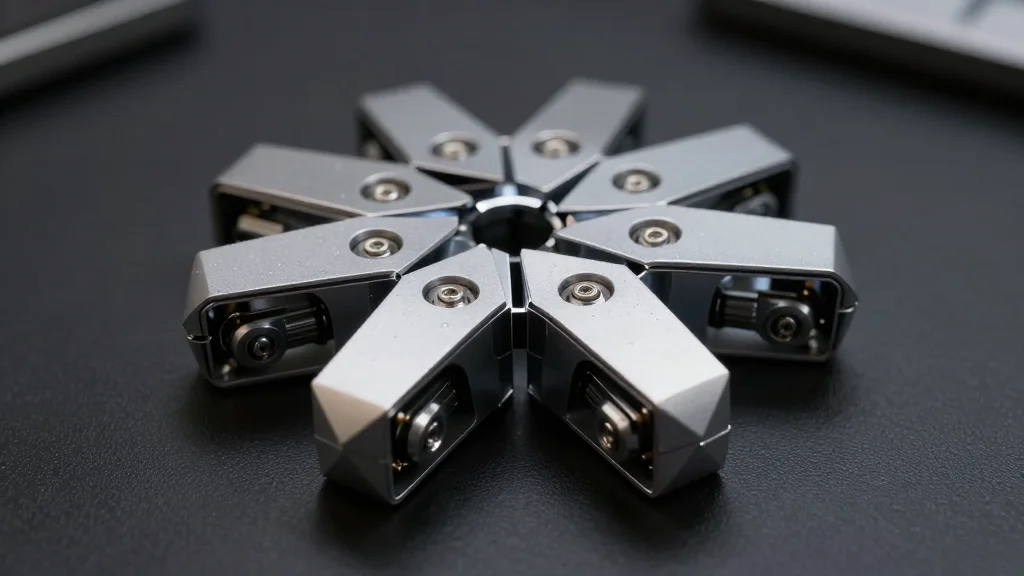
Embedding intelligence directly into a robot’s physical structure is reshaping how engineers think about autonomy. By exploiting geometry, mathematics, and the ancient art of origami, researchers at Oxford demonstrate that a robot’s body can sense, process, and even decide without relying solely on a central processor. This shift reduces computational load, shortens response times, and allows simpler control architectures. Concepts such as mechanical bifurcation—where a single mechanism branches into multiple motion paths—enable a gripper with only two actuators to perform eight distinct grasping modes, a capability that would traditionally require many more motors and sensors.
The translation from paper folding to robust hardware hinges on geometric abstraction rather than material fidelity. Origami patterns are modeled as spherical or spatial linkages, then adjusted for thickness, offset joints, and panel angles to retain mobility. Using CAD tools and desktop 3D printers, these mathematically‑derived designs become durable components fabricated from plastics, wood, or metal. The resulting structures can incorporate fatigue‑resistant polymers at crease locations or engineered hinge mechanisms that mimic doll‑joint longevity. This approach produced a millipede‑inspired robot capable of coil, wave, and triangular shapes without modular disassembly, showcasing true reconfigurability for confined‑space navigation.
Beyond mechanical elegance, unconventional materials broaden the functional envelope of intelligent robots. Inflatable fabrics enable wearable actuation, while living muscle cells offer bio‑hybrid power sources that contract on electrical stimulus, directly folding origami hinges. Such hybrid systems promise robots that adapt morphology in response to humidity, temperature, or biological cues, making them ideal for disaster‑response scenarios where terrain and conditions shift rapidly. Multi‑modal robots that transition from crawling to swimming illustrate the potential for versatile platforms across industries. As the field matures, integrating geometry‑driven intelligence with novel materials will drive more efficient, resilient, and adaptable robotic solutions.
Episode Description
Claire chatted to Chenying Liu from the University of Oxford about how a robot's physical form can actively contribute to sensing, processing, decision-making, and movement.
Chenying Liu is a Junior Research Fellow and an Associate Member of Faculty in the Department of Engineering Science at the University of Oxford. She leads an independent research programme focused on embodied physical intelligence, exploring how robot design can integrate geometry, materials, and control to enhance autonomy and robustness. Her work aims to develop more efficient and resilient robotic systems by embedding intelligence directly into their physical structures.
Support Robot Talk on Patreon: https://www.patreon.com/ClaireAsher
Comments
Want to join the conversation?
Loading comments...