Why It Matters
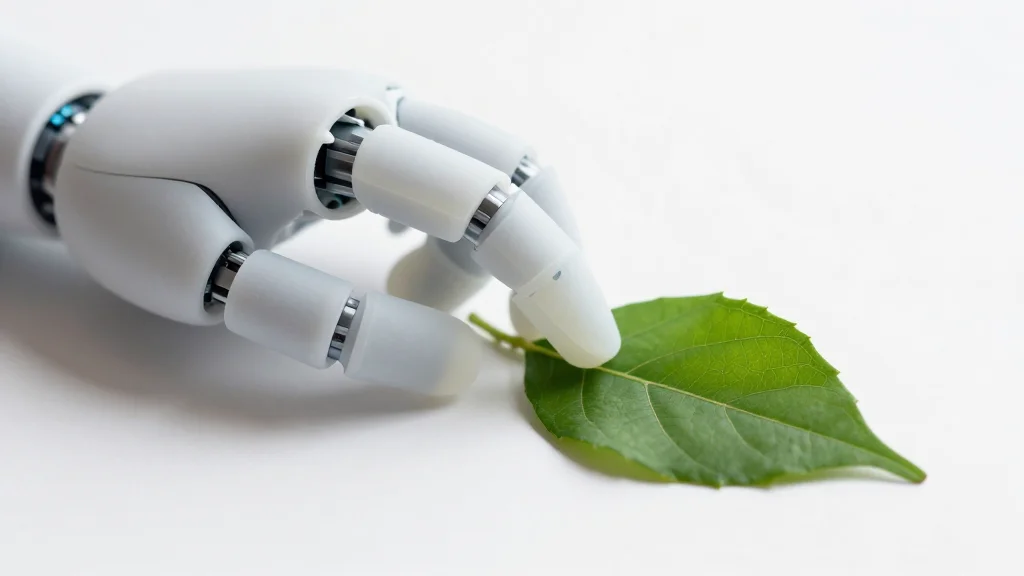
As robots move into more complex, unstructured environments, the ability to rapidly design custom manipulators could dramatically accelerate deployment in industries from manufacturing to agriculture. This episode showcases a cutting‑edge approach that merges generative AI with physical simulation, pointing toward a future where robots can be tailored on demand, boosting productivity and expanding the scope of automation.
Key Takeaways
- •AI generates robot hand designs from task descriptions
- •Soft robotics blend rigidity and compliance for dexterity
- •Simulation and reinforcement learning refine AI-generated designs
- •Bio-inspired growth and morphing enable adaptable manipulators
- •Multi-objective optimization yields Pareto fronts of robot morphologies
Pulse Analysis
Episode 157 dives into how Josie Hughes’s CREATE Lab at EPFL is reshaping robot manipulators with generative AI. The team feeds an image, video, or textual task description into large language and vision models, which then propose a full morphology—including finger count, sensor placement, and actuator type. Those high‑level concepts are translated into a text‑based CAD format, simulated, and evaluated with reinforcement‑learning policies. Successful designs are fabricated and tested in the real world, creating a closed‑loop pipeline that turns abstract task specifications into physical grippers. This approach promises faster, more customized robot hands for industries ranging from manufacturing to agriculture.
The conversation also highlights soft‑robotics as a complementary frontier. By mixing rigid skeletons with compliant skins, tendons, and ligaments, the lab mimics the human hand’s blend of strength and flexibility. Projects include continuum arms inspired by elephant trunks, octopus tentacles, and even fully soft tongues capable of high‑force manipulation. These designs exploit material compliance to achieve dexterous motion without complex joint assemblies, and they open pathways for robots that can morph on‑demand or grow over time. Such bio‑inspired adaptability could let manipulators navigate cluttered environments, handle delicate produce, or operate underwater where traditional rigid structures fail.
Despite early successes—such as a first 3‑D‑printed gripper built directly from a text prompt—several challenges remain. Large language models still struggle with spatial reasoning and physical intuition, so the pipeline relies on simulation and reinforcement‑learning loops to ground designs in reality. Multi‑objective optimization produces Pareto fronts, revealing trade‑offs between task‑specific performance, generality, weight, and actuation complexity. As the system matures, researchers aim to expand the task library, integrate online growth mechanisms, and bridge the gap between locomotion and manipulation. If achieved, these AI‑driven, soft‑enabled manipulators could accelerate productivity across sectors, echoing the ARIA Robot Dexterity Program’s vision of a new industrial revolution.
Episode Description
Claire chatted to Josie Hughes from École Polytechnique Fédérale de Lausanne (EPFL) about using generative AI to develop new designs for robotic manipulators.
Josie Hughes is an Assistant Professor at EPFL, where she established the CREATE Lab in 2021. She completed her PhD in the Bio-inspired Robotics Lab at the University of Cambridge, examining the role of passivity in bio-inspired manipulators. Her research focuses on developing novel design paradigms for designing robot structures that exploit their physicality and interactions with the environment. This includes the development of robotic hands, soft manipulators, and automation systems for applications focused on sustainability and science.
This episode is powered by the Advanced Research + Invention Agency's Robot Dexterity programme, which aims to transform robotic capabilities and unlock a step-change in human productivity.
Support Robot Talk on Patreon: https://www.patreon.com/ClaireAsher
Find out more about ARIA: https://aria.org.uk/
Comments
Want to join the conversation?
Loading comments...