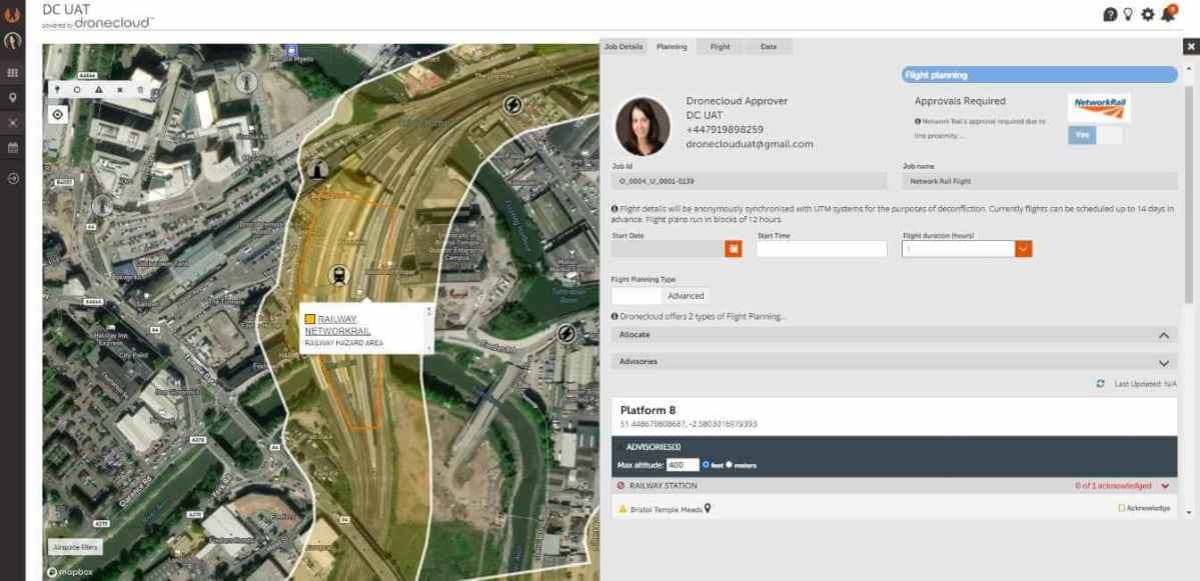
NATS, DroneCloud and Network Rail Complete Trial to Unlock Drone Operations Around Critical Infrastructure

Companies Mentioned
Why It Matters
The successful SOCNI trial shows that BVLOS drones can be integrated into congested airspace, unlocking efficiency gains for rail operators and emergency services while setting a regulatory precedent for nationwide drone deployment.
Key Takeaways
- •SOCNI demonstrated shared BVLOS drone flights over rail corridors.
- •NATS tested OpenAir digital coordination platform in live environment.
- •Consortium included NATS, DroneCloud, Network Rail, Transport for Wales, British Transport Police.
- •Results will guide UK airspace policy for drones and critical infrastructure.
Pulse Analysis
Beyond‑visual‑line‑of‑sight (BVLOS) drone flights are a cornerstone of next‑generation infrastructure monitoring, yet their adoption has been hampered by safety concerns in complex airspace. By allowing drones to operate beyond the pilot’s direct sight, operators can cover longer routes, reduce inspection cycles, and respond faster to incidents. However, integrating these flights with existing aviation users requires robust digital coordination, real‑time data sharing, and clear priority rules to prevent conflicts and ensure public safety.
Project SOCNI brought together the United Kingdom’s air navigation service provider (NATS), leading drone operator DroneCloud, rail owner Network Rail, and public safety agencies to test a shared‑airspace framework on an active rail corridor. Using the OpenAir platform, each participant accessed a common situational‑awareness feed, enabling simultaneous BVLOS missions while adhering to a predefined prioritisation hierarchy. The live demonstration, which combined actual aircraft with simulated emergency scenarios, proved that multiple stakeholders can safely coexist in the same airspace without degrading operational efficiency.
The trial’s outcomes have immediate implications for both industry and regulators. For rail operators, scalable BVLOS inspections promise cost reductions of up to 30 % compared with traditional manual checks, while emergency responders gain rapid aerial access to incident sites. For policymakers, the SOCNI results provide a concrete blueprint for updating UK airspace regulations to accommodate emerging unmanned traffic. Continued OpenAir pilots later this year will refine the concept, positioning the UK as a leader in safe, large‑scale drone integration across critical national infrastructure.
NATS, DroneCloud and Network Rail complete trial to unlock drone operations around critical infrastructure
Comments
Want to join the conversation?
Loading comments...