Drone Radio Show
Smart Materials and the Rise of Ornithopters: Dr. Onur Bilgen, Rutgers University
Why It Matters
Smart‑material‑driven ornithopters could unlock a new class of ultra‑light, low‑cost drones for delivery, inspection, and research, expanding capabilities where traditional rotors are impractical. As the drone industry seeks greener, more efficient solutions, this research points to a future where fewer moving parts mean longer lifespans and reduced maintenance, making advanced aerial robotics more accessible and sustainable.
Key Takeaways
- •Piezoelectric materials directly actuate wings, eliminating linkages.
- •Ornithopters generate leading‑edge vortex for efficient lift.
- •Computational models optimize wing shape and material placement.
- •Main challenges: vortex modeling and experimental validation.
- •Ideal use: indoor, low‑speed, low‑payload missions.
Pulse Analysis
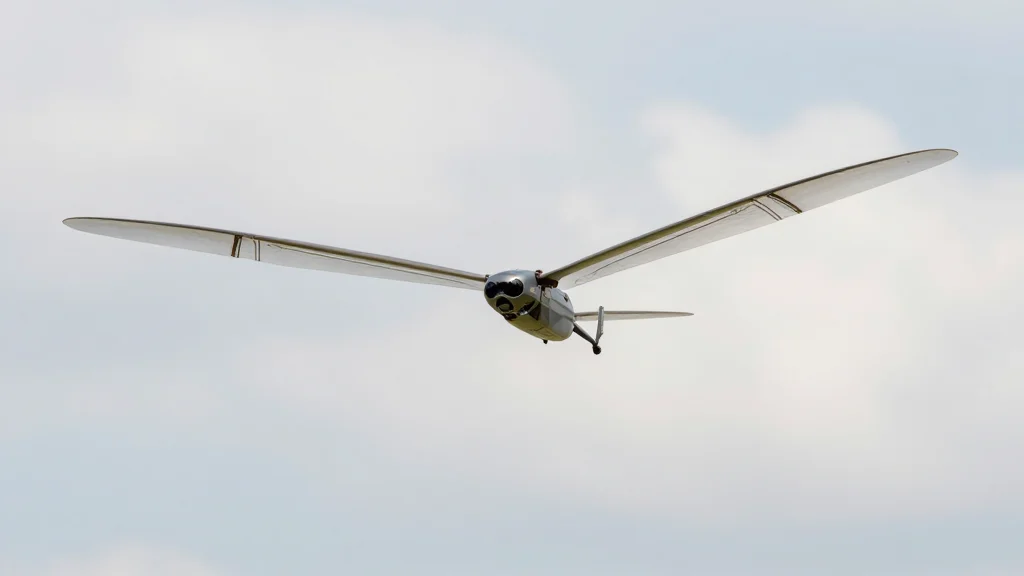
Dr. Onur Bilgen of Rutgers University is pioneering the use of smart, piezoelectric materials to power flapping‑wing drones. By applying voltage directly to these actuators, the wing surface bends without the traditional gearbox, linkage, or bearing assemblies that add weight and wear. This minimalist approach reduces manufacturing complexity, lowers cost, and improves reliability, making small unmanned aircraft more feasible for research and commercial use. The same technology can also be integrated into rotary‑blade drones, offering a unified platform for both fixed‑wing and flapping‑wing systems.
Ornithopters achieve remarkable aerodynamic efficiency by exploiting the leading‑edge vortex, a fluid phenomenon that creates temporary wing shapes unattainable with rigid airfoils. Bilgen’s team has built a comprehensive computational model that couples structural dynamics, piezoelectric actuation, and vortex physics, allowing rapid design‑space exploration without costly physical prototypes. Optimization studies have identified optimal wing thickness, curvature, and actuator placement that maximize lift while minimizing weight. Although the vortex model remains a theoretical challenge, early simulations predict cruise flight is possible with existing piezoelectric materials, guiding future experimental validation.
The most promising commercial niche for smart‑material ornithopters is indoor or densely built environments where conventional rotors struggle with confined spaces and noise restrictions. Low‑speed, low‑payload missions such as infrastructure inspection, inventory monitoring, or emergency reconnaissance could benefit from inexpensive, easy‑to‑operate flapping‑wing platforms. Ongoing work focuses on refining vortex modeling, fabricating lightweight composite wings, and conducting flight tests to confirm the predicted lift‑to‑weight ratios. As material science delivers higher‑strain piezoelectrics, Bilgen’s research could accelerate the transition from laboratory prototypes to practical UAV solutions for urban logistics and beyond.
Episode Description
Dr. Onur Bilgen is Associate Professor in the Department of Mechanical and Aerospace Engineering at Rutgers University. Dr. Bilgen conducts research in the design of advanced drone systems, including fixed-wing and rotary-wing aircraft, hybrid drone systems, and bioinspired ornithopters — flapping wing drones modeled after the flight of birds and insects. His work also explores the use of smart materials and innovative aerospace system designs.
Onur has led NASA University Student Research Challenge projects, including the development of a Multi-Mode Hybrid Unmanned Delivery System. He also teaches a graduate course at Rutgers called Drones: Fundamentals and Applications and has helped expand drone education and testing capabilities through initiatives like the Rutgers Drone Playground and the Buehler Drone Lab's VICON Motion Tracking System.
In this episode, we'll talk about the future of flapping wing drones, the role of smart materials in next-generation aircraft design, and how bioinspired engineering could influence the next wave of unmanned aviation innovation.
Comments
Want to join the conversation?
Loading comments...