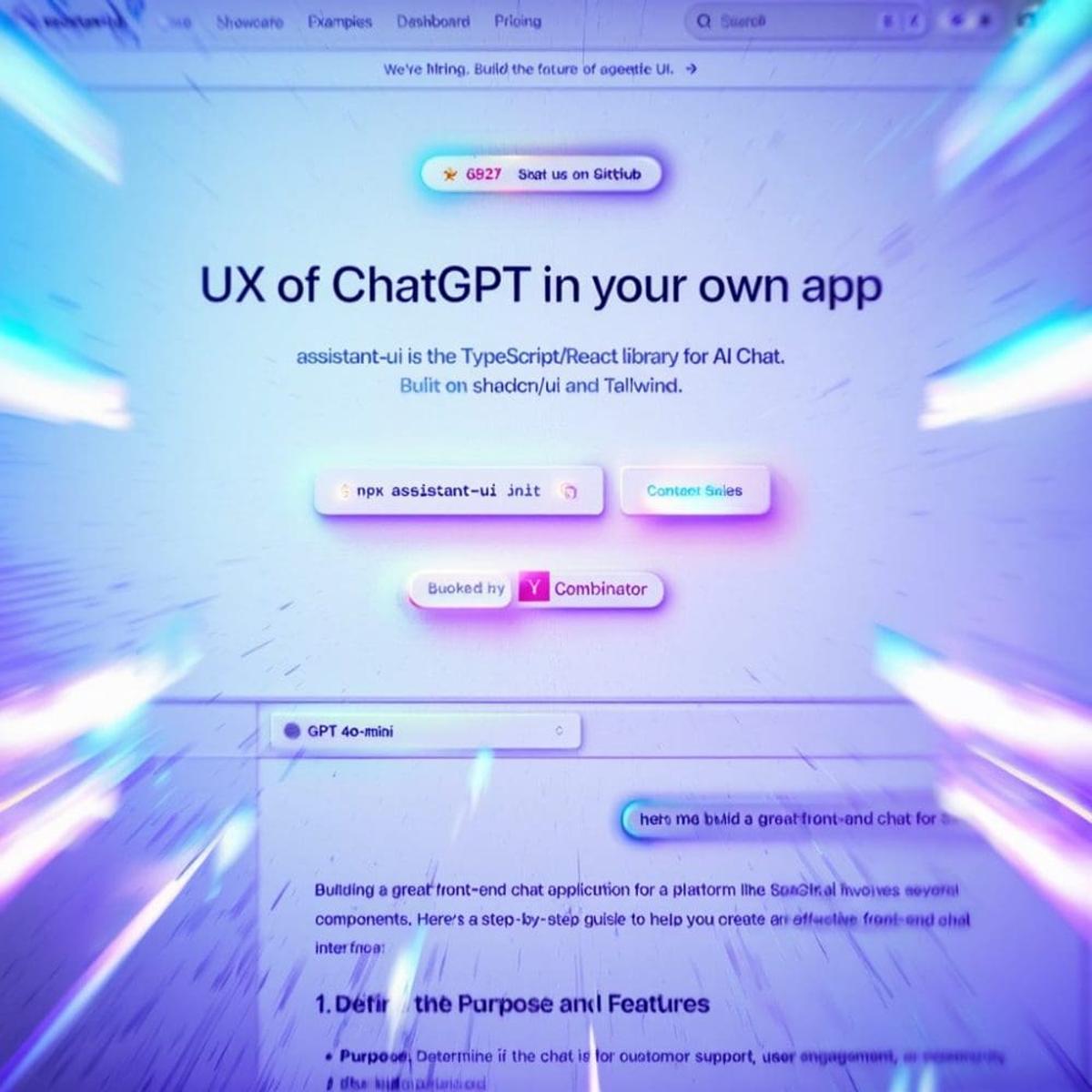
AI App of the Week: Assistant UI – The React Library That’s Eating the AI Chat Interface Market
•November 1, 2025
0

Why It Matters
By eliminating the need to build complex chat infrastructure, Assistant UI accelerates time‑to‑market for AI‑driven products and lowers engineering overhead, giving companies a competitive edge in the rapidly growing generative AI market.
Key Takeaways
- •200k+ monthly downloads, YC-backed open source library
- •Composable primitives replace monolithic chat components
- •Supports 15+ LLM providers, easy custom API integration
- •Enables production-ready chat in hours, not weeks
- •Assistant Cloud adds persistence and analytics for enterprises
Pulse Analysis
The surge of generative AI has turned conversational interfaces into a core product feature, yet developers often stumble over the intricate details of streaming responses, auto‑scrolling, and accessibility. Traditional approaches require weeks of custom code, creating a bottleneck for startups eager to showcase AI capabilities. Assistant UI addresses this gap by providing a ready‑made, TypeScript‑first foundation that abstracts the low‑level mechanics while preserving full design flexibility, allowing teams to focus on unique user experiences rather than plumbing.
At its core, Assistant UI adopts a composable‑primitive architecture inspired by Radix UI, delivering modular building blocks such as message bubbles, input fields, and attachment handlers. This design enables developers to assemble bespoke chat layouts without sacrificing out‑of‑the‑box functionality like markdown rendering, code syntax highlighting, and multimodal inputs. The library also ships with native integrations for over a dozen LLM providers—including OpenAI, Anthropic, and Gemini—and works seamlessly with Vercel AI SDK, LangGraph, and other popular stacks. Such breadth ensures that product teams can switch models or add custom endpoints without rewriting UI logic, dramatically reducing technical debt.
From a business perspective, the open‑source model paired with the optional Assistant Cloud service creates a sustainable revenue loop while fostering community trust. Enterprises gain access to managed chat persistence, analytics, and compliance features, turning a free UI kit into a scalable backend solution. The rapid adoption by high‑profile AI firms signals market validation, and the library’s alignment with widely used tools like shadcn/ui and Tailwind CSS positions it as a long‑term staple in the AI developer toolkit, likely shaping the next wave of AI‑first applications.
AI App of the Week: Assistant UI – The React Library That’s Eating the AI Chat Interface Market
0
Comments
Want to join the conversation?
Loading comments...