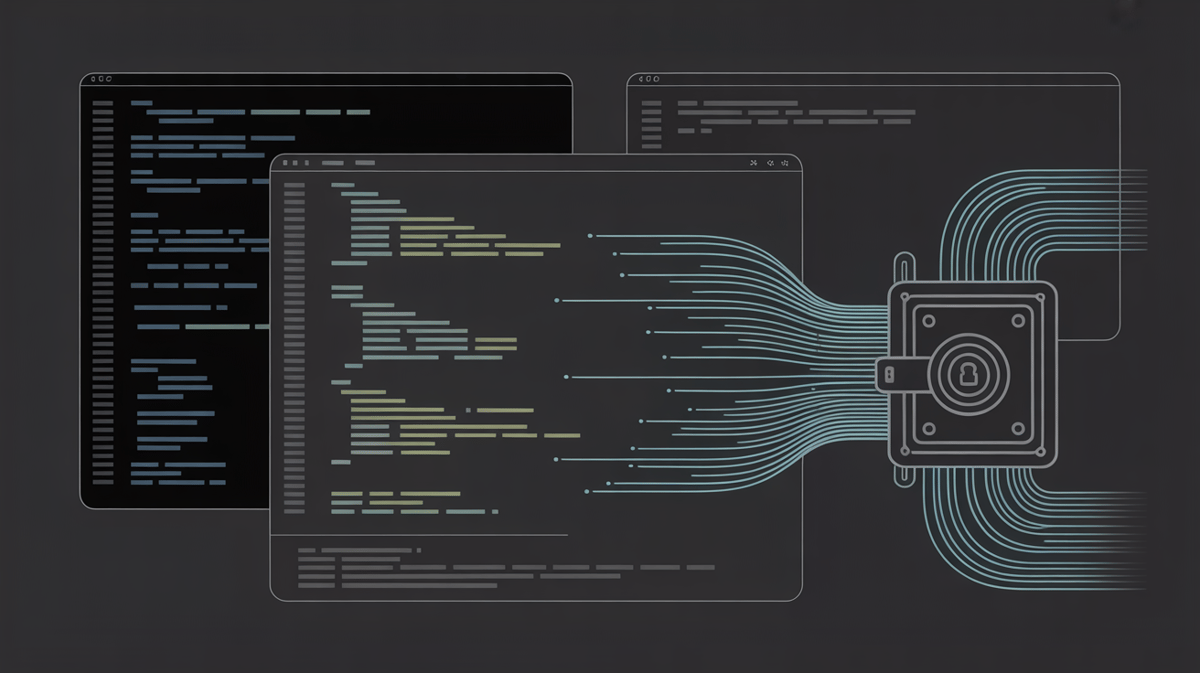
1Password Integrates with Cursor to Secure AI-Driven Development Workflows
•December 19, 2025
0


Why It Matters
By securing AI‑assisted coding at the source, the integration reduces credential leakage risk and accelerates safe adoption of generative AI in software development.
Key Takeaways
- •1Password adds just‑in‑time secret injection for Cursor.
- •Hooks script prevents hard‑coded credentials in AI‑generated code.
- •Integration enforces team policies without altering existing vaults.
- •Future updates will add secret rotation and richer permissions.
- •AI developers gain secure runtime access, reducing breach risk.
Pulse Analysis
The rise of AI‑driven code editors like Cursor promises faster development cycles, but it also introduces a new attack surface: automated agents that can inadvertently expose secrets. Traditional secret management relies on developers manually inserting environment variables or storing keys in configuration files, practices that are error‑prone and difficult to audit. As enterprises scale AI‑assisted workflows, the need for a seamless, policy‑driven approach to credential handling becomes critical to maintaining a robust DevSecOps posture.
The 1Password‑Cursor integration tackles this challenge with a Hooks Script that injects secrets at runtime, only when authorized by the user. By pulling credentials directly from 1Password Environments, the solution ensures that no plaintext keys ever touch disk or version control, and that access is governed by existing team policies. Developers can continue using familiar AI‑powered features—such as code completion and automated refactoring—while the underlying security framework automatically validates .env files, enforces vault permissions, and logs secret usage for auditability. This just‑in‑time model aligns with zero‑trust principles, turning secret management from an afterthought into an intrinsic part of the coding process.
Looking ahead, the roadmap includes automated secret rotation, expanded Model Context Protocol support, and finer‑grained permission sets, positioning the partnership as a blueprint for AI‑native development environments. As more organizations adopt generative AI tools, integrations that embed security controls will differentiate platforms that can scale responsibly. The 1Password and Cursor collaboration not only mitigates immediate credential leakage risks but also sets a precedent for embedding compliance and governance directly into the AI development stack, accelerating enterprise confidence in AI‑augmented software delivery.
1Password integrates with Cursor to secure AI-driven development workflows
0
Comments
Want to join the conversation?
Loading comments...