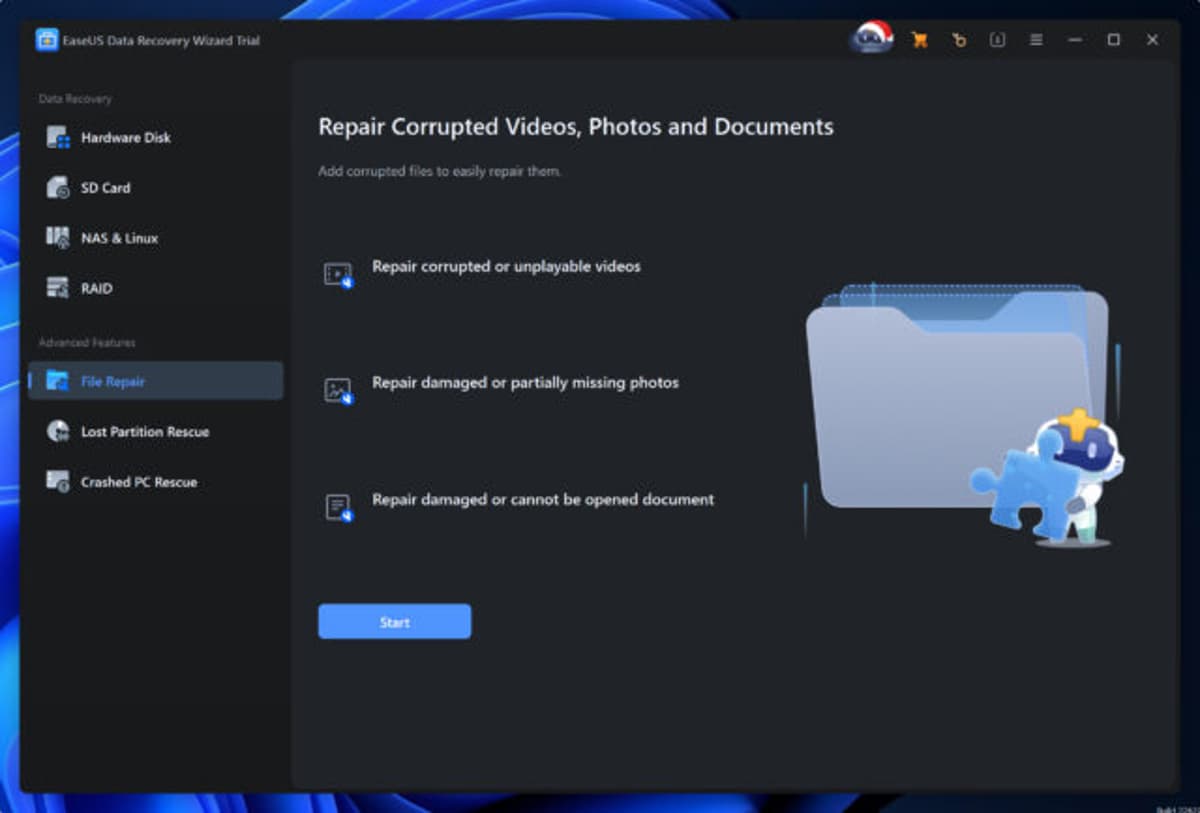
EaseUS Adds Fragmented File Recovery Tech to Data Recovery Wizard
•December 22, 2025
0
Why It Matters
Fragmented file recovery improves data integrity for millions of users relying on portable media, reducing costly data loss incidents. The feature strengthens EaseUS’s position in a competitive data‑recovery market.
Key Takeaways
- •New SmartSector Rebuild engine recovers fragmented files
- •Recovery success up to 30% on FAT32/exFAT
- •Targets USB, SD cards, external drives
- •Pricing lowered to $59.95 monthly, $99.95 lifetime
- •Preview feature shows files before completion
Pulse Analysis
Fragmentation has become a silent killer for removable storage, especially as users repeatedly write, delete, and rewrite files on USB sticks, SD cards, and external drives. Traditional recovery tools often retrieve file fragments that remain unusable, leaving users with incomplete data. By introducing SmartSector Rebuild, EaseUS addresses this gap, offering a method to piece together scattered sectors and restore files to a functional state. This advancement aligns with the growing demand for reliable data protection in mobile work environments and media archiving.
The SSR engine works by scanning residual data signatures, leveraging leftover metadata, and evaluating the physical proximity of storage blocks. By reconstructing the logical order of fragmented pieces, it can recover photos, videos, documents, and PDFs that would otherwise appear corrupted. Early benchmarks suggest a 30% increase in successful recoveries on FAT32 and exFAT file systems, which dominate removable media. Compared with competing solutions that rely on generic carving techniques, SSR’s targeted approach reduces false positives and accelerates preview capabilities, allowing users to verify recoverable content before committing to full restoration.
From a business perspective, the feature bolsters EaseUS’s competitive edge as the data‑recovery market tightens around price and performance. The reduced pricing—$59.95 for a month’s pro use and $99.95 for lifetime access—makes advanced recovery more accessible to students, freelancers, and small enterprises. As data loss incidents continue to rise, especially with remote work and cloud‑adjacent workflows, tools that promise higher success rates on everyday devices are likely to capture greater market share. EaseUS’s focus on fragmented recovery positions it as a go‑to solution for both casual users and professional archivists seeking dependable data resilience.
EaseUS adds fragmented file recovery tech to Data Recovery Wizard
0
Comments
Want to join the conversation?
Loading comments...