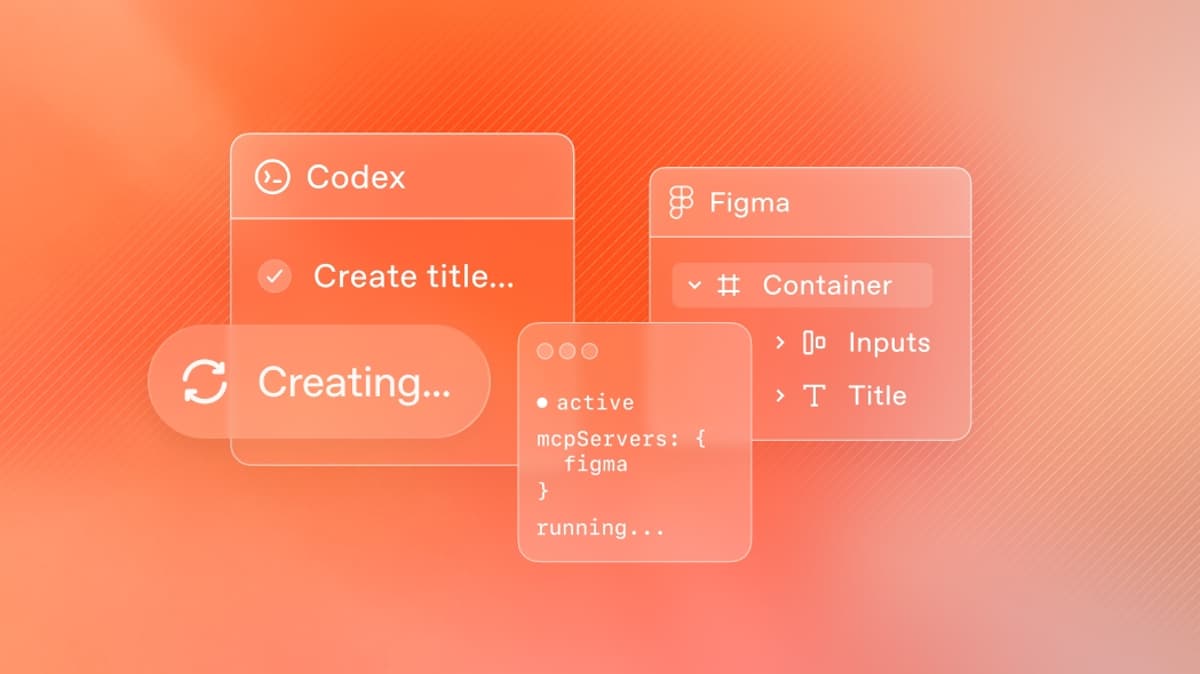
Figma Partners with OpenAI to Bake in Support for Codex
•February 26, 2026
0

Why It Matters
By uniting design and code, the integration accelerates prototyping cycles and broadens AI tooling access for both designers and developers, reshaping collaborative product creation.
Key Takeaways
- •Figma adds OpenAI Codex to its platform
- •Seamless switch between design canvas and code via MCP
- •Codex weekly users exceed one million
- •Mac app hit one million downloads first week
- •Extends Figma's AI partnership strategy
Pulse Analysis
The convergence of design and development tools has long been a goal for product teams, and Figma’s latest partnership with OpenAI brings that vision closer to reality. By embedding Codex—a powerful code generation engine—directly into Figma’s infinite canvas, users can generate UI components, adjust layouts, and even refactor code without leaving the design environment. The Model Context Protocol acts as a bidirectional bridge, ensuring that changes in the visual layer are instantly reflected in the underlying codebase, and vice versa. This level of integration reduces context switching, a major productivity drain, and signals a maturing ecosystem where AI assists at every stage of creation.
For developers, the integration means they can prototype functional interfaces faster, leveraging Codex’s ability to translate design tokens into clean, production‑ready code snippets. Designers benefit from seeing real‑time implementation feedback, allowing them to iterate on aesthetics while staying grounded in technical feasibility. OpenAI’s recent metrics—over a million weekly Codex users and a macOS app that amassed a million downloads in its debut week—underscore strong market appetite for AI‑driven coding assistants. Figma’s earlier collaboration with Anthropic’s Claude Code further demonstrates the company’s strategy to embed multiple AI models, giving users flexibility to choose the best tool for their workflow.
Industry analysts view this move as a strategic push to lock in Figma as the default front‑end for AI‑enhanced product development. Competitors like Adobe and Sketch are racing to add similar capabilities, but Figma’s early adoption of both Codex and Claude Code gives it a first‑mover advantage. As AI models become more specialized, the ability to seamlessly toggle between design and code will likely become a differentiator for enterprise collaboration platforms. In the longer term, such integrations could blur the lines between designers and engineers, fostering multidisciplinary teams that co‑create with AI as a shared partner.
Figma partners with OpenAI to bake in support for Codex
0
Comments
Want to join the conversation?
Loading comments...