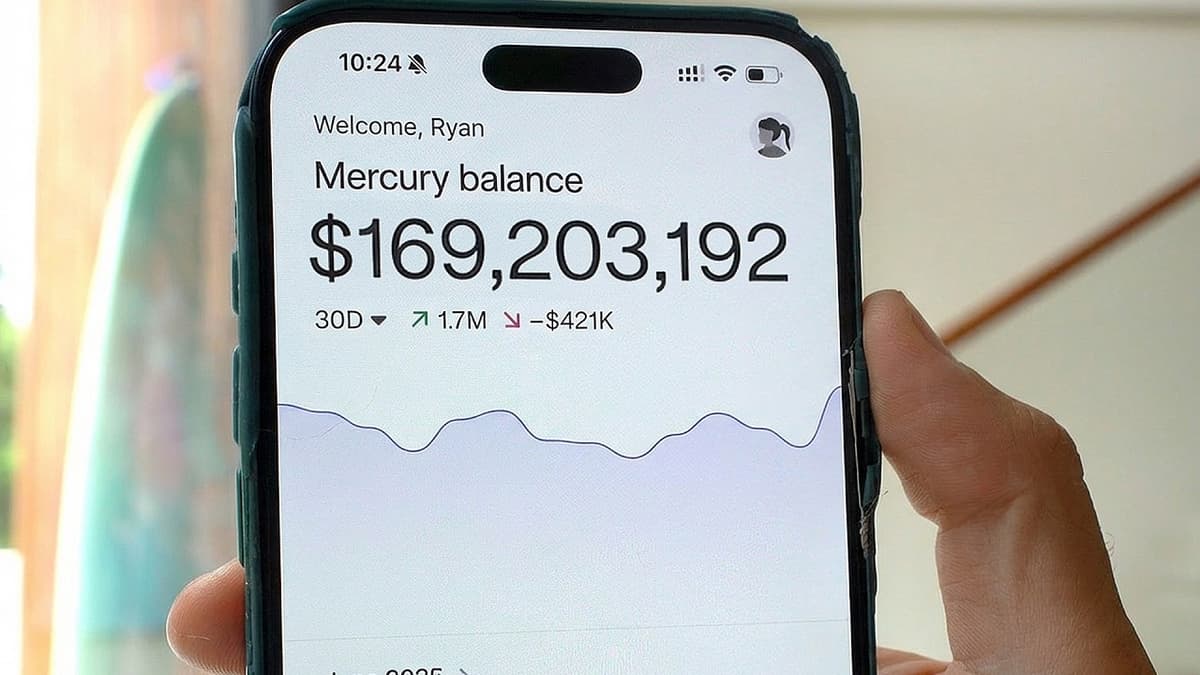
How I Built My Saas Company to $50m/Year and Sold It for $169m (Step by Step)
•January 23, 2026
0

Why It Matters
It shows that disciplined, metrics‑first scaling can turn a scrappy startup into a high‑value exit, a blueprint for SaaS founders seeking sustainable growth and profitable exits.
Key Takeaways
- •Bootstrapped to $1M ARR before external capital
- •Unit economics guided fundraising and valuation
- •Multi‑channel acquisition diversified growth beyond paid ads
- •Scaling requires hiring experienced product leaders
- •Investment bank created competitive pressure for $169M sale
Pulse Analysis
The story of turning a dorm‑room web design shop into a $50 million SaaS illustrates how early‑stage founders can achieve massive scale without relying on large early‑stage funding. By keeping the business bootstrapped until it hit $1 million in annual recurring revenue (ARR), the team forced themselves to master unit economics—CAC, LTV, churn and ARPA—before courting investors. This data‑driven discipline turned growth from a hopeful gamble into a repeatable engine, allowing the founders to raise capital only when the numbers justified a higher valuation and to keep dilution low.
Once the company crossed the $1 million ARR threshold, the focus shifted from survival tactics to systematic growth. The founders built a multi‑channel acquisition strategy that blended Google Ads, SEO, affiliate partnerships and reseller networks, ensuring that no single source dominated revenue. Simultaneously, they professionalized the organization by hiring senior product and growth leaders who had previously scaled companies past the $30 million mark. These hires introduced robust processes, from cohort analysis to go‑to‑market playbooks, which enabled the business to accelerate from $10 million to $50 million ARR while maintaining healthy LTV:CAC ratios.
The ultimate exit at $169 million was not accidental; it was engineered through a disciplined fundraising philosophy and the use of a top‑tier investment bank. By raising a modest $500 k Series A after proving $1.3 million ARR, then a $5 million round after $5 million ARR, the founders kept ownership stakes high and board control tight. The bank’s involvement added competitive tension, tightened timelines and maximized valuation, culminating in a sale to Vocus. For SaaS entrepreneurs, the takeaways are clear: master unit economics early, diversify acquisition channels, build experienced teams, and align fundraising with proven growth metrics to secure high‑value exits.
How I built my saas company to $50m/year and sold it for $169m (step by step)
0
Comments
Want to join the conversation?
Loading comments...