How to Create Retargeting Ads on Meta, Google, and LinkedIn
•January 16, 2026
0

Companies Mentioned


Why It Matters
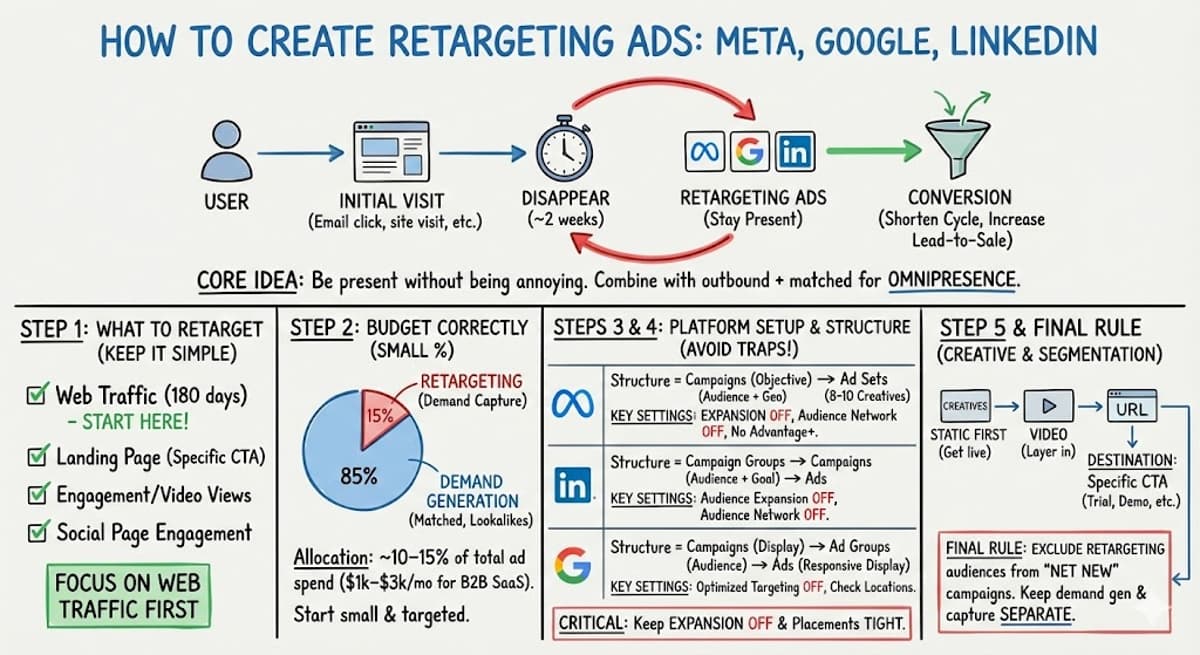
Effective retargeting boosts conversion rates while protecting overall ad efficiency, making it a critical component of modern B2B demand‑capture strategies.
Key Takeaways
- •Start with 180‑day website visitor retargeting
- •Allocate 10‑15% of ad spend to retargeting
- •Turn off audience expansion on all platforms
- •Use static creatives before adding video
- •Exclude retargeting audiences from net‑new campaigns
Pulse Analysis
Retargeting has become a cornerstone of B2B digital strategy because it captures intent that traditional prospecting often misses. When a decision‑maker clicks a cold email, watches a webinar snippet, or lands on a case‑study, the signal indicates early interest but not immediate purchase. By serving tailored ads across Meta, Google Display, and LinkedIn, marketers keep their brand top‑of‑mind throughout the multi‑month buying journey, typically improving visitor‑to‑lead conversion by 20‑30% and lead‑to‑sale conversion by a similar margin.
Budget discipline is essential for sustainable growth. Industry benchmarks suggest dedicating 10‑15% of total ad spend to retargeting, translating to $1,000‑$3,000 per month for most B2B SaaS firms. Positioning retargeting within a demand‑capture bucket—alongside paid search—ensures it complements, rather than cannibalizes, broader demand‑generation efforts such as lookalike and thought‑leadership campaigns. Marketers should monitor frequency caps and cost‑per‑action metrics to avoid diminishing returns, scaling only after the core audience shows consistent engagement.
Platform nuances dictate execution success. On Meta, disabling Advantage+ audiences and limiting placements prevents algorithmic drift beyond the curated list. LinkedIn requires audience expansion and Audience Network to be off, preserving the high‑value professional targeting. Google Display remains the cleanest entry point, with Optimized Targeting turned off to keep spend focused on the defined retargeting list. As privacy regulations tighten, first‑party pixel data and contextual creative assets will become even more valuable, making a disciplined, cross‑platform retargeting framework a long‑term competitive advantage.
How to Create Retargeting Ads on Meta, Google, and LinkedIn
0
Comments
Want to join the conversation?
Loading comments...