Why It Matters
The steep price cut makes sophisticated AI PDF capabilities accessible to small businesses and freelancers, accelerating workflow automation. It also underscores the rapid commoditization of AI‑enhanced document tools in a competitive market.
Key Takeaways
- •Annual plan drops to $34.99, 61% discount
- •Perpetual plan $76.99, 74% discount
- •Includes 12k/40k AI credits yearly/lifetime
- •AI tools: summarization, generation, translation, chat
- •Multi‑platform, works on all devices
Pulse Analysis
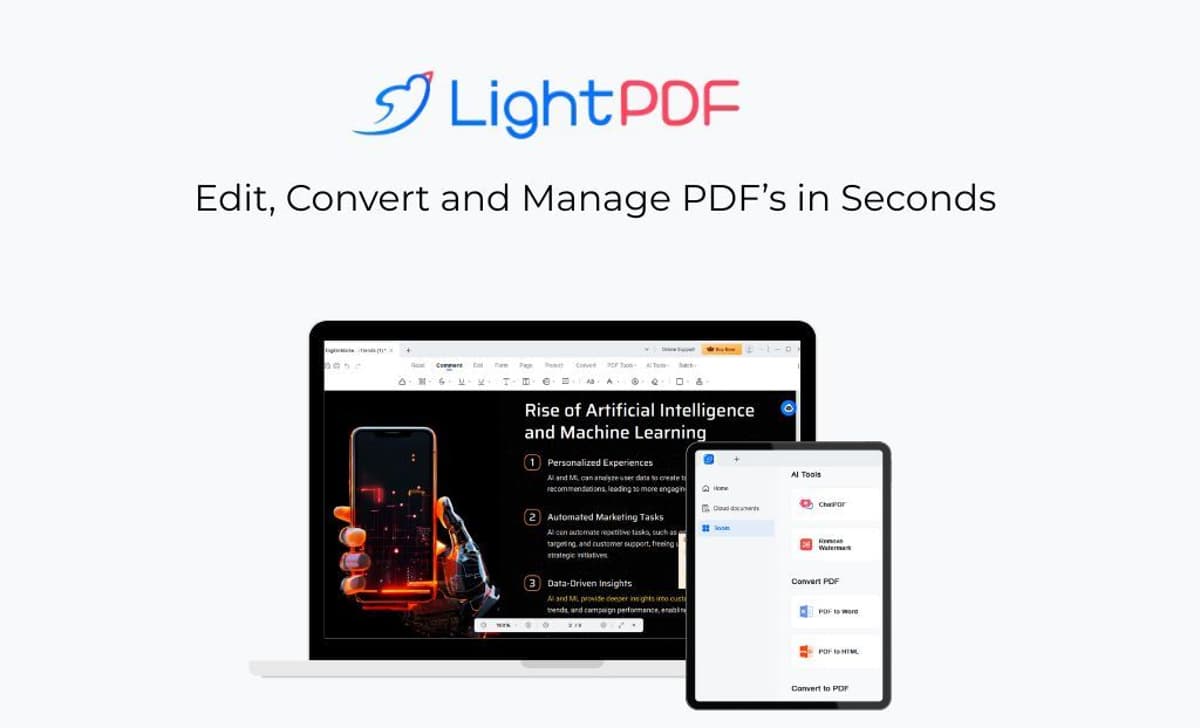
The PDF editing landscape is undergoing a transformation as artificial intelligence becomes a core differentiator. Traditional PDF tools focused on static manipulation, but AI‑enabled platforms now offer dynamic features such as content summarization, language translation, and conversational assistance. LightPDF leverages large‑language models to automate repetitive tasks, positioning itself alongside competitors like Adobe Acrobat and Nitro while targeting price‑sensitive users who need enterprise‑grade functionality without the overhead.
LightPDF’s current promotion dramatically lowers the barrier to entry for its AI suite. The Annual plan, reduced to $34.99, provides 12,000 AI credits that can be spent on summarizing documents, generating new PDFs from prompts, or translating text across 20+ languages. The Perpetual option, at $76.99, grants a lifetime credit pool of 40,000, effectively future‑proofing users against incremental usage costs. Combined with standard features—OCR, eSign, annotation, and page management—the discounted packages deliver a comprehensive solution that rivals higher‑priced incumbents while remaining accessible to freelancers, startups, and mid‑size firms.
For businesses, the timing of this discount aligns with a broader push toward digital transformation and remote collaboration. By integrating AI-driven PDF workflows, teams can reduce manual editing time, improve document accessibility, and maintain compliance through secure eSignatures. The aggressive pricing also pressures rival vendors to enhance their AI offerings or adjust pricing structures, potentially accelerating innovation across the document‑management sector. As AI continues to mature, tools like LightPDF are likely to become foundational components of everyday productivity stacks, driving efficiency gains and reshaping how organizations handle digital paperwork.
Master PDFs like a pro with 30% off LightPDF
0
Comments
Want to join the conversation?
Loading comments...