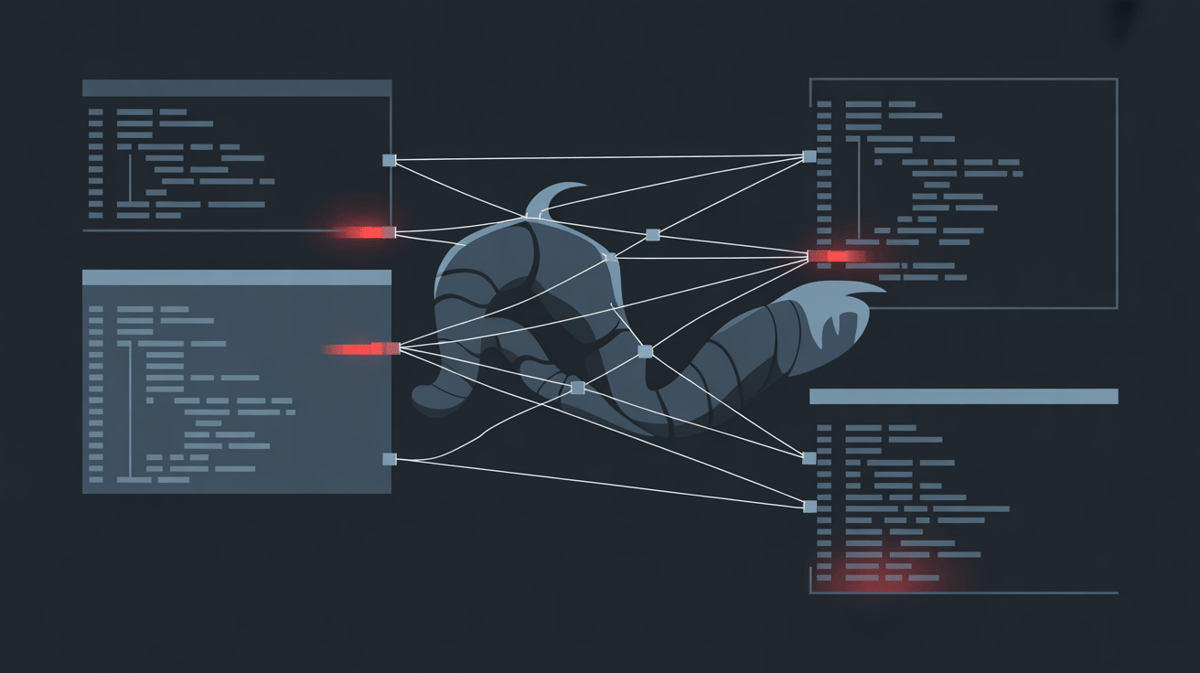
New Shai Hulud 3.0 Malware Variant Raises Fresh Supply Chain Security Concerns
•December 30, 2025
0
Companies Mentioned

Why It Matters
The variant demonstrates that open‑source supply‑chain attacks remain a potent threat, capable of breaching development environments and exposing critical secrets. Organizations must strengthen dependency hygiene and monitoring to protect their software pipelines.
Key Takeaways
- •Shai Hulud 3.0 attacks npm packages with advanced obfuscation.
- •Variant spreads laterally across CI/CD pipelines and developer machines.
- •Limited initial distribution suggests controlled testing before broader rollout.
- •Enhanced error handling improves resilience against detection tools.
- •Experts warn supply chain attacks will rise across ecosystems.
Pulse Analysis
The Shai Hulud malware family has evolved from a simple npm trojan into a sophisticated, self‑propagating worm that targets the software supply chain at its core. First spotted in late 2023, the campaign leverages the trust developers place in open‑source packages to infiltrate build environments. By compromising npm modules, attackers gain a foothold that bypasses traditional perimeter defenses, allowing them to harvest API keys, cloud credentials, and source‑code repositories. This shift reflects a broader industry trend where threat actors prioritize the development lifecycle as a high‑impact vector.
Version 3.0 introduces several technical refinements that raise the bar for detection. Enhanced error handling prevents crashes that would alert developers, while modular code and advanced obfuscation make static analysis tools less effective. The malware now runs on multiple JavaScript runtimes, including Windows‑based node environments, expanding its reach beyond typical Linux CI agents. Its ability to move laterally across continuous integration pipelines means a single compromised package can cascade into multiple downstream projects, amplifying the potential damage.
For enterprises, the emergence of Shai Hulud 3.0 reinforces the urgency of adopting robust supply‑chain security practices. Implementing Software Bill of Materials (SBOMs), enforcing strict version pinning, and integrating automated scanning of dependencies into CI workflows are essential defenses. Threat‑intelligence feeds and behavior‑based monitoring can help spot the subtle anomalies introduced by the new variant. As attackers continue to weaponize open‑source ecosystems, organizations that prioritize proactive dependency management will be better positioned to mitigate the risk of credential theft and pipeline sabotage.
New Shai Hulud 3.0 malware variant raises fresh supply chain security concerns
0
Comments
Want to join the conversation?
Loading comments...