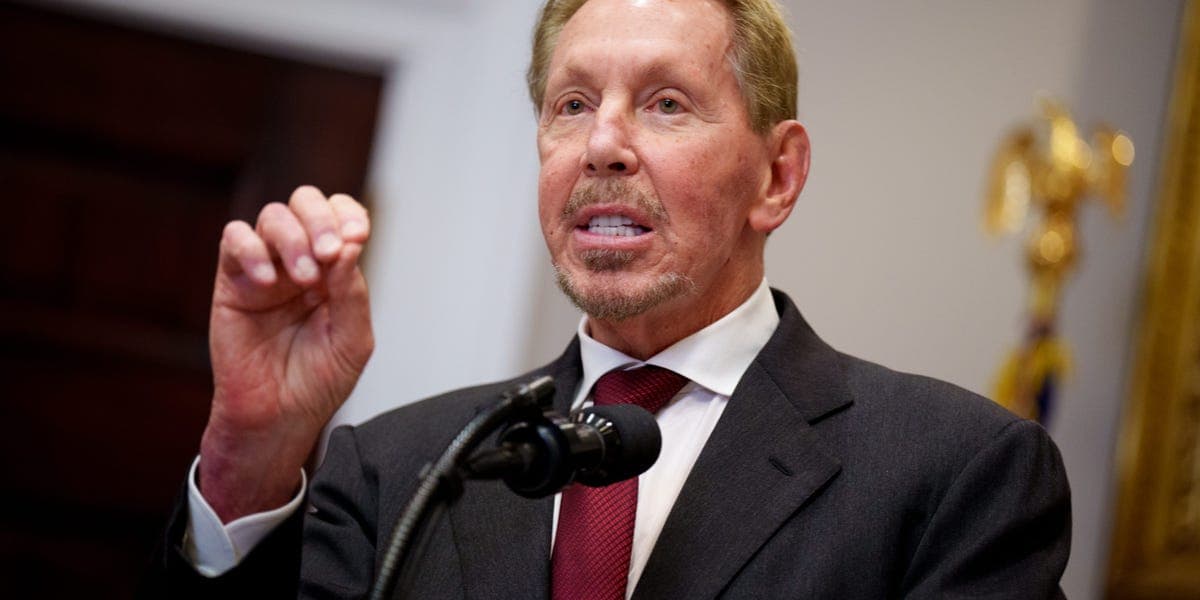
Oracle's Larry Ellison Downplays Software Apocalypse Fears: 'We Think the SaaSpocalypse Applies to Others, but Not to Us'
•March 10, 2026
0
Why It Matters
Oracle’s confidence signals to investors that large SaaS providers can weather AI‑induced market turbulence, shaping sector valuation trends.
Key Takeaways
- •Oracle says AI won’t trigger SaaS apocalypse for them
- •Oracle integrating AI agents into core applications
- •Executives cite customer demand for legacy systems
- •Market sell‑off hit Salesforce, Asana after Anthropic launch
- •Competitors like Salesforce, Workday also downplay AI threat
Pulse Analysis
The term "SaaSpocalypse" has become a shorthand for investor anxiety that generative AI could render traditional software‑as‑a‑service offerings obsolete. The fear intensified after Anthropic released a suite of agentic tools, prompting a sharp decline in several high‑profile SaaS stocks. Analysts warned that rapid AI adoption might accelerate product cannibalization, especially for firms whose revenue hinges on subscription models. This backdrop set the stage for Oracle’s earnings call, where executives sought to calm markets and differentiate their strategy.
Oracle’s response hinges on a two‑pronged approach: leveraging AI to accelerate product development while reinforcing the value of its entrenched enterprise suites. Ellison highlighted the company’s ability to construct comprehensive, agent‑based ecosystems for complex domains such as healthcare and financial services, positioning Oracle as a disruptor rather than a victim. CEO Mike Sicilia reinforced the narrative, noting that customers are not abandoning core banking, retail merchandising, or electronic health‑record systems. Instead, Oracle is embedding AI agents directly into these legacy platforms, creating hybrid solutions that enhance functionality without displacing existing contracts.
Other SaaS giants are echoing Oracle’s sentiment. Salesforce’s Marc Benioff framed AI as a growth engine, coining the "SaaS‑quatch" to suggest that AI will expand, not shrink, the market. Workday’s leadership made similar claims, emphasizing regulatory complexity that AI alone cannot resolve. Collectively, these reassurances aim to stabilize investor confidence and suggest that the AI wave will reshape, rather than eradicate, the SaaS landscape. For stakeholders, the key takeaway is that AI adoption is likely to be incremental, with large incumbents betting on integration over replacement as the primary path to sustained revenue growth.
Oracle's Larry Ellison downplays software apocalypse fears: 'We think the SaaSpocalypse applies to others, but not to us'
0
Comments
Want to join the conversation?
Loading comments...