
Why It Matters
Without a structured sales engine and aligned compensation, high‑quality leads evaporate, stalling growth and eroding marketing ROI. Implementing these frameworks turns lead flow into predictable, scalable ARR.
Key Takeaways
- •ACV > $3K warrants dedicated sales team
- •Speed to lead within five minutes maximizes conversion
- •AE OTE should equal ~20% of generated ARR
- •Define funnel stages to calculate lead economics
- •CSM ratio: one manager per $2M revenue
Pulse Analysis
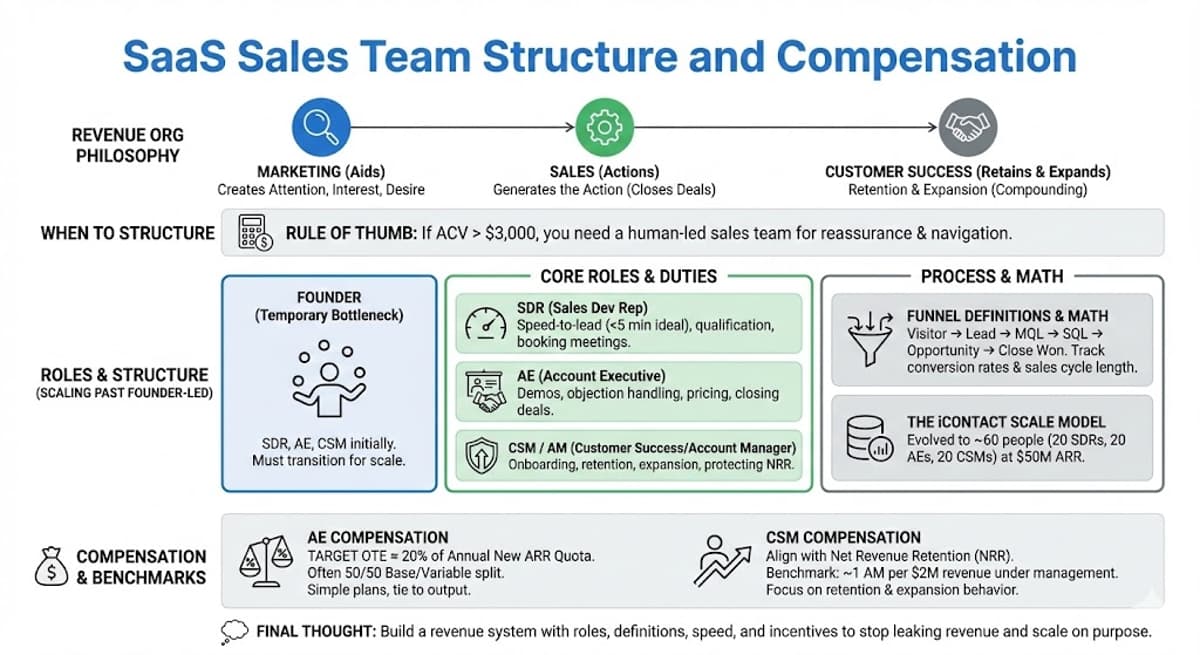
In the SaaS landscape, marketing can generate abundant inbound interest, but without a disciplined sales motion the pipeline stalls. Companies that wait until lead volume spikes before formalizing a sales organization often see diminishing returns. The rule of thumb—deploy a sales team once average contract value (ACV) tops $3,000—helps ensure that prospects receive the human guidance needed for complex buying cycles, while still preserving the efficiency of product‑led growth for smaller deals. This threshold aligns resource allocation with revenue potential, preventing founders from becoming bottlenecks and allowing the organization to scale beyond founder‑led calls.
Speed to lead is another critical lever. Research and field experience show that responding within five minutes dramatically improves conversion rates, yet most B2B SaaS teams lag behind an hour. Implementing multi‑channel, automated outreach that hands off to SDRs instantly preserves lead momentum and reduces cost‑per‑acquisition. Coupled with a rigorously defined funnel—visitor, lead, MQL, SQL, opportunity, close—companies gain the math needed to evaluate each stage, forecast ARR, and justify spend on paid acquisition versus sales headcount.
Compensation design ties the entire system together. Aligning account executives' on‑target earnings (OTE) to roughly 20% of the ARR they generate creates a direct link between pay and performance, simplifying quota setting and avoiding over‑complicated plans. Similarly, customer success managers should be measured on net revenue retention (NRR) and staffed at a ratio of one manager per $2 million of revenue under management, turning post‑sale activities into a growth engine rather than a cost center. By standardizing roles, response times, funnel definitions, and incentive structures, SaaS firms convert marketing momentum into sustainable, compounding revenue.
SaaS Sales Team Structure and Compensation
0
Comments
Want to join the conversation?
Loading comments...