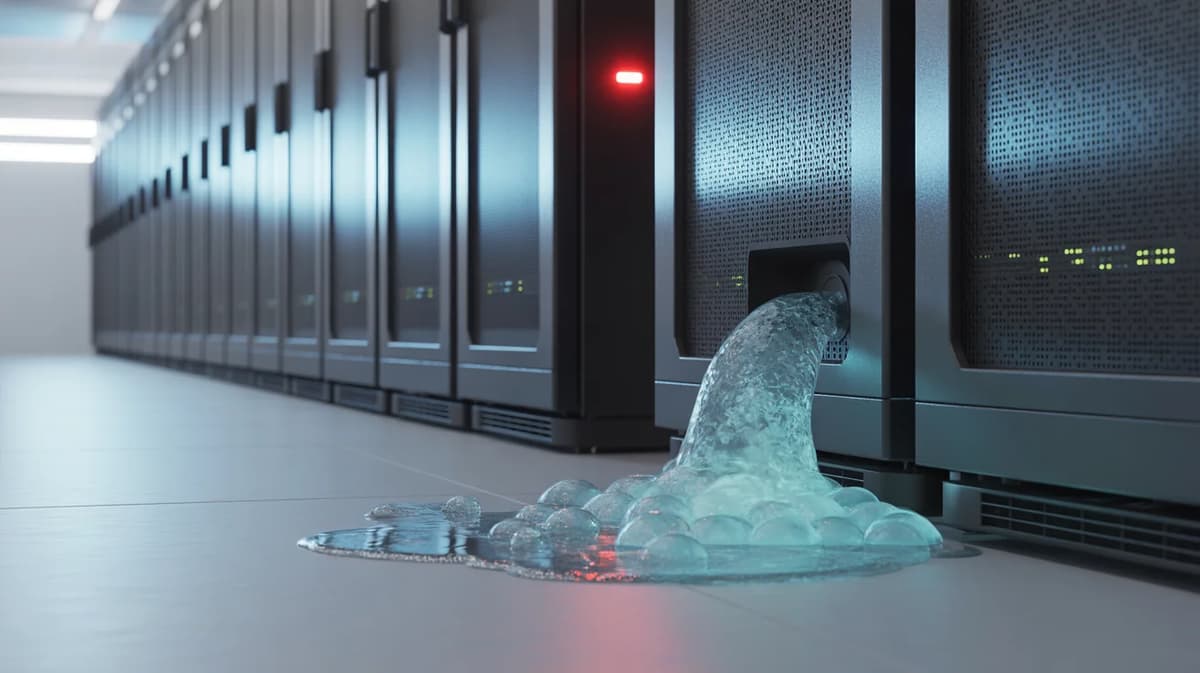
That's What I Call a Dip - World's Largest Derivatives Exchange Shut Down by Embarrassing Data Center Cooling Issue
•December 3, 2025
0
Companies Mentioned

Why It Matters
The incident exposes how a single data‑center infrastructure fault can disrupt global derivatives trading, underscoring the critical need for robust resiliency and redundancy in financial technology operations.
Key Takeaways
- •CME cooling failure halted global electronic trading
- •BrokerTec US/EU resumed quickly; others stayed offline
- •Temporary chillers restored limited operations
- •Asian, European markets faced greatest disruption
- •Incident highlights data‑center resilience risks for exchanges
Pulse Analysis
The CME outage illustrates a growing vulnerability in the financial sector: reliance on centralized data‑center infrastructure. While exchanges have long invested in high‑speed networks and low‑latency matching engines, physical plant failures—such as cooling system breakdowns—can cascade into market-wide halts. In this case, a malfunction at a CyrusOne facility forced CME to suspend trading across most product classes, revealing that even the most sophisticated electronic venues remain dependent on basic environmental controls. Industry analysts now argue that diversification of data‑center locations and the adoption of edge‑computing nodes could mitigate such single‑point failures.
Beyond the immediate trading disruption, the incident has broader implications for risk management and regulatory oversight. Regulators monitor market continuity metrics, and prolonged outages can trigger circuit‑breaker mechanisms, affect price discovery, and erode investor confidence. CME’s rapid restoration of BrokerTec US and EU services demonstrates the value of segmented architecture, where critical liquidity pools can be insulated from broader system failures. However, the prolonged downtime of other platforms suggests that existing redundancy plans may not be uniformly applied across all asset classes, prompting a reassessment of business‑continuity strategies.
Looking forward, the CME cooling failure may accelerate investment in resilient infrastructure, including redundant cooling systems, predictive maintenance powered by AI, and geographically dispersed disaster‑recovery sites. Financial firms are likely to demand higher service‑level agreements that explicitly address environmental risks. As the market increasingly embraces cloud‑native solutions, hybrid models that blend on‑premise data‑centers with cloud resources could provide the flexibility needed to sustain continuous trading even when physical plant issues arise. The episode serves as a cautionary tale: robust digital trading platforms must be matched by equally robust physical foundations.
That's what I call a dip - world's largest derivatives exchange shut down by embarrassing data center cooling issue
0
Comments
Want to join the conversation?
Loading comments...