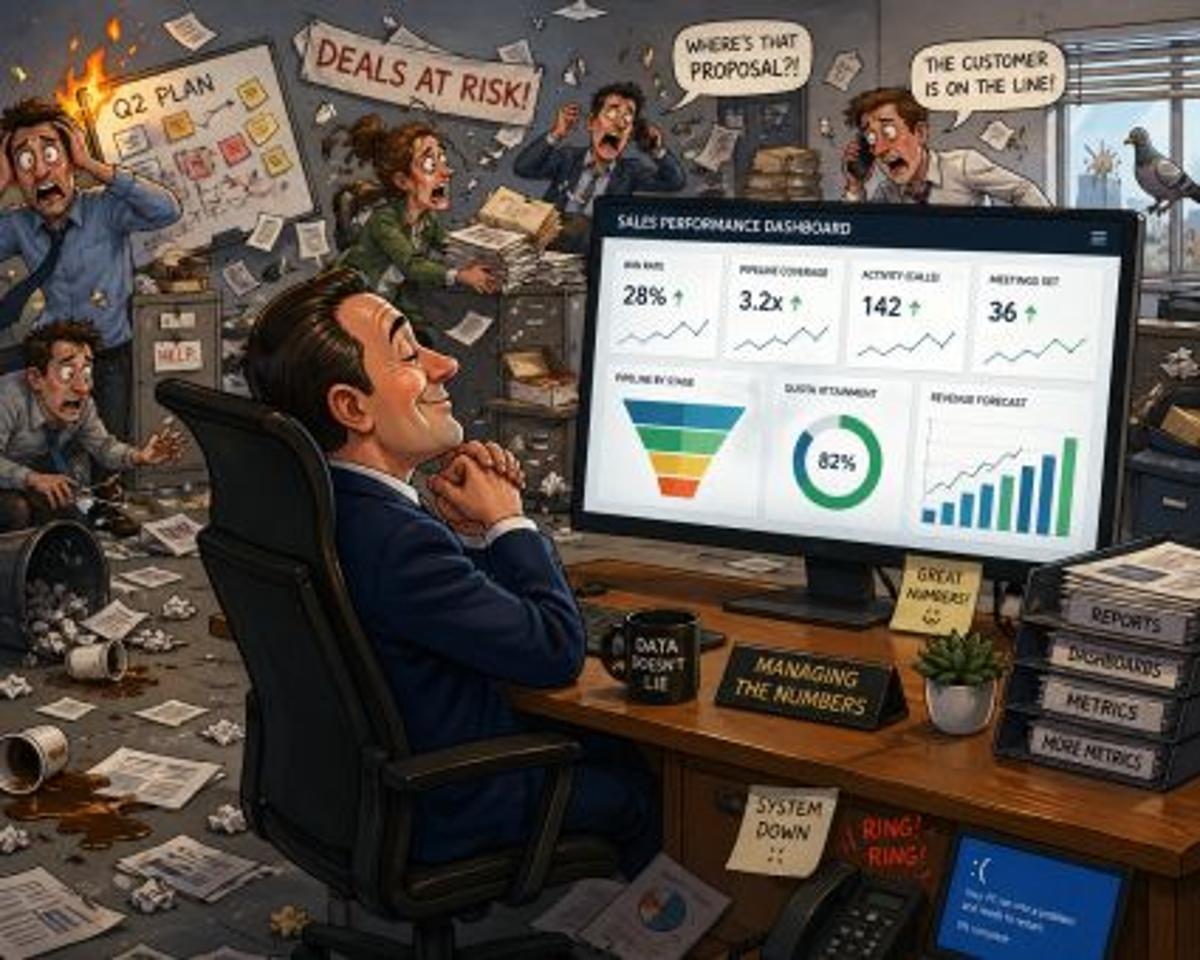
Managing The Number, Missing The Cause
Key Takeaways
- •Metrics show outcomes, not root causes
- •AI dashboards increase data volume but can diminish judgment
- •Managers must turn metric changes into investigative questions
- •Over‑reliance on automated recommendations weakens coaching skills
- •Effective leadership blends metric insight with human context
Pulse Analysis
In many revenue‑focused organizations, a dip in win rates or a shortfall in pipeline coverage triggers an immediate scramble to hit the numbers. Managers often respond by increasing call volume or tightening quotas, assuming the metric itself is the problem. This reactive stance overlooks the cascade of decisions, market shifts, skill gaps, and process flaws that actually drive the numbers. By treating the dashboard as the sole source of truth, leaders miss the nuanced conversations needed to diagnose why customers are buying less or deals are stalling, ultimately compromising long‑term growth.
Artificial intelligence promises smarter dashboards—continuous alerts, granular slices of data, and auto‑generated narratives that explain each movement. While the technology delivers unprecedented visibility, it also creates a paradox: the more insights are handed to managers, the less they engage in hypothesis‑building. When an AI system flags a declining win rate and suggests a specific coaching intervention, the manager’s critical thinking is sidestepped. Over time, this reliance erodes the muscle of metric interpretation, turning skilled coaches into dashboard operators who react to signals without understanding the underlying business dynamics.
The antidote is a disciplined posture that treats every metric shift as a starting point for inquiry. Leaders should ask, “What changed in the customer’s buying process? Did competition introduce a new solution? Are our salespeople executing a robust deal strategy?” AI‑generated explanations become one hypothesis among many, to be validated through direct deal reviews, customer conversations, and frontline observations. By re‑embedding human judgment into the analytics loop, organizations preserve the strategic agility needed to adapt to market volatility while still benefiting from AI’s data‑driven clarity.
Managing The Number, Missing The Cause
Comments
Want to join the conversation?