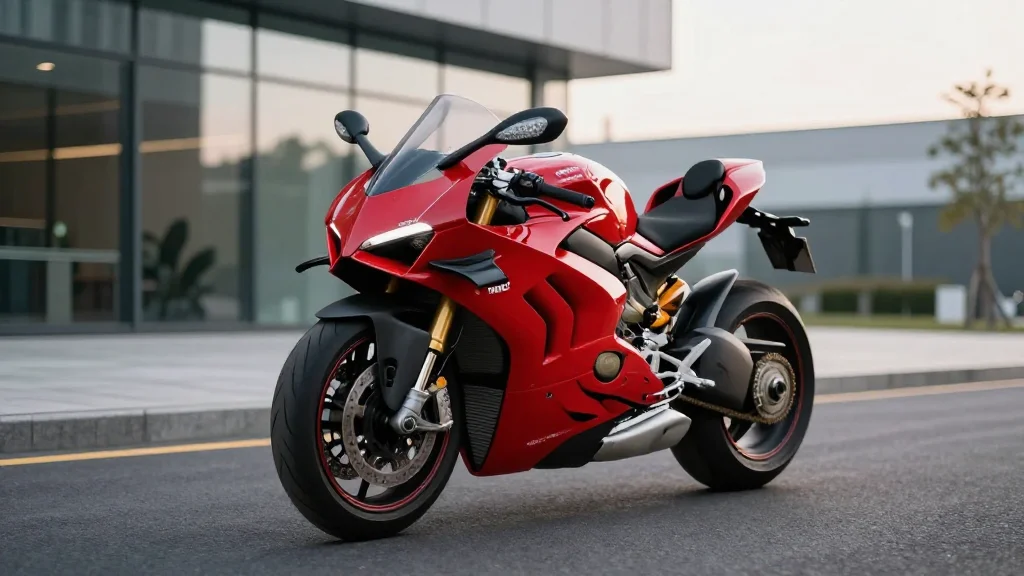
Ducati NA CEO Attributes Rise to Sales Roots and Strategic Moves

Why It Matters
Chinnock’s trajectory illustrates how internal mobility and cross‑industry experience can sharpen sales leadership in premium‑goods companies. By grounding his strategy in a sales‑manager mindset, he ensures that every growth initiative is filtered through the lens of customer acquisition and dealer profitability. His willingness to reset his career path demonstrates that even senior executives benefit from fresh perspectives, a lesson that resonates across B2B and B2C firms seeking to stay competitive in fast‑changing markets. For the broader sales community, the story underscores three actionable takeaways: set a clear multi‑year vision, seek deliberate career detours to broaden skill sets, and institutionalize a culture of continuous role rotation to prevent complacency. As Ducati pushes toward a $1.2 billion revenue target, these principles could become a template for other luxury and performance brands navigating similar sales‑centric challenges.
Key Takeaways
- •Jason Chinnock joined Ducati as a sales manager in 2004 and became North America CEO in 2016.
- •He spent 2013‑2015 at Lamborghini, gaining cross‑industry luxury experience.
- •Ducati sold about 55,000 motorcycles worldwide in 2024, generating €1 billion (~$1.173 billion).
- •Motorcycle prices in the U.S. start above $10,000, with top models exceeding $40,000.
- •Chinnock’s leadership mantra: change roles before comfort sets in to stay challenged.
Pulse Analysis
Chinnock’s rise is a textbook case of leveraging a sales‑first pedigree to steer a premium brand through turbulent macro conditions. Historically, luxury manufacturers have promoted engineers or product chiefs to the top, but Ducati’s choice reflects a shift toward revenue‑centric leadership. By embedding a sales‑manager’s empathy for dealer margins and consumer passion, the company can better align product development with market demand, a crucial advantage as it eyes electric‑motorcycle expansion.
The Lamborghini interlude is equally significant. Cross‑industry stints are rare among senior executives in the motorcycle sector, yet they provide a sandbox for testing brand positioning, high‑performance marketing, and global supply‑chain tactics. Chinnock’s admission that he “hit the reset button” suggests a deliberate shedding of legacy biases, enabling Ducati to adopt best practices from the super‑car arena—such as limited‑edition drops and experiential retail—that can invigorate motorcycle sales.
Finally, his personal rule to avoid stagnation mirrors a broader industry trend: the rise of “career agility” as a competitive lever. Companies that institutionalize role rotation, especially between sales, product, and operations, are better equipped to anticipate market shifts, from tariff changes to post‑pandemic consumer behavior. Ducati’s continued growth will likely hinge on how effectively it translates Chinnock’s philosophy into systematic talent development, ensuring that the next generation of leaders inherits the same blend of sales acuity and strategic daring.
Ducati NA CEO Attributes Rise to Sales Roots and Strategic Moves
Comments
Want to join the conversation?
Loading comments...