How to Use Close Forms with Workflows (and Never Miss a Lead Again)
•February 17, 2026
0
Why It Matters
By eliminating manual routing and delays, companies can respond to leads faster, which directly lifts conversion rates and revenue potential. The solution scales with lead volume without adding headcount.
Key Takeaways
- •Instant lead creation eliminates manual data entry
- •Workflows assign owners and tasks within minutes
- •Automated Slack alerts keep reps informed instantly
- •Standardized status improves pipeline reporting
- •Faster response boosts conversion rates
Pulse Analysis
Inbound lead generation has become a cornerstone of modern B2B sales, yet many organizations still stumble on the critical hand‑off between marketing capture and sales outreach. Studies show that every minute of delay can erode a prospect’s interest, with response times beyond five minutes slashing conversion odds dramatically. Traditional setups rely on separate form tools, manual data imports, and human memory to assign leads—processes ripe for error and latency. Automation platforms promise speed, but integration complexity often stalls adoption, leaving teams with fragmented workflows that fail to deliver on the promise of real‑time engagement.
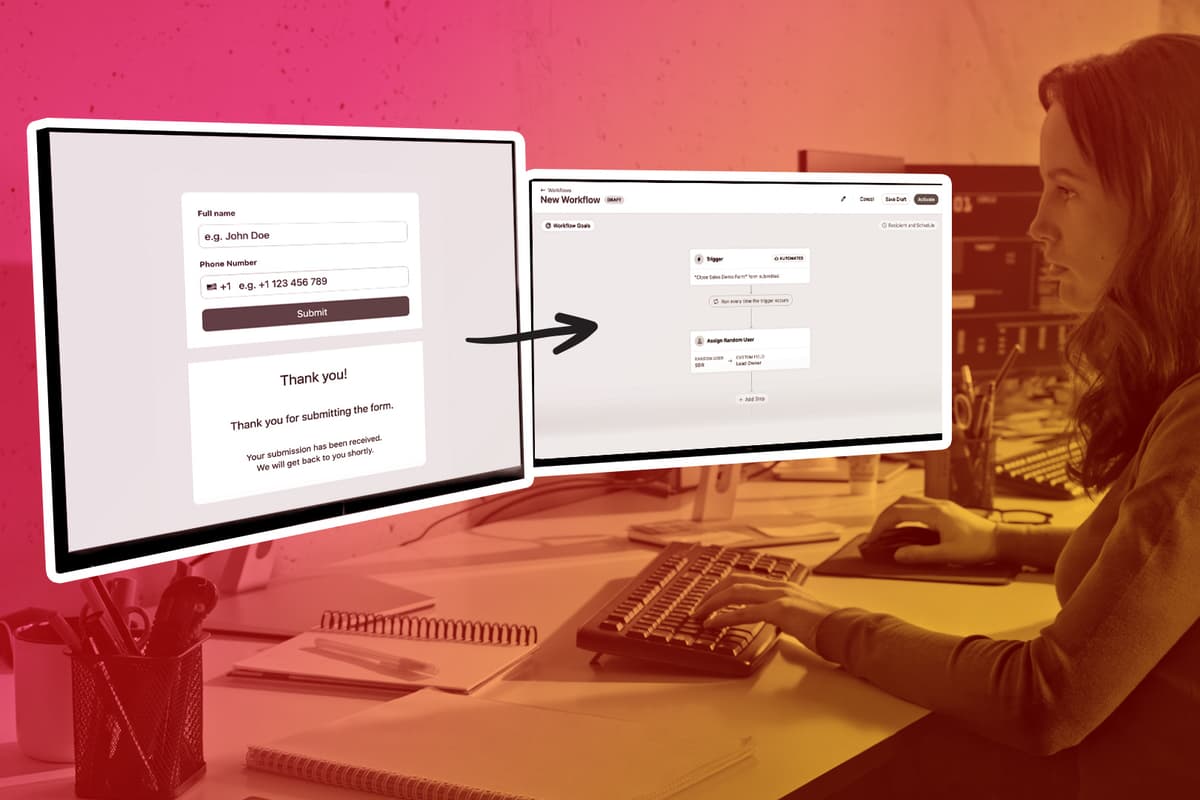
Close addresses these pain points by bundling form capture directly into its CRM and exposing a native "Form Submitted" trigger for Workflows. As soon as a visitor fills out a Close Form, the system either creates a new lead or enriches an existing record, then instantly assigns ownership based on routing rules, sets a uniform status, and generates a call task slated for the next five minutes. A Slack notification fans the fire, alerting the assigned SDR without requiring them to monitor a dashboard. This tight loop eliminates duplicate data entry, guarantees every lead has a clear owner, and standardizes pipeline entry, which in turn sharpens reporting and forecasting accuracy.
The broader impact extends beyond speed. Automated routing and task creation free sales managers from micromanaging lead distribution, allowing them to focus on coaching and strategy. Teams that adopt Close Forms + Workflows report higher lead‑to‑opportunity ratios and lower churn in the early sales stages, because prospects experience consistent, timely contact. However, success hinges on keeping routing logic simple, pairing assignment with actionable tasks, and avoiding delayed follow‑up windows. Companies can test the workflow in a sandbox, iterate on filters, and scale as volume grows, all while leveraging Close’s free trial to validate ROI before committing. In a market where every second counts, this integrated automation becomes a competitive differentiator for inbound sales operations.
How to Use Close Forms with Workflows (and Never Miss a Lead Again)
0
Comments
Want to join the conversation?
Loading comments...