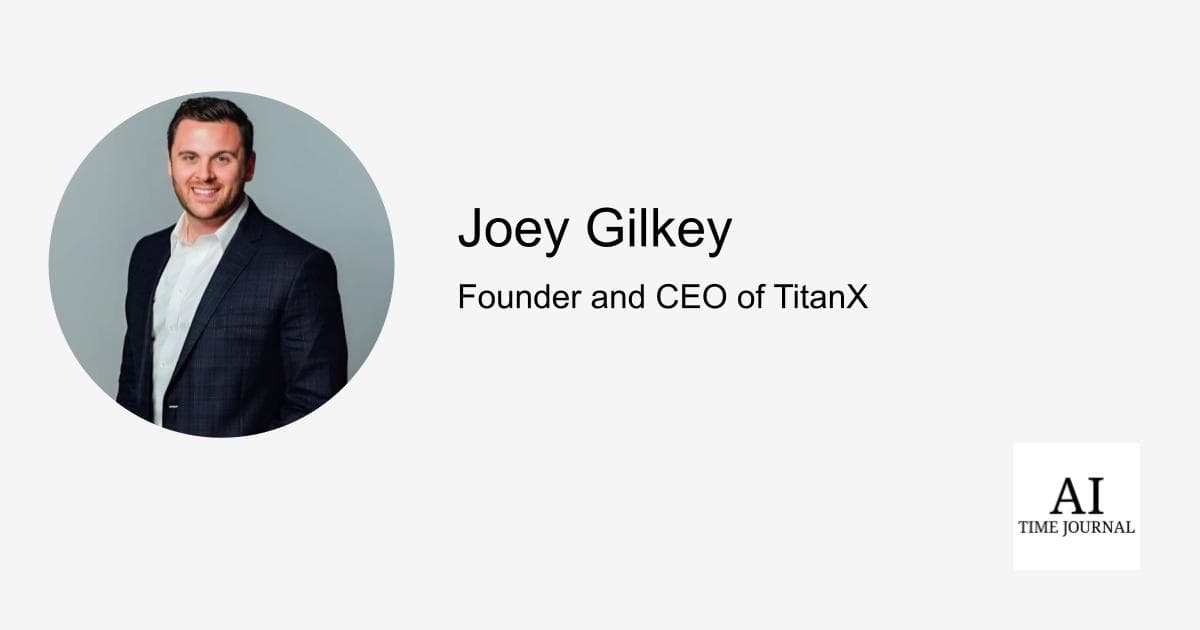
Joey Gilkey — Rebuilding Outbound Sales Around Phone Intent and Predictive Precision
•February 24, 2026
0
Why It Matters
Predictive phone intent transforms outbound economics, delivering far more conversations per rep and reshaping the go‑to‑market cost structure. Companies that adopt it gain scalable efficiency while avoiding market fatigue from high‑volume spam tactics.
Key Takeaways
- •Phone Intent predicts answer likelihood, boosts connect rates
- •Shift from volume to precision reduces dialer waste
- •AI centralizes email/LinkedIn, reps focus on phone conversations
- •Integrated prediction and dialing improves unit economics, scaling
- •High connect rates improve morale, forecasting, pipeline quality
Pulse Analysis
The rise of intent‑driven outbound sales reflects a broader market fatigue with volume‑based outreach. As email inboxes overflow and LinkedIn algorithms throttle mass messaging, the phone remains the only real‑time, human channel. Platforms like TitanX’s Phone Intent™ aggregate disparate data—call‑answer propensity, number validity, and recent engagement—to create a behavioral profile for each prospect. This predictive layer acts as a decision engine, directing reps to the 20 % of contacts most likely to answer, while routing the remaining 80 % through automated multichannel sequences. The result is a dramatic lift in connect rates, often reaching 20‑30 % versus the industry norm of under 3 %.
From an economics standpoint, the shift reshapes SDR unit economics. Fewer dials per conversation mean lower operational costs and higher revenue per headcount. Companies like Vanta have reported doubling attainment without adding reps, illustrating how precision can replace the traditional “more dials equals more meetings” mantra. Moreover, by centralizing email and LinkedIn outreach under marketing or AI‑driven automation, organizations free reps to focus on high‑value phone interactions, improving skill development, morale, and forecasting accuracy. The metrics transition from vanity counts—dials per day—to outcome‑based indicators such as conversations per hour and pipeline generated per rep.
Looking ahead, the division of labor between AI and humans will solidify. Text‑based channels will become fully autonomous, with AI handling composition, sequencing, and delivery at scale. The phone, however, will remain a human‑centric touchpoint, with AI’s role confined to the pre‑call decision layer. Companies that integrate predictive intelligence with reliable dialing infrastructure—controlling both the "what" and the "how" of outreach—will build a sustainable, scalable outbound engine. Those clinging to high‑volume tactics risk burning through their addressable market, eroding brand perception, and falling behind a market that increasingly values precision, relevance, and genuine conversation.
Joey Gilkey — Rebuilding Outbound Sales Around Phone Intent and Predictive Precision
0
Comments
Want to join the conversation?
Loading comments...