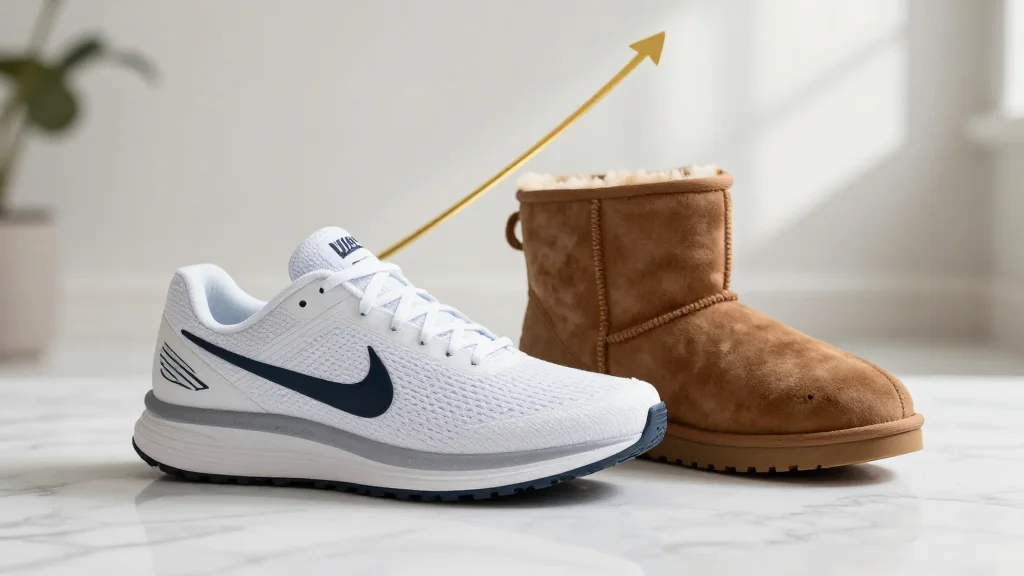
Nike Vs. Deckers Outdoor: Growth Gap and Valuation Clash in 2026

Companies Mentioned
Why It Matters
The Nike‑Deckers comparison spotlights a pivotal inflection point for consumer‑goods investors. Nike’s revenue contraction highlights how even market‑dominant brands can falter when macro pressures erode discretionary spending, while Deckers’ robust margin expansion demonstrates the upside potential of niche, premium‑priced portfolios. The analysis also signals how valuation differentials—forward P/E and price‑to‑sales—may drive capital toward smaller, higher‑margin players as investors seek earnings growth in a volatile environment. Beyond individual stocks, the debate underscores a sector‑wide rebalancing. Companies with agile supply chains, strong cash positions, and focused brand strategies may capture market share from legacy players that are slower to adapt to inflationary pressures and shifting consumer preferences. This dynamic could reshape competitive dynamics in footwear and broader apparel categories for years to come.
Key Takeaways
- •Deckers Outdoor FY 2025 revenue rose 16% to $5 billion, net margin 19.4%
- •Nike FY 2025 revenue fell 9.8% to $46.3 billion, net margin 7%
- •Deckers’ debt‑to‑equity 0.1 and current ratio 3.7 vs Nike’s 0.8 and 2.2
- •85% of S&P 500 beat EPS estimates, while overall earnings rose 28% YoY
- •Analysts will watch Nike Q2 2026 (Aug) and Deckers Q2 2026 (Sept) for growth trends
Pulse Analysis
Nike’s recent earnings dip reflects a confluence of macro‑economic headwinds—higher energy costs, lingering inflation, and a cautious consumer base—combined with structural challenges in its supply chain. The company’s heavy reliance on contract manufacturers in Vietnam and China makes it vulnerable to geopolitical disruptions, a risk that has become more pronounced as trade tensions and labor cost escalations rise. While Nike’s brand equity remains unmatched, its margin compression suggests that pricing power is waning, especially in core markets like North America and Greater China where consumers are tightening belts.
Deckers Outdoor, by contrast, has leveraged its premium positioning to extract higher margins. The UGG and HOKA lines command price premiums that have insulated the firm from some inflationary pressures. Its low leverage (debt‑to‑equity 0.1) and strong liquidity (current ratio 3.7) give it the capacity to invest in product innovation and expand direct‑to‑consumer channels without over‑extending its balance sheet. However, the company’s seasonality and dependence on sheepskin sourced from Australia introduce weather‑related and supply‑chain risks that could affect quarterly results.
From an investor standpoint, the valuation gap is compelling. Deckers trades at a lower forward P/E, implying that the market is pricing in slower earnings growth than the company’s fundamentals support. Nike’s lower price‑to‑sales multiple reflects its scale but may mask underlying earnings volatility. As the broader S&P 500 continues to post strong earnings beats—85% surpassing EPS estimates—capital may increasingly flow toward high‑margin, lower‑debt players like Deckers that can deliver consistent earnings growth in a tightening consumer environment. The upcoming earnings windows will be critical in confirming whether Deckers can sustain its momentum and whether Nike can arrest its revenue decline, shaping the allocation decisions of growth‑oriented funds for the remainder of 2026.
Nike vs. Deckers Outdoor: Growth Gap and Valuation Clash in 2026
Comments
Want to join the conversation?
Loading comments...