Rivian Unveils In‑House Silicon for R2 SUVs, Boosting EV Sales Pitch

Companies Mentioned
Why It Matters
Rivian’s decision to design and fabricate its own AI chips reshapes the competitive dynamics of the EV market. By controlling the hardware stack, the company can promise faster, more reliable autonomous features while potentially reducing per‑vehicle costs—a combination that strengthens its value proposition to consumers and investors alike. The move also signals a broader industry trend toward vertical integration, where automakers seek to own critical technology components to avoid supply‑chain disruptions and to create proprietary differentiation. For the sales function, the proprietary silicon provides a concrete narrative hook: a vehicle that can evolve through software without waiting on external chip vendors. This narrative can translate into higher reservation conversion rates, premium pricing for advanced driver‑assist packages, and new revenue streams from over‑the‑air feature subscriptions. As EV buyers become more tech‑savvy, the ability to market a truly integrated AI platform could become a decisive factor in purchase decisions.
Key Takeaways
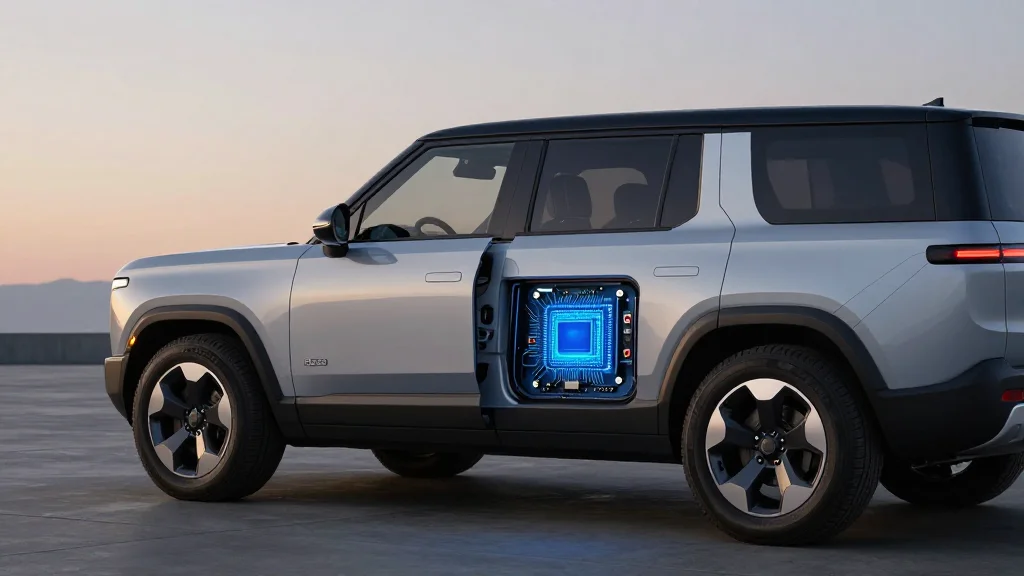
- •Rivian unveiled a Gen 3 Autonomy Computer built on in‑house silicon for its R2 SUVs.
- •Vidya Rajagopalan, SVP of electrical hardware, highlighted vertical integration and efficiency gains.
- •The silicon development took place in a repurposed Palo Alto school, evolving from a skunkworks team.
- •Rivian invested “millions of dollars” in the stealth chip project, though exact figures were not disclosed.
- •R2 SUVs with the new chip are slated for release later this year, promising hands‑free driving in defined scenarios.
Pulse Analysis
Rivian’s silicon push is more than a technical milestone; it is a strategic sales lever. Historically, automakers have relied on external semiconductor partners, which can create bottlenecks and dilute brand differentiation. By internalizing chip design, Rivian can claim a unique selling point that resonates with a market increasingly focused on software-defined vehicle experiences. This mirrors the broader shift seen in consumer electronics, where companies like Apple have turned hardware control into a premium brand attribute.
From a financial perspective, the upfront capital outlay—estimated in the low‑single‑digit millions—could be amortized over the lifecycle of multiple vehicle platforms. If the Gen 3 Autonomy Computer delivers the promised efficiency gains, Rivian may see a reduction in per‑vehicle component costs, improving gross margins on the R2 line. Moreover, the ability to push OTA updates without third‑party constraints opens the door to subscription‑based features, a revenue model that could offset the initial investment and provide a recurring income stream.
Competitors will likely respond by accelerating their own silicon initiatives or by deepening partnerships with chip makers. However, Rivian’s early‑stage integration gives it a head start in establishing a proprietary AI ecosystem. The success of this strategy will hinge on the reliability of the silicon in real‑world conditions and the company’s ability to translate technical advantages into compelling sales narratives that convince both dealers and end‑consumers.
Rivian Unveils In‑House Silicon for R2 SUVs, Boosting EV Sales Pitch
Comments
Want to join the conversation?
Loading comments...