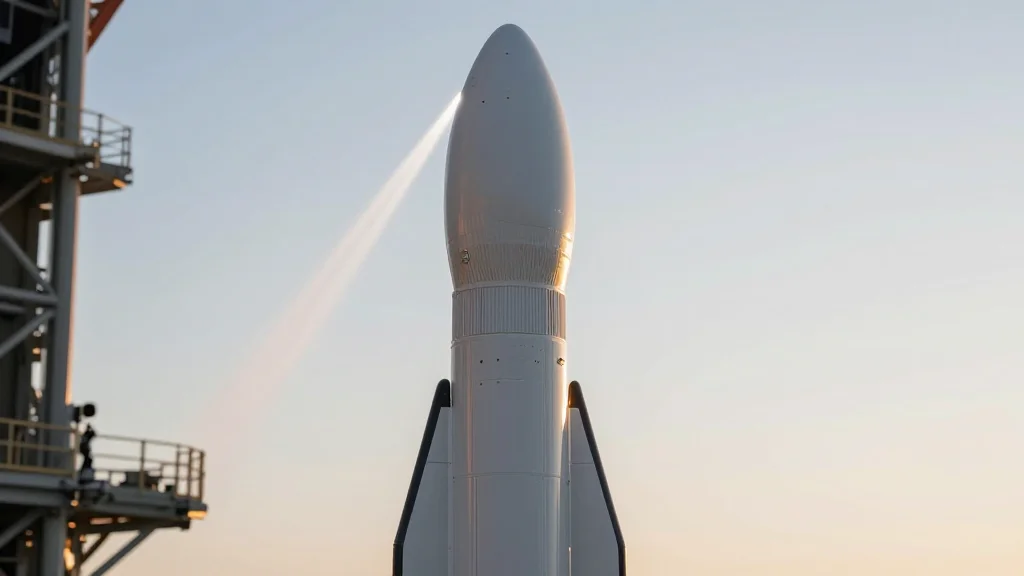
Rocket Lab’s $1.85 B Backlog Fuels 28.5% Stock Surge, Showcasing Sales Strength

Companies Mentioned
Why It Matters
The backlog surge demonstrates that commercial demand for reliable, low‑cost launch services is outpacing supply, reshaping the economics of the space industry. For sales teams, Rocket Lab’s bundled‑service approach offers a template for turning technical capability into multi‑year contracts that stabilize revenue streams. Beyond Rocket Lab, the episode highlights a broader shift: investors are rewarding companies that can prove end‑to‑end execution, not just technology promise. As satellite constellations proliferate and defense budgets prioritize rapid deployment, firms that can lock in large, recurring contracts will command premium valuations, driving a new era of sales‑centric growth in the aerospace sector.
Key Takeaways
- •Rocket Lab’s backlog grew to $1.85 billion, the highest on record
- •Shares jumped 28.5% in April after the backlog announcement
- •Electron launches in April put the company on pace for a record year
- •Analysts raised price targets, citing strong sales execution and upcoming SpaceX IPO
- •Neutron test flight slated for Q4 2026 could add $50 million+ per launch
Pulse Analysis
Rocket Lab’s recent stock rally is less about a single news flash and more about the cumulative effect of disciplined sales execution in a capital‑intensive industry. By packaging launch services, hardware, and mission support into a single contract, the company has reduced friction for customers and created a predictable revenue stream that investors can model. This approach mirrors trends in other high‑tech B2B markets where solution‑selling beats component‑selling, and it explains why Wall Street quickly upgraded price targets after the backlog disclosure.
Historically, space launch firms have struggled with revenue volatility tied to launch cadence. Rocket Lab’s ability to sustain a pipeline that now covers multiple years of launch capacity is a competitive moat that differentiates it from newer entrants like Astra, which still rely on ad‑hoc contracts. The Neutron program adds a strategic layer: if the larger rocket can deliver on its promised payload capacity, Rocket Lab will move up the value chain, attracting higher‑margin defense and deep‑space customers. However, the transition also introduces execution risk; a failed test could erode the confidence that underpins the current backlog valuation.
Going forward, the market will likely reward firms that can turn backlog into cash without over‑leveraging. Rocket Lab’s $600 million revenue base in 2025, combined with a backlog that effectively triples its near‑term cash inflow, positions it to fund Neutron development while maintaining a healthy balance sheet. The key question for sales leaders will be whether the company can replicate its bundled‑service model at the larger scale required for Neutron, and whether it can keep the backlog filled as competition intensifies. If it does, the sales‑driven growth story could sustain the stock’s premium valuation well beyond the SpaceX IPO window.
Rocket Lab’s $1.85 B Backlog Fuels 28.5% Stock Surge, Showcasing Sales Strength
Comments
Want to join the conversation?
Loading comments...