Serve Robotics Posts 578% Revenue Surge as Autonomous Delivery Bots Scale

Companies Mentioned
Why It Matters
Serve Robotics’ explosive revenue growth illustrates how autonomous hardware can quickly translate into top‑line sales when paired with a clear value proposition—drastically lowering last‑mile delivery costs. The company’s success validates the broader hypothesis that physical AI can unlock new revenue streams across disparate sectors, from food delivery to hospital logistics. However, the stark contrast between soaring sales and deep operating losses highlights a classic scaling dilemma for capital‑intensive hardware firms: growth must be funded, often at the expense of short‑term profitability, putting pressure on investors to tolerate dilution and volatility. The rollout also raises societal questions about labor displacement and urban livability. While robots promise cost savings and environmental benefits, they generate friction with pedestrians, small‑business owners, and workers who fear job loss. Policymakers and city planners will need to balance innovation incentives with public‑space management, potentially shaping the regulatory environment for autonomous delivery fleets nationwide.
Key Takeaways
- •Serve Robotics Q1 2026 revenue rose 578% YoY to $3 million.
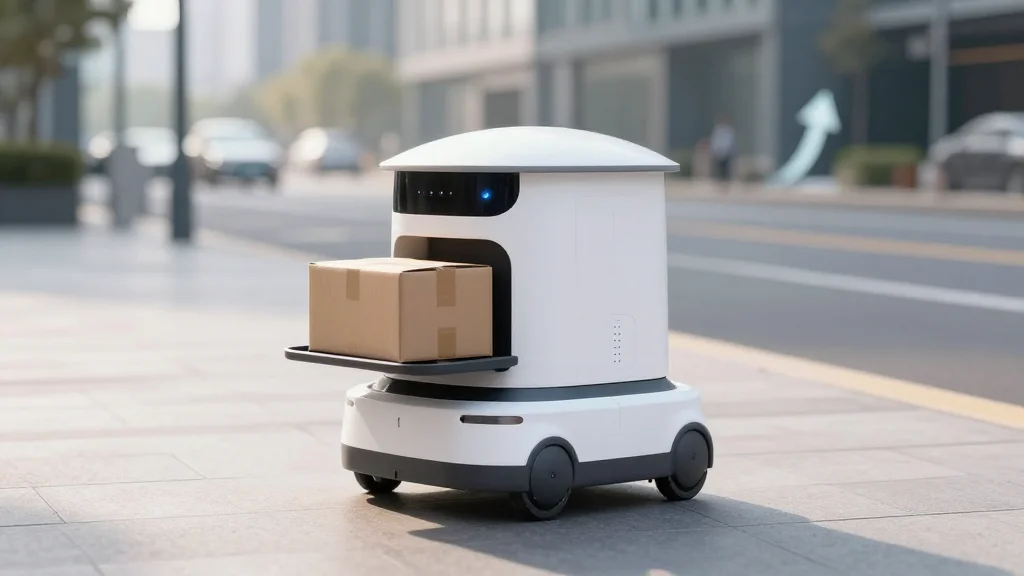
- •Gen3 autonomous robots now operate in 20 U.S. cities with ~2,000 units deployed.
- •Acquisition of Diligent added Moxi hospital robot, doubling geographic reach to 44 cities.
- •Company projects $26 million revenue for full‑year 2026, a near‑tenfold increase from 2025.
- •Operating loss of $49 million in Q1; cash balance $197.4 million supports runway through year‑end.
Pulse Analysis
Serve Robotics’ Q1 performance is a textbook case of a hardware‑software hybrid leveraging a compelling unit economics story to drive sales. By positioning its Gen3 robot as a $1‑per‑delivery solution, the firm taps into the $450 billion last‑mile logistics market, a segment where incumbents like Uber Eats and DoorDash are eager to shave margins. The Diligent acquisition was a strategic masterstroke: it not only added a revenue line from the healthcare sector but also broadened the company’s addressable market, mitigating the risk of over‑reliance on food‑delivery contracts.
Nevertheless, the financials reveal a classic growth‑at‑all‑costs playbook. With operating expenses outpacing revenue by more than tenfold, Serve will need fresh capital to sustain fleet expansion and R&D. The high forward P/S ratio suggests the market is already pricing in aggressive growth, leaving limited upside unless the firm can demonstrate a clear path to breakeven. Investors will likely demand a roadmap that includes either a strategic partnership with a logistics giant or a secondary equity raise that dilutes current shareholders but injects the cash needed for global rollout.
From a competitive standpoint, Serve is not alone. Companies like SoftBank‑backed Roze and Nvidia‑enabled physical AI startups are racing to dominate the sensor‑driven robotics space. Serve’s advantage lies in its early mover status in autonomous sidewalk delivery and its integration with major platforms (DoorDash, Uber Eats). However, regulatory pushback in cities such as Glendale and Chicago signals that municipal approval will become a critical moat. Firms that can navigate local ordinances while scaling will capture the lion’s share of the market, and Serve’s ability to secure city permits will be a decisive factor in its long‑term sales trajectory.
Serve Robotics Posts 578% Revenue Surge as Autonomous Delivery Bots Scale
Comments
Want to join the conversation?
Loading comments...