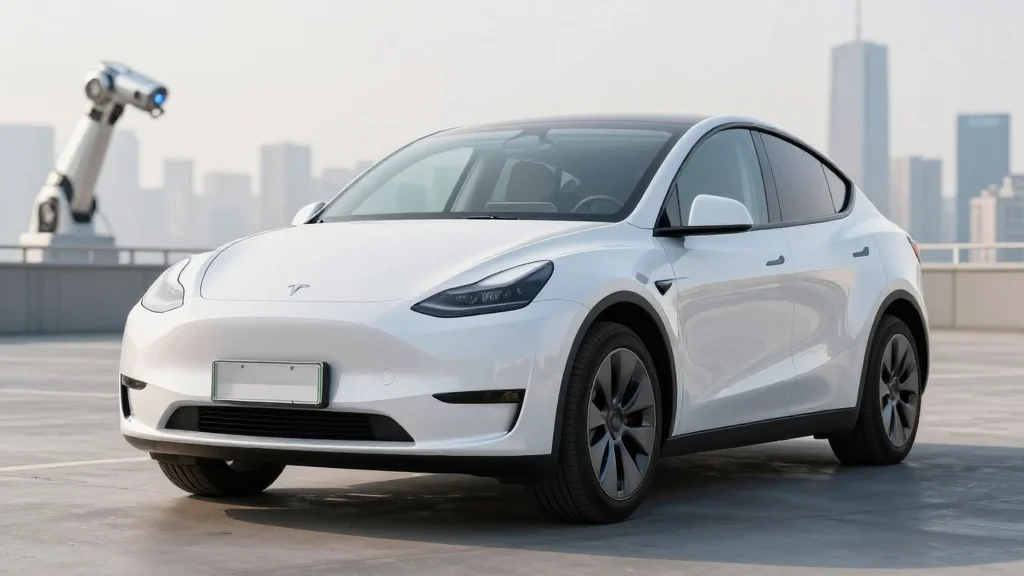
Tesla Hikes Model Y Price as It Pivots to Autonomy and Robots, Reshaping Sales Strategy

Companies Mentioned
Why It Matters
Tesla’s price increase on its core Model Y signals a decisive shift from a pure vehicle‑sales model to a hybrid of hardware, software and robotics revenue. By leveraging its dominant brand to extract higher margins, the company is testing whether its massive cash burn can be offset by recurring income from Full Self‑Driving subscriptions and future robot sales. If the strategy succeeds, it could rewrite the economics of the auto industry, prompting legacy manufacturers to accelerate their own software‑first sales models. The move also puts pressure on the broader EV market, where price sensitivity remains high. Competitors will need to decide whether to follow Tesla’s lead—raising prices to fund tech investments—or double down on cost leadership to capture market share. The outcome will shape dealer networks, financing structures, and the overall pace of autonomous‑vehicle adoption over the next decade.
Key Takeaways
- •Tesla raised Model Y premium AWD and RWD prices by $1,000 and Performance trim by $500 in the U.S.
- •Automotive sales still account for about 73% of Tesla’s $69.5 billion 2025 revenue.
- •Full Self‑Driving subscriptions cover roughly 14% of Tesla’s fleet, about 1.28 million active users.
- •BNP Paribas analysts warned of a $7 billion cash burn and high stakes for robotaxi and Optimus projects.
- •Tesla plans to discontinue Model S/X production and repurpose capacity for Optimus humanoid robots.
Pulse Analysis
Tesla’s pricing maneuver is less about short‑term profit and more about financing a long‑term transformation. The company’s balance sheet shows a $7 billion cash burn, a figure that can only be sustained by scaling high‑margin software and robotics revenue. By nudging the Model Y price upward, Tesla extracts additional cash from its most price‑elastic segment while signaling to investors that it will not sacrifice cash flow for market share.
Historically, automakers have protected volume at the expense of margin, but Tesla’s hybrid model—selling cars, licensing FSD, and building Optimus—creates a diversified revenue stream. If the Full Self‑Driving subscription base grows beyond its current 14%, the recurring revenue could offset the declining automotive gross margin. However, the success of Optimus remains speculative; the market for humanoid robots is nascent, and achieving the 1 million‑unit target will require breakthroughs in cost, safety and regulatory approval.
Competitors are watching closely. Legacy OEMs that have invested heavily in EV platforms now face a strategic fork: double down on cost‑competitive EVs or accelerate software and autonomous‑driving development to match Tesla’s emerging revenue mix. The price hike may force a recalibration of dealer incentives and financing terms across the industry, as higher sticker prices could compress financing spreads and alter consumer purchasing behavior. In the next 12‑18 months, Tesla’s ability to convert higher‑priced vehicle sales into sustainable software and robot revenue will determine whether this pivot reshapes the sales playbook for the entire automotive sector.
Tesla hikes Model Y price as it pivots to autonomy and robots, reshaping sales strategy
Comments
Want to join the conversation?
Loading comments...