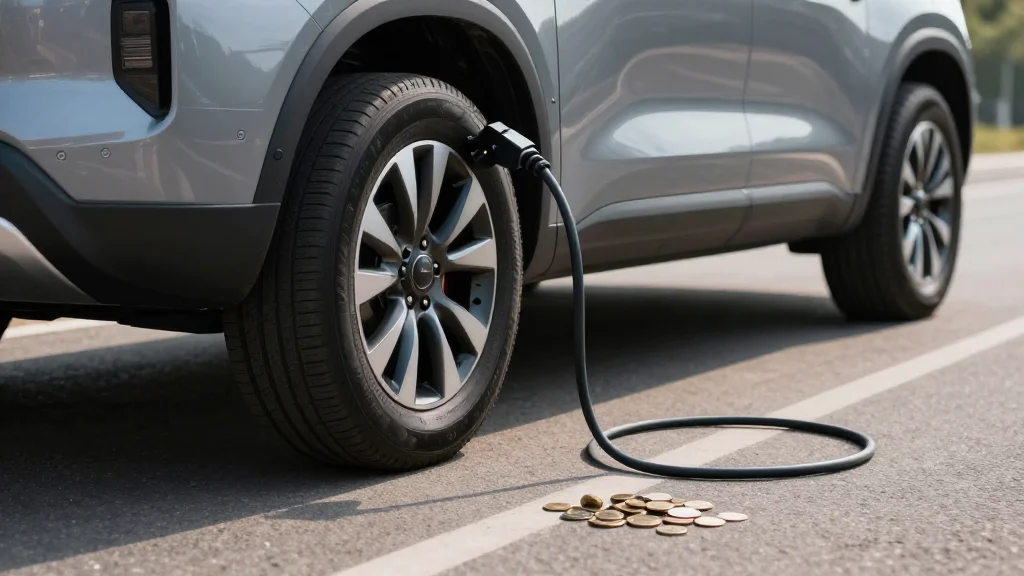
U.S. Electric‑truck Sales Plunge After Federal Tax Credit Repeal, Prompting State Rebate Race

Companies Mentioned
Why It Matters
The plunge in electric‑truck sales highlights the fragility of market adoption when policy levers are removed. For automakers, the loss of a federal credit compresses price elasticity, forcing a rethink of pricing, financing, and product rollout strategies. For dealers and fleet managers, the shift accelerates the need to source alternative incentives, such as state rebates or corporate sustainability budgets, to justify purchases. State‑level actions in California and Michigan illustrate a growing patchwork of localized support that could fragment the market. If successful, these programs may become templates for other jurisdictions, creating a new competitive landscape where regional policy, rather than national consensus, drives sales velocity. The outcome will shape inventory planning, dealer incentives, and the broader push toward decarbonizing freight.
Key Takeaways
- •U.S. electric‑truck sales dropped sharply after the repeal of federal tax credits.
- •California launched a $1 billion rebate program offering up to $120,000 per truck.
- •Michigan awarded a $5 million grant to Slate Auto for its electric pickup production.
- •Ohio began autonomous electric‑truck trials on a 166‑mile I‑70 corridor.
- •Dealers now rely on state incentives and financing deals to offset higher upfront costs.
Pulse Analysis
The abrupt removal of the federal tax credit has exposed a structural dependency in the electric‑truck market that many manufacturers underestimated. Historically, the credit acted as a price‑floor, allowing OEMs to price vehicles competitively against internal‑combustion rivals. Its disappearance compresses margins and forces a rapid shift toward cost‑cutting measures, such as larger battery cell orders and platform sharing across vehicle lines. Companies that have already invested in vertical integration—like Tesla with its Gigafactories—are better positioned to weather the shock, while legacy automakers may see a slowdown in their electrification timelines.
State interventions are now the de‑facto policy lever. California’s $1 billion fund, while sizable, targets a niche segment of medium‑ and heavy‑duty trucks, leaving the broader consumer pickup market still exposed. Michigan’s grant to Slate Auto signals a strategic bet on domestic manufacturing and job creation, but its impact will be limited to a single model and a relatively small production run. The real test will be whether these regional incentives can generate enough sales volume to sustain supply chains and keep battery manufacturers scaling. If they succeed, we could see a fragmented incentive landscape where manufacturers tailor models to the most lucrative state programs, potentially leading to a patchwork of vehicle specifications across the country.
Looking forward, the industry’s resilience will depend on two factors: the speed at which manufacturers can lower vehicle costs through economies of scale, and the political will to reinstate a federal incentive or replace it with a more durable, perhaps performance‑based, credit system. Until then, B2C sales teams will need to become adept at navigating a mosaic of state rebates, dealer discounts, and financing options to keep the electric‑truck pipeline flowing.
U.S. electric‑truck sales plunge after federal tax credit repeal, prompting state rebate race
Comments
Want to join the conversation?
Loading comments...