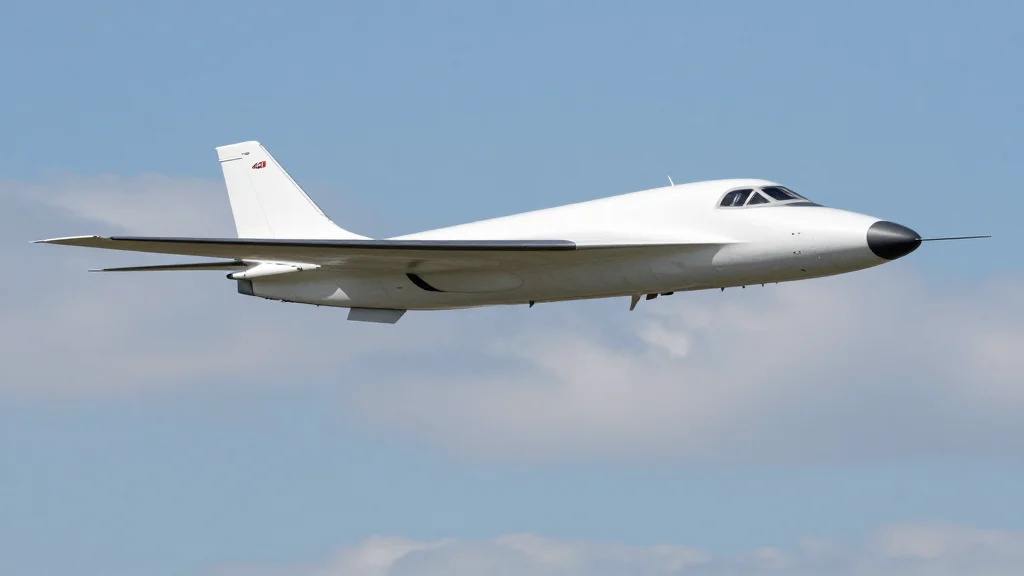
NASA Preps X‑59 Quiet Supersonic Plane for First Supersonic Flight in Early June

Companies Mentioned
Why It Matters
The X‑59’s upcoming supersonic flight is a pivotal proof‑of‑concept for low‑boom technology, which could resolve the long‑standing trade‑off between speed and community noise that ended the Concorde era. By demonstrating that a supersonic aircraft can meet stringent noise standards, NASA is providing a regulatory pathway that could unlock billions of dollars in commercial investment and reshape global air travel patterns. Beyond commercial aviation, the data gathered will inform future NASA missions that require high‑speed, low‑impact flight, such as rapid response transport for disaster relief or high‑altitude research platforms. The program also serves as a benchmark for how public agencies and private aerospace firms can collaborate on high‑risk, high‑reward technologies.
Key Takeaways
- •NASA schedules X‑59’s first supersonic flight for early June, targeting 630 mph at 43,000 ft.
- •Planned follow‑up runs will reach 925 mph (Mach 1.4) at 55,000 ft and 1,218 mph (Mach 1.6) at 60,000 ft.
- •A chase plane will accompany the X‑59 to mask its low‑boom signature during early testing.
- •Successful acoustic data could lead to FAA rule changes for low‑boom commercial jets.
- •The program positions NASA as a catalyst for a new generation of supersonic passenger aircraft.
Pulse Analysis
NASA’s Low‑Boom Flight Demonstration is more than a technical exercise; it is a strategic move to re‑open the supersonic market under a new regulatory framework. The Concorde’s demise was driven largely by community noise complaints and the resulting political pressure. By delivering empirical evidence that a supersonic aircraft can stay below the FAA’s 75 EPNdB (Effective Perceived Noise Decibel) threshold, the X‑59 could rewrite that narrative.
Historically, the commercial supersonic sector has been dominated by a handful of ambitious startups, each betting on a single aircraft design to capture market share. The X‑59’s data will provide a common baseline, reducing technical risk and allowing multiple firms to iterate on the same low‑boom concept. This could accelerate competition, drive down development costs, and encourage a broader ecosystem of suppliers.
Looking ahead, the timeline is critical. If NASA releases favorable acoustic results by late 2026, the FAA could begin drafting revised noise standards within the next two years. That would give companies like Boom Supersonic a clear regulatory target for their Overture jet, slated for certification in the early 2030s. Conversely, any setback—such as unexpected acoustic spikes or structural issues—could delay the entire industry’s roadmap, reinforcing the cautionary stance that has kept supersonic travel grounded for decades. The upcoming June flight therefore represents a high‑stakes inflection point for the future of fast, quiet air travel.
NASA Preps X‑59 Quiet Supersonic Plane for First Supersonic Flight in Early June
Comments
Want to join the conversation?
Loading comments...