The Current State of GPS Following OCX with Dr. Sean Gorman, CEO of Zephr.xyz.
In this episode, Dr. Sean Gorman, CEO of Zephyr, explains the fundamentals of GNSS, the differences between GPS jamming and spoofing, and why the U.S. Space Force’s Next Generation Operational Control System (OCX) – a $6‑$7 billion ground‑segment upgrade for GPS – was cancelled due to cost overruns and compatibility challenges. Gorman highlights how the aging 1990s‑era AEP ground stations limit further cybersecurity hardening and how emerging alternatives like Starlink’s LEO positioning and the upcoming Zona constellation could provide resilient, multi‑orbit solutions. He also discusses the geopolitical soft‑power stakes of GNSS dominance, noting China’s more modern system as a competitive pressure on the United States.

NAN123: How ION Meets the Out-of-This-World Challenges of Deep-Space Networking
In this episode of Network Automation Nerds, host Eric Cho and co‑host Drew Conner‑Merry sit down with delay‑tolerant networking specialist Scott Spicer to explore how NASA’s ION software tackles the extreme latency and connectivity challenges of deep‑space communications—from the Moon’s...
232 - How Is 5G NTN Shaping Long-Term Strategy Across the Satellite Industry?
In this episode, industry leaders from SES, ABI Research, and Kratos discuss how 5G Non‑Terrestrial Networks (NTN) are being integrated into satellite operators’ long‑term strategies. They highlight the rapid standardization progress—from 3GPP Release 17 to the upcoming Release 19—early commercial...
231 - What Will Define Operator Advantage in Asia's Satellite Market?
In this episode, Nathan DeRuiter of NovaSpace breaks down the fragmented satellite capacity market across Asian nations, highlighting how new GEO launches and LEO constellations—especially Starlink and emerging Chinese systems—are reshaping supply, pricing power, and competitive dynamics. He explains how...
Rethinking Industrial IoT From Space.
In this episode of T‑Minus, host Maria Varmazas talks with Dave Roscoe, President of Satellite IoT for Orbcom and SkyWave, about the company’s newest industrial satellite IoT network, OGX, and the SkyWave brand that bundles satellite and cellular connectivity, devices,...
Can America Build Fast Enough to Win in Space?
In this bonus episode recorded at the 41st Space Symposium, Matt Magana, President of Defense and National Security at Voyager Technologies, discusses how the U.S. space acquisition landscape has shifted from slow, bespoke projects to rapid, high‑rate production enabled by...

The New Space Race: NASA, Artemis, and the Race to the Moon
In this episode, NASA Administrator Jared Isaacman outlines the agency’s aggressive push to accelerate Artemis moon missions, shifting launch cadence from years to months and rebuilding core in‑house competencies. He emphasizes the strategic importance of a sustained lunar presence for...

China Is Beating the U.S. in Space?!
In this episode of China Decode, hosts Alice Han and James King examine China's rapid advancements in space, highlighting milestones such as a Mars rover, a lunar far‑side sample return, a new space station, over 90 launches in 2025, a...
Orbital Debris Remediation as a Stepping Stone Toward Asteroid Mining.
In this episode, Maria Varmazas interviews Joel Sersel, CEO of TransAstra, about the company's capture‑bag technology, which was demonstrated on the ISS for orbital‑debris removal and is intended as a stepping stone toward asteroid mining. Sersel explains how small near‑Earth...

Space & Satellite Futures: Why I Serve, Episode 1: With Daniel Gizinski
In the inaugural "Why I Serve" episode of SSPI's Space & Satellite Futures series, Daniel Kaczynski, President of Satellite and Space Communications at Comtech, shares his career journey from engineering to corporate strategy and discusses Comtech’s role in mission‑critical communications...
230 - Which System Wins, When Comparing Virtual Ground With Traditional Hardware ROI?
In this episode, Grace Kanuja of Nova Space explains how virtualized ground systems dramatically cut costs and boost revenue for satellite operators compared to traditional hardware. Drawing on lessons from Earth observation, she highlights double‑digit savings, up to 40% total...
AWS in Orbit: Cloud, Space, and AI Convergence.
In this episode of AWS in Orbit, solution architect Tony Jacobs (AWS) and chief strategy officer Russell Glenn (Viasat) discuss how cloud, satellite communications, and generative AI converge to provide resilient, tactical‑edge connectivity for warfighter missions, especially autonomous drone swarms....
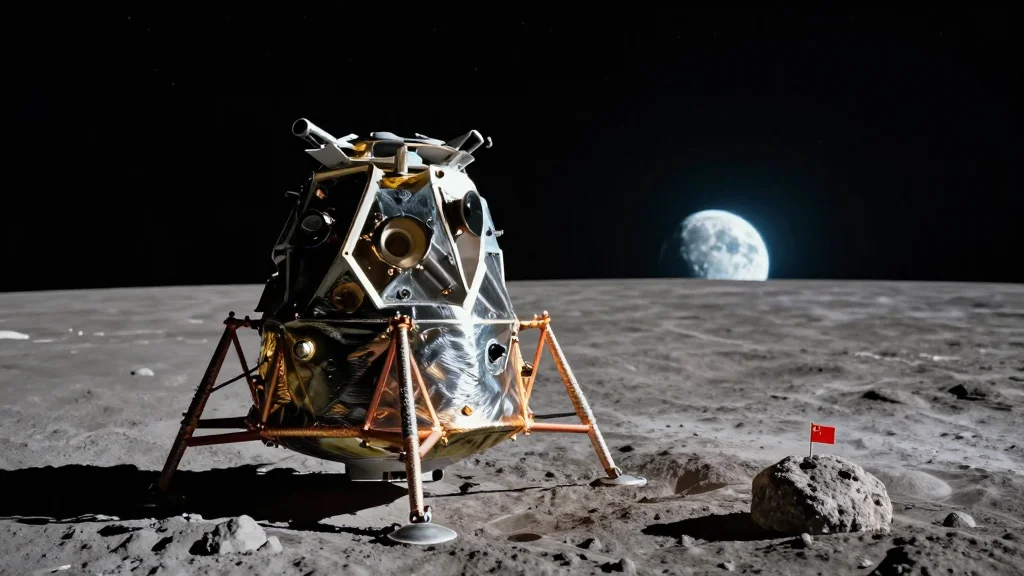
Ep. 791: Chang'e Sample Return
In this episode Fraser Cain and Dr. Pamela Gay explore China's Chang'e lunar sample‑return program, covering the progression from early orbital missions to the successful Chang'e‑5 near‑side return and the ambitious Chang'e‑6 far‑side landing in the Apollo crater. They highlight...

Are We There Yet? - Episode 1: Does the Space Safety Economy Exist Yet?
In the inaugural episode of SSPI’s "Are We There Yet?" series, host Tamara Bond‑Williams talks with Rob Scheiger, senior vice president of Willis Global in Space, about the nascent state of a space safety economy. Scheiger explains how space insurance—covering...
Encore: The Atmospheric Impacts of Satellite Re-Entry.
In this encore episode, Maria Varmazas talks with Professor Ming‑Kwon Kim about the UK Space Agency’s studies on atmospheric ablation caused by satellite re‑entry. The research estimates that each satellite could destroy 6‑8 tons of ozone, and large constellations might affect...