Why It Matters
Understanding the Moon’s geological history reshapes models of planetary evolution and informs where future human bases might be safest and most resource‑rich. China's rapid advances in sample‑return technology also signal a new competitive dynamic in space exploration, making the episode timely for anyone following the next wave of lunar missions.
Key Takeaways
- •Chang'e 5 returned 1.7 kg lunar soil from near side.
- •Chang'e 6 sampled far‑side basalts, revealing younger volcanism.
- •China placed service module at Earth‑Moon L2 for tests.
- •International instruments aboard Chang'e missions foster data sharing.
- •Chang'e 7, 8 target South Pole, test ISRU technologies.
Pulse Analysis
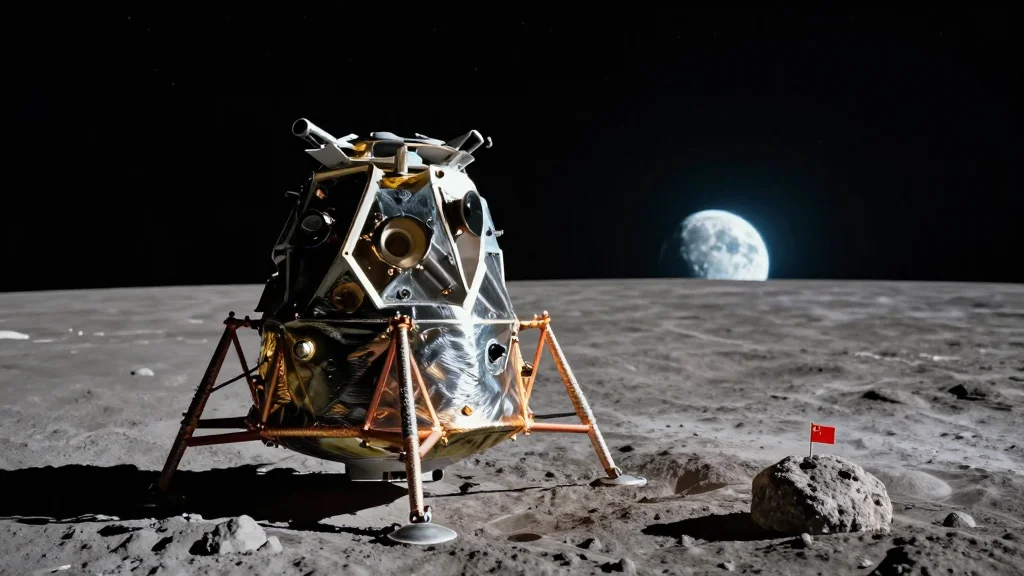
The Chinese Chang'e program has rapidly progressed from orbital reconnaissance to full‑scale lunar sample return. Chang'e 5 achieved a precision landing on the Moon’s near side in 2020, collected 1.7 kg of regolith, and delivered it back to Earth, proving China can retrieve and return extraterrestrial material. Shortly after, Chang'e 6 tackled the far side’s Apollo crater, retrieving basalts that demonstrated volcanic activity persisted far later than previously thought. Together, these missions showcase a methodical, step‑by‑step approach that rivals historic U.S. and Soviet efforts, positioning China as a leading player in lunar science.
Scientific analysis of the returned samples has already reshaped our understanding of lunar history. Chang'e 5’s near‑side material confirmed known elemental suites—potassium, phosphorus, rare‑earth elements—and added a new titanium‑oxide mineral to the lunar catalog. More striking, Chang'e 6’s far‑side basalts revealed a younger age, around 3 billion years, indicating that volcanism continued for over a billion years longer than earlier models suggested. These findings, supported by uranium‑lead dating, help resolve the long‑standing mystery of why the near side is volcanic while the far side remains heavily cratered, hinting at complex thermal evolution and possibly a past secondary impact.
Looking ahead, China’s roadmap includes Chang'e 7, a lunar scout slated for a Shackleton Crater landing, and Chang'e 8, which will test in‑situ resource utilization (ISRU) by 3‑D printing structures from regolith. Both missions will operate from the Earth‑Moon L2 gateway, where a service module already conducts communications and navigation experiments. Coupled with the heavy‑lift Long March 10 and a planned crewed landing around 2030, the program integrates international payloads—Italian, French, Swedish instruments—to broaden data access. This blend of sample science, technology demonstration, and collaborative outreach sets the stage for sustainable human presence on the Moon.
Episode Description
Astronomy Cast Ep. 791: Chang'e Sample Return By Fraser Cain & Dr. Pamela Gay Streamed live on Apr 20, 2026. Last week we talked about samples from other worlds delivered to Earth by meteorites. But sometimes you've gotta do the job yourself. Visit the far off place and bring the samples home. And today we're gonna talk about China's Chang'e sample return program. How they've delivered rocks from different parts of the Moon, and how this sets the stage for their upcoming human lunar missions. The Chinese space program is step by step testing the technologies necessary for humanity to return to the surface of the Moon. From orbiting comms satellites, to landing sample return missions, the Change missions are exploring new places in new ways. In today's episode, we discuss the Change 6 sample return. This show is supported through people like you on Patreon.com/AstronomyCast In this episode, we'd like to thank: Andrew Poelstra, Burry Gowen, David, David Rossetter, Ed, Eric Lee, Gerhard Schwarzer, Jason Kwong, Jeanette Wink, Joe McTee, Michael Purcell, Sergey Manouilov, Siggi Kemmler
Comments
Want to join the conversation?
Loading comments...