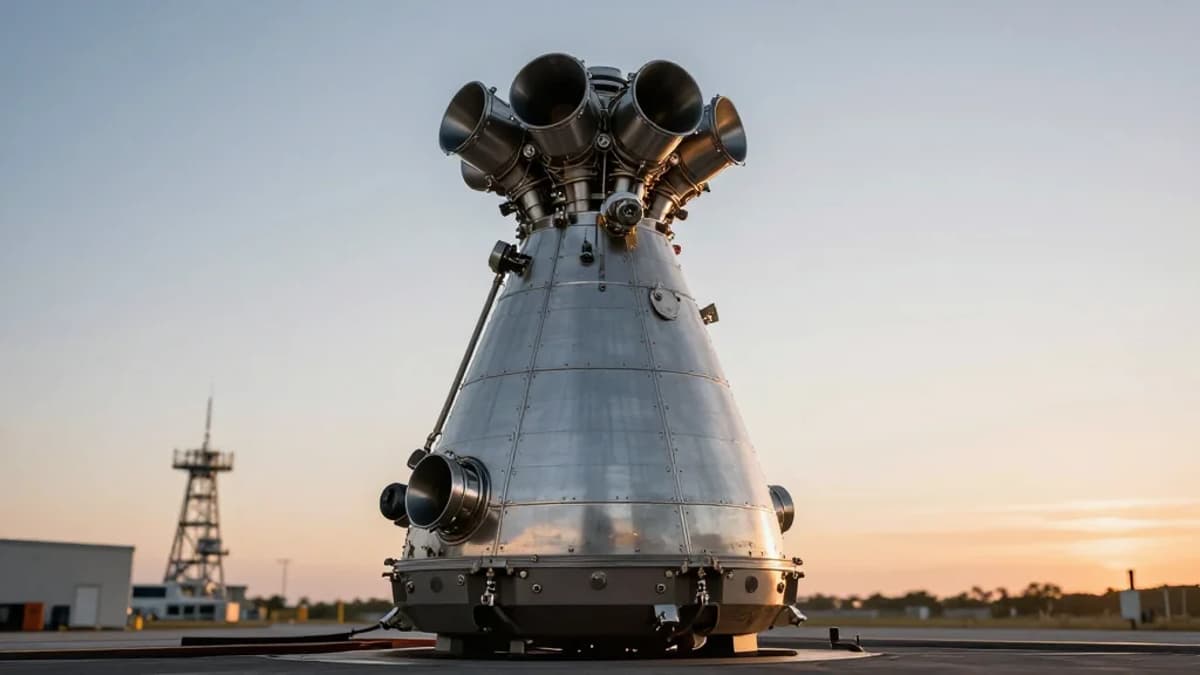
Centaur V Upper Stage Added To Artemis IV and V
•March 6, 2026
0
Key Takeaways
- •NASA selects ULA's Centaur V for Artemis IV/V
- •Sole‑source award bypasses full competition under FAR 6.103‑1(c)
- •Centaur V adds higher payload capacity to SLS
- •Contract accelerates Artemis schedule under Jared Isaacman's initiative
- •Enables more flexible lunar mission architectures
Summary
NASA’s Marshall Space Flight Center issued a procurement notice for a next‑generation upper stage, Centaur V, to be used on the Space Launch System’s Artemis IV and V flights. The agency will award the contract solely to United Launch Alliance, citing the specialized nature of the hardware under FAR 6.103‑1(c). The move aligns with Jared Isaacman’s accelerated timeline for rebooting the Artemis architecture. Centaur V is expected to boost SLS payload performance for upcoming lunar missions.
Pulse Analysis
The Artemis program’s momentum hinges on the Space Launch System’s ability to deliver larger payloads to lunar orbit, and the Centaur V upper stage promises exactly that. Developed by United Launch Alliance, CentraV builds on the heritage of the proven Centaur family while incorporating higher thrust engines, advanced avionics, and increased propellant capacity. By integrating this stage, SLS can loft heavier lander modules, deep‑space habitats, and additional scientific payloads, reducing the number of launches required for a single mission and lowering overall program costs.
NASA’s decision to award the contract without a competitive bid reflects both urgency and technical specificity. Under FAR 6.103‑1(c), the agency justified a sole‑source award, arguing that no other supplier currently possesses the requisite expertise to deliver a next‑generation upper stage on the required timeline. This approach expedites the procurement process, allowing the Centaur V hardware to enter testing phases ahead of the Artemis IV launch window, slated for the mid‑2020s. While it sidesteps traditional competition, the move underscores confidence in ULA’s track record and the strategic need to keep the Artemis schedule on track.
Beyond the immediate hardware benefits, the Centaur V contract signals a deeper integration of commercial capabilities into NASA’s deep‑space architecture. By leveraging ULA’s existing launch infrastructure, NASA reduces risk and taps into private‑sector innovation, a trend championed by investors like Jared Isaacman. The added performance margin also opens the door for more ambitious mission profiles, such as extended lunar surface stays or early Mars precursor flights, positioning the United States to maintain leadership in cislunar exploration. This partnership exemplifies how targeted, specialized procurements can accelerate national objectives while fostering a robust commercial space ecosystem.
Comments
Want to join the conversation?