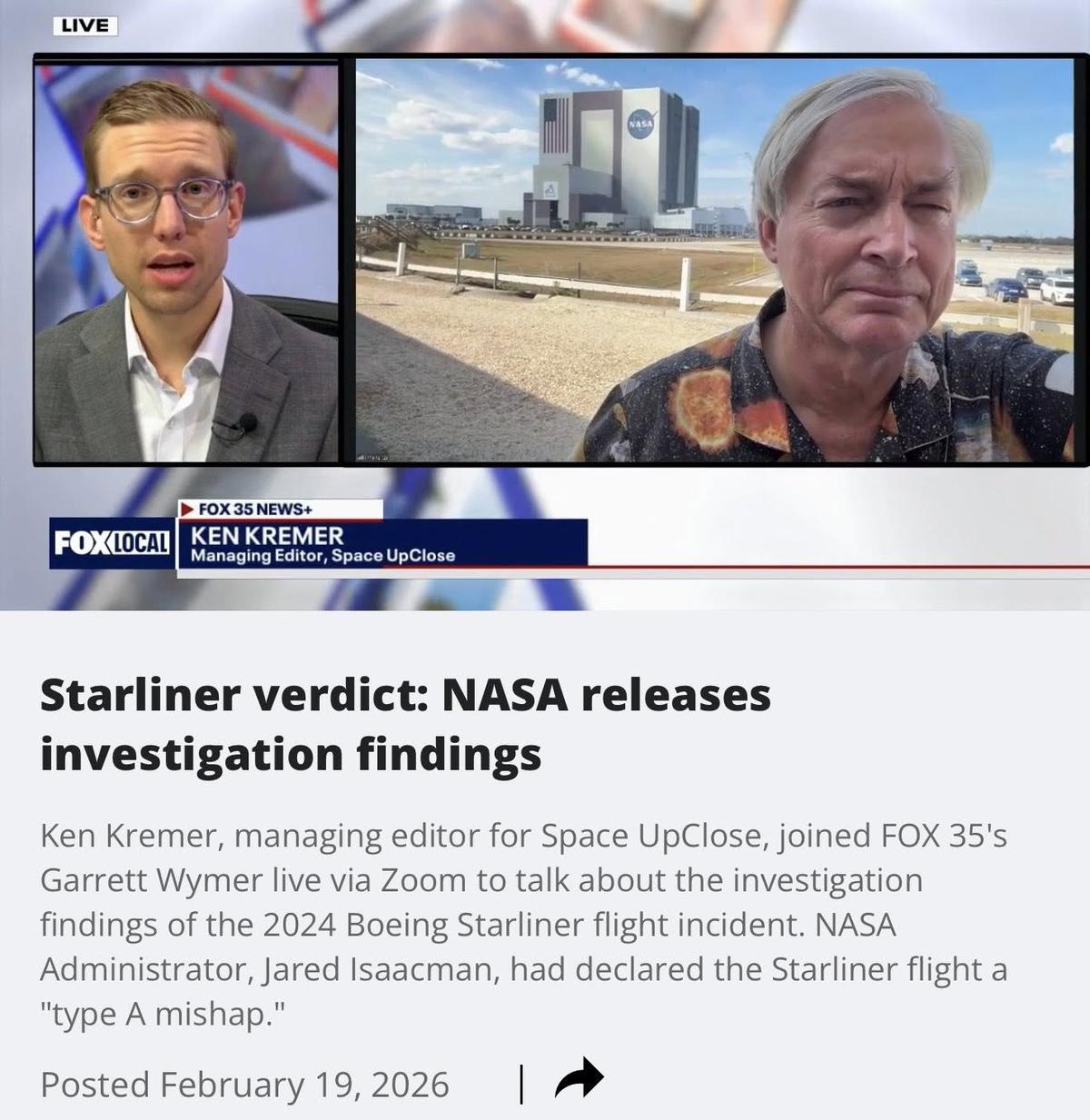
Ken Kremer Live Interview Fox 35 Orlando – Starliner Verdict: NASA Releases Investigation Findings Citing Type A Mishap: Video
•February 25, 2026
0
Why It Matters
The Type A classification underscores serious safety gaps in the U.S. commercial crew pipeline, potentially delaying Boeing’s return to crewed launches and affecting NASA’s reliance on private partners.
Key Takeaways
- •NASA calls Starliner CFT mission a Type A mishap
- •Report blames Boeing software and NASA procedural errors
- •Potential crew danger averted by successful ISS docking
- •Incident may delay Starliner crew certification
- •Highlights need for stricter commercial crew oversight
Pulse Analysis
The Boeing Starliner’s 2024 Crew Flight Test was intended to cement the spacecraft’s role in NASA’s Commercial Crew Program after years of delays. While the vehicle achieved a flawless rendezvous with the International Space Station, a cascade of software anomalies and ground‑control oversights triggered an abort scenario that NASA now labels a Type A mishap—the most severe classification for a crewed incident. This designation reflects not only the immediate technical failures but also the systemic gaps that emerged between Boeing’s development processes and NASA’s oversight protocols.
In the investigative report released on February 19, 2026, NASA highlighted two primary failure domains: Boeing’s flight‑software integration, which failed to reconcile sensor inputs during ascent, and NASA’s procedural checks that missed critical validation steps. The agency’s findings point to a missed opportunity for early detection, suggesting that enhanced real‑time diagnostics and stricter verification regimes could have prevented the near‑miss. By classifying the event as Type A, NASA signals that the incident could have resulted in loss of crew life had the Starliner not successfully docked, reinforcing the high stakes of human‑spaceflight safety.
The ramifications extend beyond the immediate program. A delayed certification timeline for Starliner may shift NASA’s crew‑transport strategy back toward SpaceX’s Dragon, altering contract allocations and market dynamics. Moreover, the report serves as a cautionary benchmark for all commercial partners, emphasizing the need for tighter integration of safety culture, rigorous software testing, and transparent communication channels. As the industry watches, the Starliner case will likely shape future regulatory frameworks and reinforce the imperative for uncompromising safety standards in the burgeoning era of private human spaceflight.
Ken Kremer Live Interview Fox 35 Orlando – Starliner verdict: NASA releases investigation findings citing Type A Mishap: Video
0
Comments
Want to join the conversation?
Loading comments...