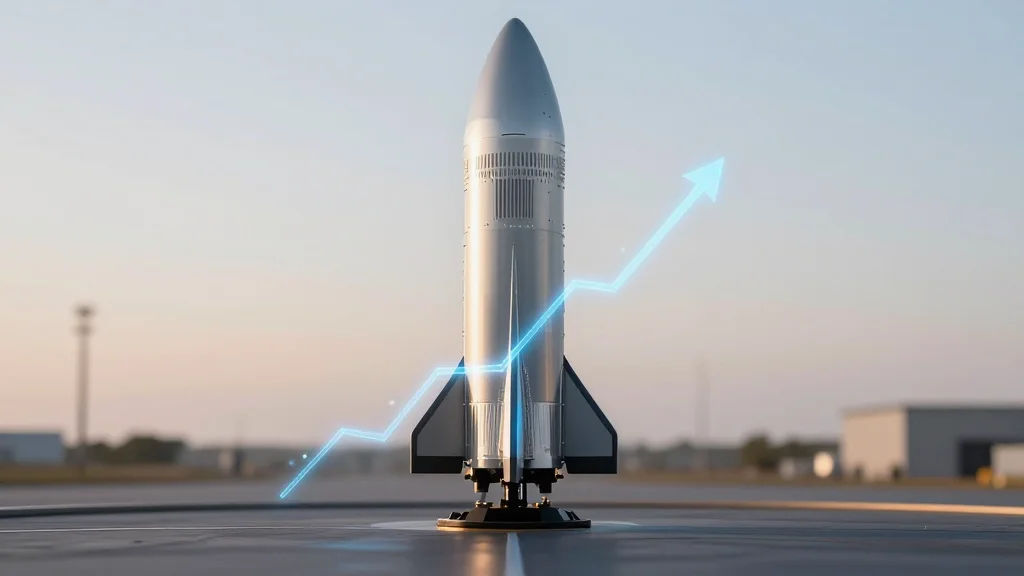
The SpaceX “Super-Cycle”: Why Mega-Funds Are Positioning Around the Largest Liquidity Event in History:
Key Takeaways
- •Hedge funds allocate cash for potential SpaceX IPO.
- •Valuation target $1.75‑2 trillion would rank SpaceX among top public firms.
- •IPO could reprice entire space economy and boost satellite stocks.
- •Investors will weigh launch dominance versus governance and capital intensity risks.
- •Index inclusion may force portfolio reshuffles across tech, defense, and AI sectors.
Pulse Analysis
The prospect of a SpaceX initial public offering marks a rare convergence of capital intensity, strategic scarcity and megacap valuation. While most IPOs serve as a market entry point for relatively unknown firms, SpaceX would arrive as a fully operational platform that already dominates reusable launch services and operates a global satellite broadband network. This dual‑business model blurs traditional industry lines, prompting analysts to debate whether the company should be valued like an aerospace contractor, a telecom provider, a defense asset or an AI infrastructure layer. The sheer size of the potential float—approaching $2 trillion—means it could instantly become a core component of major indices, compelling index funds and thematic ETFs to allocate significant weight.
For institutional investors, the implications extend beyond a single‑stock trade. Hedge funds can construct network‑wide strategies that go long on SpaceX while shorting rivals in launch services, satellite manufacturing or ground‑segment equipment, exploiting relative‑value mispricings that emerge as the market builds a new valuation framework. Long‑only managers must decide whether to treat SpaceX as a growth anchor or as a defensive infrastructure play, especially given its deep ties to U.S. national security contracts. The IPO also forces portfolio rebalancing: capital must be freed from existing positions—often in AI hardware, telecoms or other mega‑caps—to accommodate the new heavyweight, reshaping sector weightings across the board.
Beyond public markets, the listing would reverberate through private‑equity and venture capital ecosystems. A successful trillion‑dollar debut would validate the business models of late‑stage space startups, potentially lifting private‑market valuations for launch‑service providers, satellite constellations and related AI‑edge compute firms. However, the heightened scrutiny that accompanies public ownership could also raise the bar for governance, capital efficiency and regulatory compliance, pressuring private firms to tighten operations. In sum, SpaceX’s IPO could catalyze a super‑cycle that redefines how capital flows to space‑related technologies, but investors must balance the allure of strategic scarcity against the risks of over‑valuation and execution challenges.
The SpaceX “Super-Cycle”: Why Mega-Funds Are Positioning Around the Largest Liquidity Event in History:
Comments
Want to join the conversation?