Juno Propulsion Secures $1.4M Pre-Seed Funding Led by SOSV
Participants
Why It Matters
The funding accelerates the commercialization of rotating detonation engines, a technology that could dramatically lower satellite propulsion costs and eliminate hazardous propellants, reshaping the space‑flight market.
Key Takeaways
- •Juno secured $1.4M pre‑seed led by SOSV.
- •Iris RDE will fly as hosted payload on Momentus bus Q1 2027.
- •RDE efficiency 7% higher than constant‑pressure engines, using nitrous oxide and ethane.
- •Goal: scale production to tens of engines annually, reach TRL 9.
- •RDE could replace toxic hydrazine for satellite orbit maneuvers.
Pulse Analysis
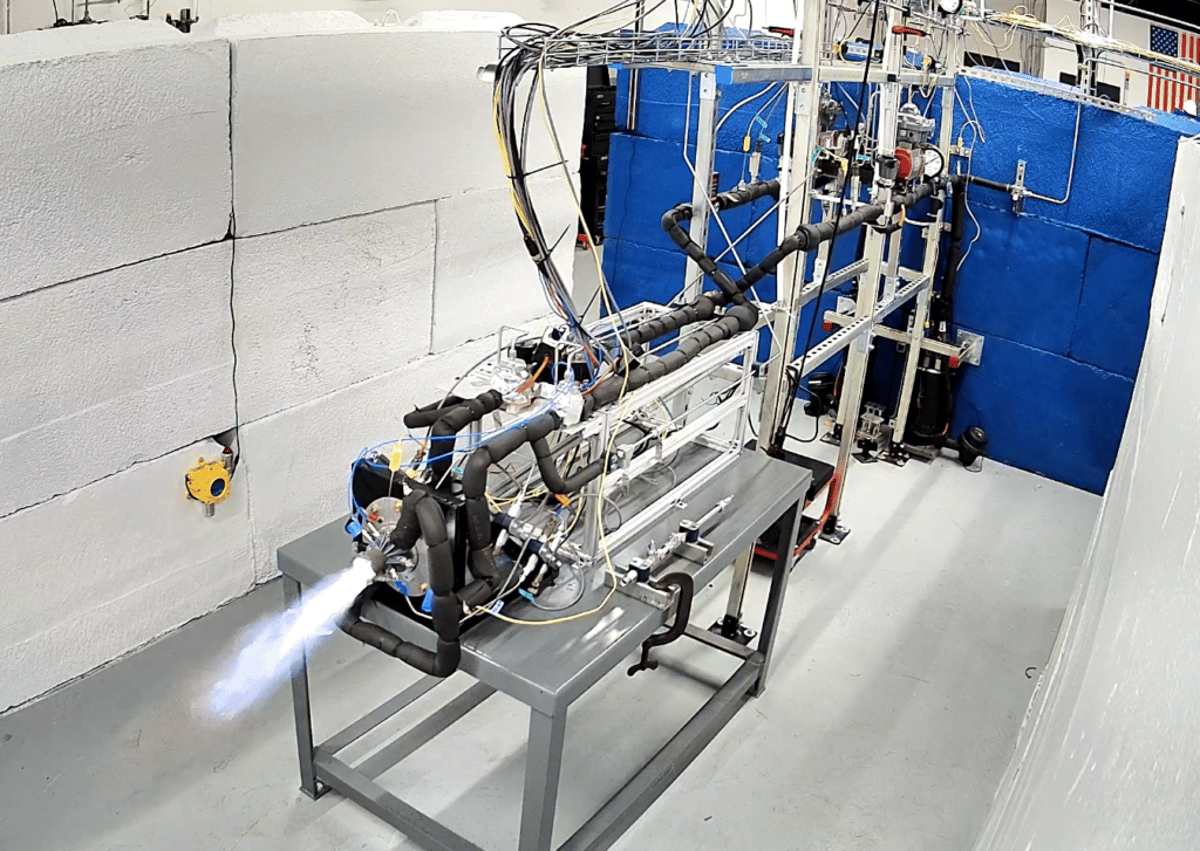
Rotating detonation engines (RDEs) have moved from laboratory curiosity to near‑operational status, and Juno Propulsion is at the forefront of this transition. By leveraging the rapid combustion cycles of detonation waves, RDEs achieve higher specific impulse and thrust density while using simpler hardware than traditional chemical rockets. Juno’s recent pre‑seed infusion, anchored by SOSV and a slate of venture partners, provides the capital needed to complete hot‑fire testing, integrate the Iris engine onto a Momentus bus, and demonstrate sustained orbital burns in 2027. This milestone will validate the claim that RDEs can outperform conventional constant‑pressure thrusters by roughly 7% in efficiency, all while running on inexpensive, non‑toxic propellants such as nitrous oxide and ethane.
The commercial implications are significant. Satellite operators have long relied on hydrazine‑based thrusters, which pose handling hazards and drive up launch costs. An RDE that can deliver comparable or superior performance with safer propellants could lower both operational expenses and regulatory burdens. Juno’s approach—pairing the Iris engine with a hosted payload architecture—offers a low‑risk entry point for customers, enabling rapid orbit‑raising, de‑orbiting, and precise station‑keeping without redesigning the spacecraft. Competitors worldwide, from JAXA to private firms like Venus Aerospace, are racing to field RDEs, but Juno’s emphasis on scalable manufacturing gives it a potential edge in capturing early market share.
Looking ahead, Juno’s ambition to reach Technology Readiness Level 9 and produce tens of engines annually signals a shift from prototype to volume production. Achieving TRL 9 will require rigorous flight data, reliability testing, and supply‑chain maturation, but success could open new business models such as on‑demand propulsion modules and RDE‑powered satellite constellations. As the space industry seeks greener, more cost‑effective propulsion solutions, Juno’s progress may set the standard for next‑generation satellite maneuverability, influencing everything from low‑Earth‑orbit logistics to deep‑space exploration missions.
Deal Summary
Juno Propulsion announced a $1.4 million pre‑seed round to fund development of its rotating detonation engine, Project Iris, ahead of a 2027 demo mission. The round was led by SOSV and included Hypernova, Leslie Ventures, Activate, Collab Fund, Safar Partners and Cape Fear Ventures. The capital will support in‑house production and scaling of the engine for satellite propulsion.
Comments
Want to join the conversation?
Loading comments...