LambdaVision Raises $7M in Venture Round Led by 776 Ventures and Aurelia Foundry Fund
Participants
Why It Matters
A user‑focused model turns space platforms into revenue‑generating biotech tools, unlocking a scalable market and attracting venture capital beyond traditional aerospace spending.
Key Takeaways
- •Voyager builds global science parks to lower space R&D barriers
- •LambdaVision raised $7 million, targeting 2028 human trials for retinal therapy
- •Exobiosphere’s OHTS automates high‑throughput experiments on commercial stations
- •Investors stress demand‑side funding and payer reimbursement for space biotech
- •Upcoming flights to Haven‑1 and Starlab aim to scale orbital manufacturing
Pulse Analysis
The pivot toward user‑centric space healthcare reflects a maturation of the orbital economy. By treating stations and rockets as shared utilities rather than proprietary assets, organizations like Voyager are constructing science parks that embed universities, venture funds, and grant specialists directly around the end‑users. This model reduces transaction costs, accelerates experiment turnaround, and creates a pipeline of repeat customers—biotech firms, pharma, and health systems—who can justify the expense of microgravity research with clear commercial outcomes.
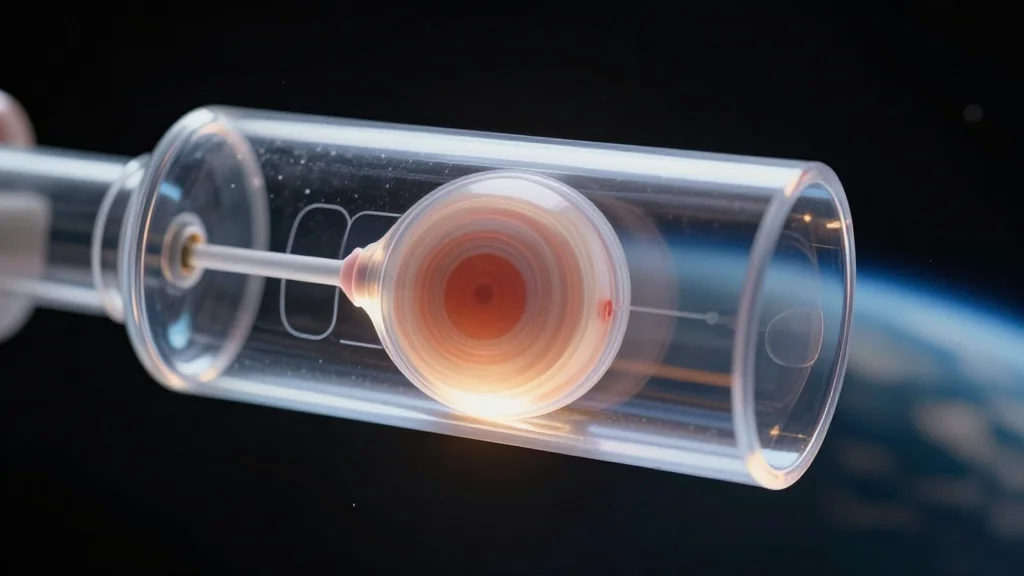
LambdaVision’s artificial retina and Exobiosphere’s Orbital High‑Throughput Screener exemplify how microgravity can add tangible value. In orbit, reduced sedimentation improves multilayer film uniformity, while automated mini‑labs enable dozens of parallel assays without astronaut intervention. The $7 million Series A round for LambdaVision and the upcoming Phase II ISS award illustrate growing investor confidence, yet both companies stress that frequent, affordable access to commercial stations like Haven‑1 and Starlab will be the decisive factor in moving from proof‑of‑concept to FDA‑ready products. Scaling manufacturing volume and data throughput in space will require robust supply chains and standardized payload interfaces.
From a market perspective, demand‑side signals are now the bottleneck. Venture capitalists and health‑care VCs are asking hard questions about reimbursement, cost‑effectiveness, and regulatory pathways. Policy makers must align launch incentives with life‑science priorities to avoid a supply‑only scenario that has plagued earlier space initiatives. As launch cadence improves and user ecosystems solidify, space‑enabled biotech could become a mainstream R&D option, delivering novel therapeutics and diagnostics that lower on‑earth production costs while opening new revenue streams for both aerospace and health‑care stakeholders.
Deal Summary
LambdaVision, a pre‑clinical biotech developing an artificial retina, announced a $7 million fundraising round led by 776 Ventures and Aurelia Foundry Fund. The capital will support pre‑clinical studies and GMP manufacturing as the company prepares for first‑in‑human trials. The round was disclosed during the ASCEND 2026 panel on space healthcare.
Comments
Want to join the conversation?
Loading comments...