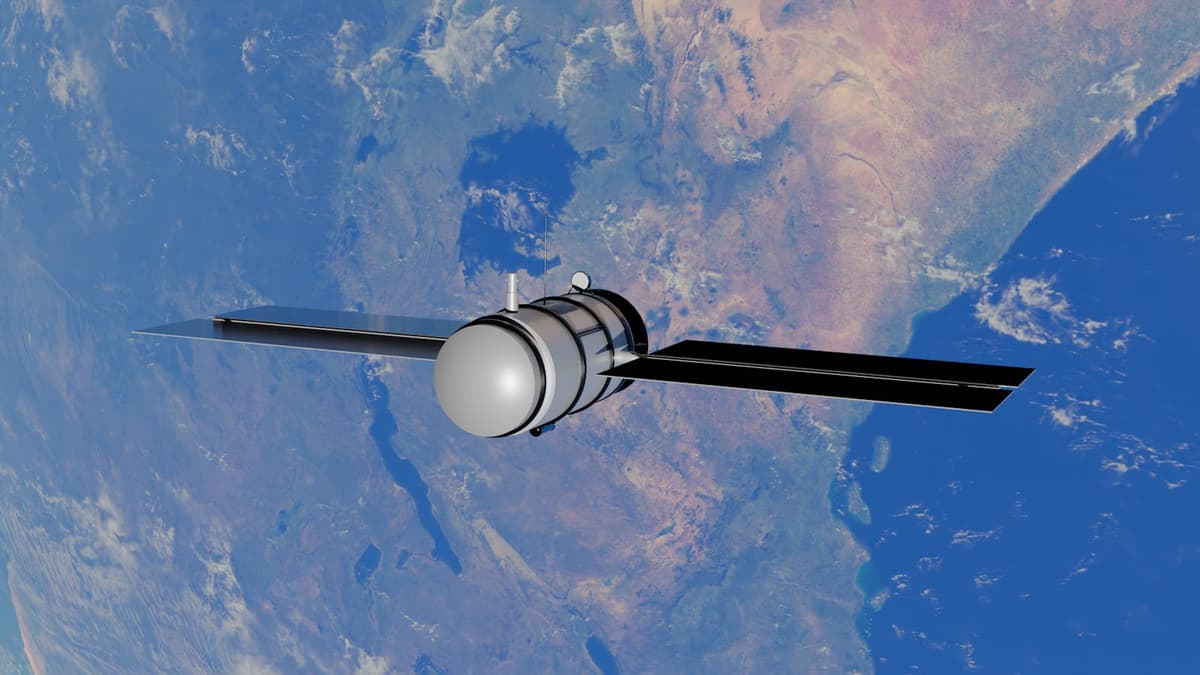
Rhea Space Activity Secures $6M Series A to Commercialize GPS-Free Spacecraft Navigation
Participants
Why It Matters
The Pentagon’s push for GPS‑independent navigation addresses growing signal‑jamming threats, making autonomous positioning critical for both defense hypersonic systems and emerging lunar operations. Success could reshape how the U.S. secures space‑based assets in contested environments.
Key Takeaways
- •Rhea Space Activity raised $6 million Series A for GPS‑free navigation.
- •AutoNav uses onboard cameras to match objects against Space Force catalog.
- •First test flew on Varda’s W‑6 capsule during plasma‑sheath blackout.
- •Pentagon seeks PNT alternatives as GPS becomes vulnerable to jamming.
- •Optical navigation offers passive, jam‑resistant positioning for hypersonic and lunar missions.
Pulse Analysis
The erosion of trust in satellite‑based positioning has accelerated the Pentagon’s search for resilient alternatives. GPS signals are increasingly vulnerable to jamming, spoofing, and outright denial in contested theaters, as demonstrated in recent conflicts. By turning to passive optical navigation, the U.S. defense establishment hopes to restore autonomous situational awareness for assets that operate beyond the reach of traditional radio frequency beacons, from high‑speed glide vehicles to deep‑space probes.
Rhea’s AutoNav system leverages high‑resolution cameras and a proprietary pattern‑matching algorithm that cross‑references observed celestial and orbital bodies with the U.S. Space Force’s Unified Data Library. The recent flight on Varda’s W‑6 re‑entry capsule provided a real‑world stress test: during the plasma sheath that envelops a vehicle at Mach 25, GPS is blind, yet the optical system continued to generate position estimates. If the data proves accurate, it validates a technology that could be integrated into hypersonic weapons, where split‑second navigation is mission‑critical, and into cislunar platforms that lack any terrestrial signal infrastructure.
Commercial prospects hinge on scaling the technology beyond niche defense contracts. The emerging Artemis and private lunar lander programs require reliable, GPS‑free navigation for orbit‑to‑surface maneuvers, presenting a parallel market. However, challenges remain—maintaining up‑to‑date object catalogs, ensuring sufficient onboard compute, and coping with limited visibility in daylight or cloud‑filled environments. Investors and policymakers will watch the next performance metrics from AutoNav closely; a successful demonstration could catalyze broader adoption across both military and commercial space sectors.
Deal Summary
Washington-based startup Rhea Space Activity closed a $6 million Series A round, backed by Boston Global Space Tech Investors, Iron Prairie Ventures, Blackbird Capital Group, Purdue Research Foundation, New Mexico Vintage Fund and SpaceFund. The funding will be used to commercialize its AutoNav optical navigation system that determines spacecraft position without GPS. The round was announced on April 19, 2026.
Comments
Want to join the conversation?
Loading comments...