Samara Aerospace Closes $10M Seed Round Led by Balerion Space Ventures
•January 20, 2026
•Jan 20, 2026
0
Participants


Why It Matters
The technology could dramatically improve image clarity for Earth‑observation and reliability for optical communications, while enabling faster, cheaper deployment of large satellite constellations.
Key Takeaways
- •$10M seed led by Balerion Space Ventures.
- •Hummingbird tech uses panel hinges for 1,000x stability.
- •Reduces satellite mass, eliminates reaction wheels.
- •Validation on Impulse Space Mira spacecraft pending.
- •Target launch summer 2027 for first Hummingbird sat.
Pulse Analysis
Satellite attitude control has long relied on reaction wheels, a proven but mechanically complex solution that introduces vibration, jitter, and added weight. As the small‑sat market scales, operators demand lighter, more reliable platforms that can deliver high‑resolution imagery and steady optical links without the maintenance overhead of moving parts. This pressure has spurred a wave of alternative stabilization concepts, from magnetorquers to control‑moment gyros, yet many still fall short of the precision needed for next‑generation Earth‑observation and inter‑satellite laser communications.
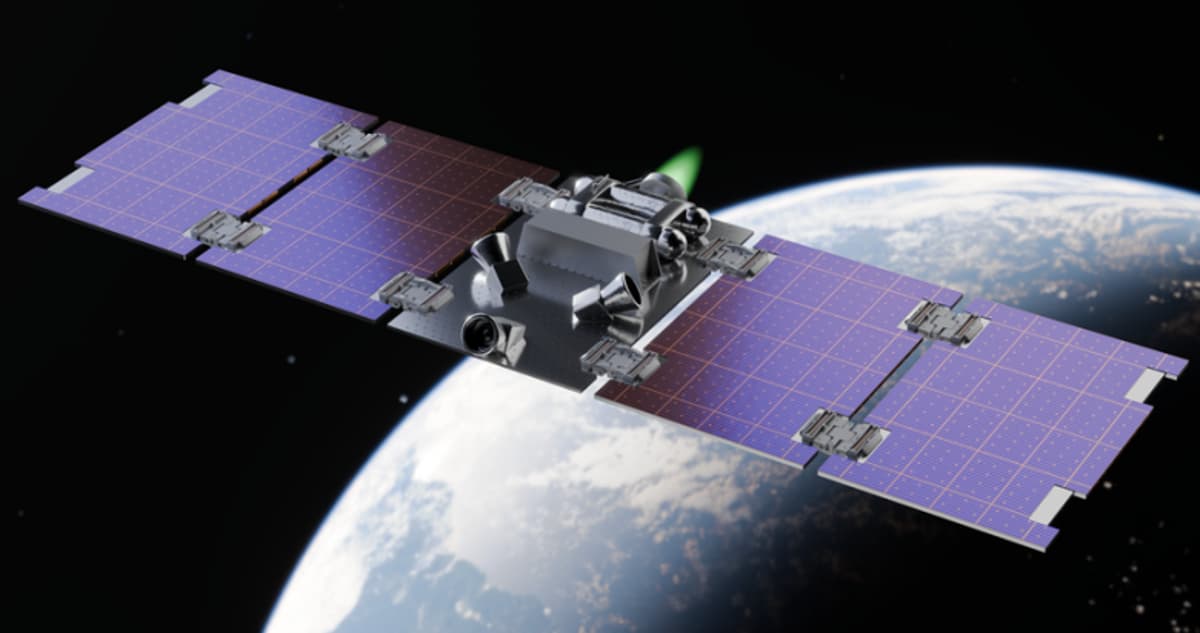
Samara Aerospace’s Hummingbird approach sidesteps traditional hardware by leveraging the existing solar‑panel array as a multi‑axis actuator. By mounting hinges that tilt panels in four directions, the system can counteract torque disturbances and lock the spacecraft into a remarkably steady orientation. The company claims up to a 1,000‑fold improvement in stability, translating into sharper images for EO customers and more consistent link margins for optical comms providers. Early interest from aerospace primes suggests the design also simplifies stacking and launch integration, potentially accelerating the rollout of dense constellations where every gram and cubic centimeter matters.
The recent $10 million seed round not only validates investor confidence but also funds critical milestones: completing ground‑test campaigns, securing an in‑orbit experiment slot on Impulse Space’s Mira bus, and preparing for a dedicated launch in 2027. As the market anticipates a surge in demand for high‑performance, low‑cost satellites, Samara’s hinge‑based stabilization could become a differentiator, challenging incumbents and reshaping the economics of satellite manufacturing and deployment.
Deal Summary
San Francisco‑based Samara Aerospace announced the closing of a $10 million seed round to develop its Hummingbird satellite stabilization technology. The round was led by Balerion Space Ventures with participation from Illinois Ventures, MFV Partners and Access Venture Partners. The funding will support technology validation and a planned launch in summer 2027.
0
Comments
Want to join the conversation?
Loading comments...