Participants
Why It Matters
These moves signal accelerating commercialization, cross‑border collaboration, and renewed focus on crewed missions, reshaping the competitive landscape of the global space economy.
Key Takeaways
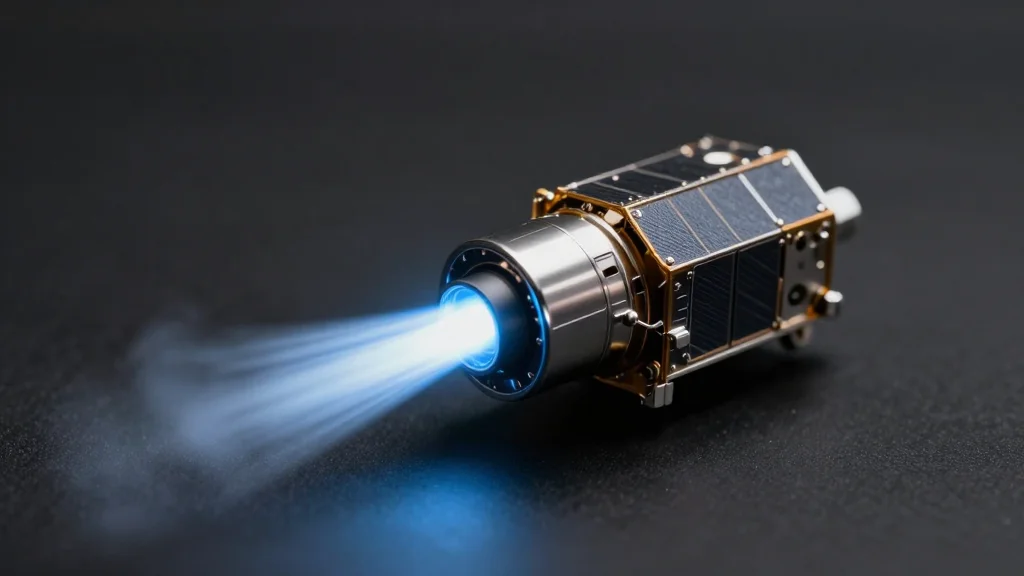
- •Rocket Lab unveiled Gauss electric propulsion for small satellites
- •Starcloud reached $1 billion valuation after $170 million funding round
- •Axiom partnered with Germany's OHB to grant station research access
- •Buran shuttle displayed on An‑225 at 1989 Paris Air Show
- •Boeing released video of Atlas‑5 launch for first crewed Starliner
Pulse Analysis
Rocket Lab’s Gauss electric propulsion system marks a strategic pivot from pure launch services to satellite‑level innovation. By offering a low‑mass, high‑efficiency thruster, the company taps into the burgeoning small‑sat market, where operators demand precise orbital adjustments without relying on traditional chemical propulsion. This diversification aligns with investor appetite for end‑to‑end space solutions and could spur broader adoption of electric propulsion across constellations, driving cost reductions and extending satellite lifespans.
Starcloud’s $1 billion valuation, buoyed by a $170 million infusion, reflects the rising importance of data‑center infrastructure in orbit. As hyperscale cloud providers eye low‑latency services, satellite‑based edge computing becomes a lucrative frontier. The funding round not only validates the business model but also signals confidence from venture capital in space‑based digital ecosystems. Meanwhile, Axiom’s collaboration with Germany’s OHB illustrates how commercial space stations are evolving into multinational research hubs, offering European scientists direct access to microgravity experiments without the logistical overhead of traditional government programs.
The historical reference to the Soviet Buran shuttle’s 1989 Paris Air Show appearance provides context for today’s renewed crewed ambitions. Boeing’s recent video of the Atlas‑5 launch, which carried the first crewed Starliner mission, underscores the industry’s progress from Cold‑War showcase to operational commercial crew transport. This continuity highlights how legacy technologies and modern private‑sector initiatives together shape the next era of human spaceflight, reinforcing the United States’ leadership while inviting global partnerships.
Deal Summary
Satellite-data-center startup Starcloud announced a $170 million funding round, pushing its valuation to $1 billion. The round was reported in a quick‑space‑links post on June 5, 2026, marking a significant capital infusion for the company’s growth.
Comments
Want to join the conversation?
Loading comments...