Growth StageSpaceTech
Starlab Secures Major New Investor Seven Grand Managers in Strategic Funding Deal
•January 12, 2026
•Jan 12, 2026
0
Participants


Why It Matters
The private infusion reduces reliance on government contracts, accelerating a commercial orbital economy. It also signals strong investor confidence in single‑launch, commercially viable space habitats, reshaping the competitive landscape.
Key Takeaways
- •Seven Grand Managers invests significant funds in Starlab
- •Starlab aims commercial viability from day one
- •Funding adds to $600M prior NASA and public capital
- •Single-module launch via Starship differentiates Starlab
- •Competes with Haven-1, Axiom, Thunderbird, Orbital Reef
Pulse Analysis
The entry of Seven Grand Managers into Starlab’s financing marks a pivotal shift toward private‑driven orbital infrastructure. Historically, space‑station development hinged on government budgets, but this sizable, though undisclosed, capital injection underscores a growing belief that commercial habitats can generate sustainable revenue streams. By bolstering the $600 million already raised from public markets and NASA, Starlab gains the financial resilience to progress on design, hardware procurement, and launch contracts without waiting for a definitive NASA award.
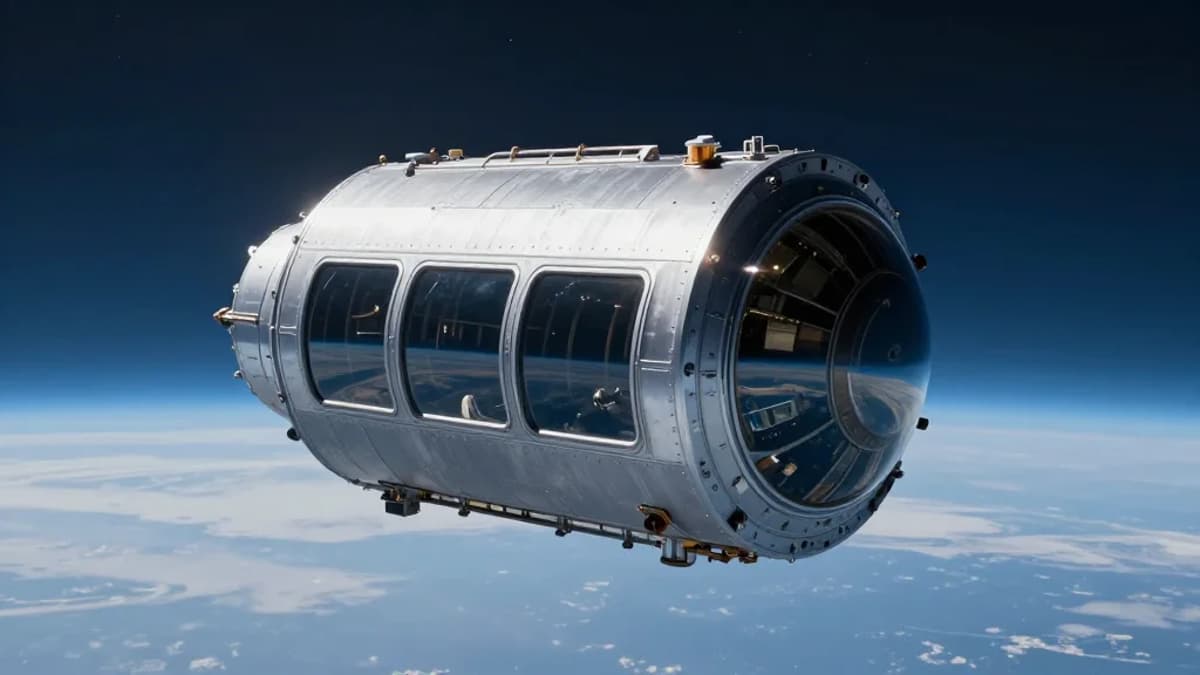
Starlab’s technical proposition—launching a full‑scale, ready‑to‑operate station on a single Starship flight—offers a stark contrast to the modular assembly approaches of competitors. A single‑launch architecture promises lower integration risk, reduced launch cadence, and faster time‑to‑revenue, potentially cutting overall program costs by tens of percent. This model also leverages SpaceX’s high‑payload capacity, enabling a larger habitable volume and more robust power and thermal systems from the outset, advantages that could attract commercial research, tourism, and in‑space manufacturing customers.
In the broader market, Starlab’s strengthened balance sheet intensifies rivalry among emerging U.S. stations such as Haven‑1, Axiom, Max Space’s Thunderbird, and Blue Origin’s Orbital Reef. Investors are watching closely as capital allocation signals which architectures may dominate the post‑ISS era. If Starlab can demonstrate operational capability on schedule, it could set a new benchmark for commercial viability, unlocking downstream services like microgravity manufacturing, satellite servicing, and space‑based tourism, thereby accelerating the maturation of a multi‑billion‑dollar low‑Earth‑orbit economy.
Deal Summary
The Starlab space station consortium, led by Voyager Technologies, announced it has secured a major new investor, Seven Grand Managers, in a strategic funding round. While the exact amount was not disclosed, the investment adds to Starlab’s prior $383 million public offering and $217.5 million NASA funding, strengthening its commercial viability. The deal was announced in early January 2026.
0
Comments
Want to join the conversation?
Loading comments...