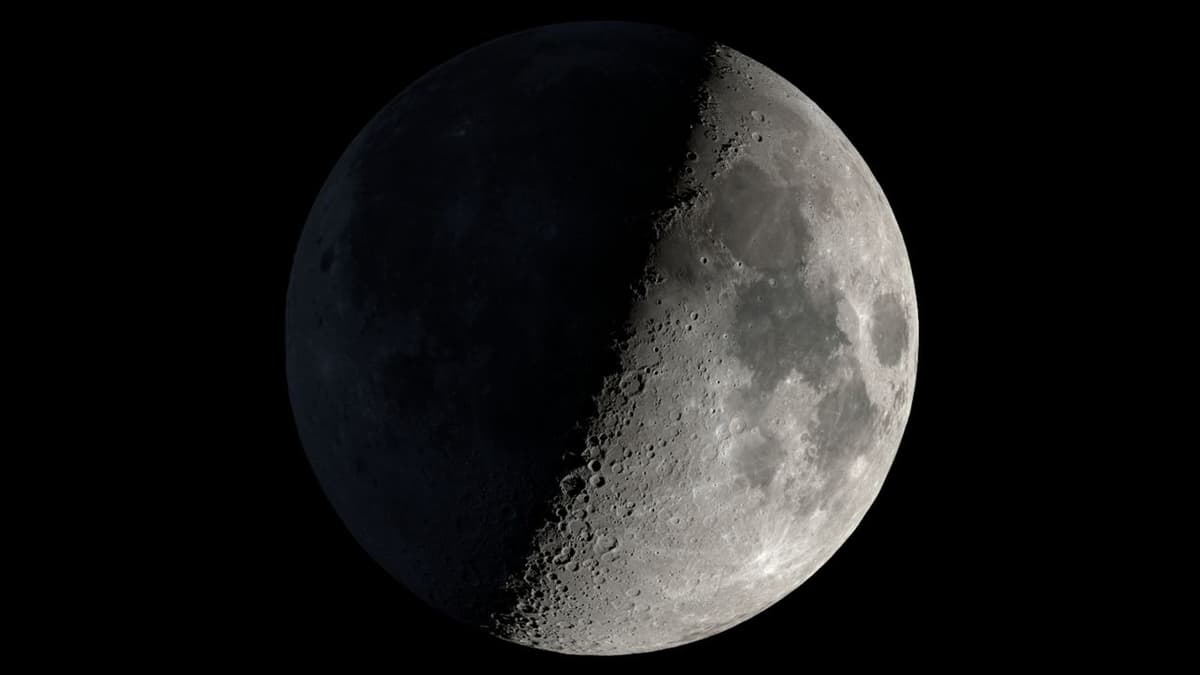
3 Stunning Lunar Craters to Explore During the Half-Lit First Quarter Moon Tonight
•January 25, 2026
0
Companies Mentioned

Why It Matters
These craters become especially observable during the first‑quarter phase, providing amateur astronomers with clear, educational targets that illustrate lunar geology and the legacy of historic astronomers.
Key Takeaways
- •First‑quarter moon highlights crater shadows on Jan 25.
- •Eudoxus crater: 67 km, near Mare Serenitatis.
- •Aristoteles crater: 87 km, south of Mare Frigoris.
- •Cassini crater: 57 km, rim visible, lava‑filled floor.
- •Perfect for telescopes, binoculars, and astrophotography.
Pulse Analysis
The first‑quarter moon, often called the "half‑moon," places the terminator—the line between light and dark—across the lunar surface. This sharp contrast accentuates the relief of craters, making their walls and central peaks stand out in modest telescopes. For observers on the evening of Jan 25, the Moon’s right side will be illuminated, positioning the terminator near the three featured craters and creating deep shadows that reveal depth and texture rarely seen during full‑moon glare.
Eudoxus, Aristoteles and Cassini are not only named for pioneering thinkers but also showcase distinct geological stories. Eudoxus, a 42‑mile‑wide basin, sits above the basaltic plain of Mare Serenitatis, offering a glimpse of ancient highland material. Aristoteles, larger and rimmed by rugged hills, borders Mare Frigoris, where its central basin catches sunlight at a low angle, highlighting crater walls. Cassini’s rim remains visible while its floor is flooded with ancient lava, and two younger craters within its basin provide contrasting darkness that enriches visual depth. Observers should aim for 50‑100× magnification to resolve these features, using a steady mount and a lunar filter to reduce glare.
Beyond aesthetic appeal, amateur lunar observations contribute to ongoing scientific dialogue. Detailed sketches and photographs can help track subtle changes in shadow length, supporting studies of lunar libration and surface aging. With renewed interest in lunar exploration—NASA’s Artemis program and private lunar landers—public engagement through backyard astronomy reinforces the cultural relevance of space. Investing in a quality 8‑10 inch Dobsonian or high‑power binoculars, coupled with a simple lunar atlas, empowers enthusiasts to connect historical astronomy with modern missions, turning a night of stargazing into a bridge between past and future.
3 stunning lunar craters to explore during the half-lit first quarter moon tonight
0
Comments
Want to join the conversation?
Loading comments...