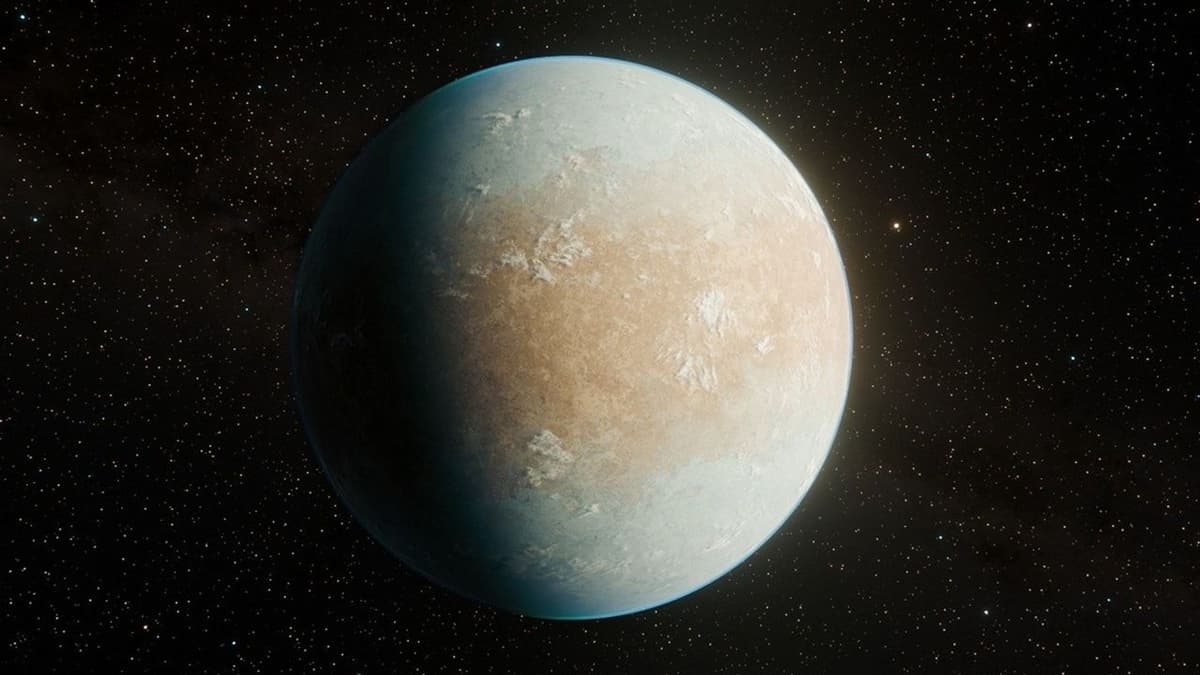
A 'Cold Earth' Exoplanet Just 146 Light-Years Away Might Be in Its Star's Habitable Zone — if It Exists
•February 4, 2026
0
Companies Mentioned

Max Planck Institute for Astronomy

European Space Agency

NASA

Jet Propulsion Laboratory

California Institute of Technology

Bloomsbury Publishing
BMY
Why It Matters
The discovery highlights a rare, bright‑star exoplanet near the habitable zone, offering a valuable opportunity to study atmospheric composition on a potentially Earth‑like world. Confirming its existence could refine models of temperate, low‑insolation planets and guide future biosignature searches.
Key Takeaways
- •HD 137010b candidate cold Earth near habitable zone.
- •Receives ~29% Earth’s insolation; orbit ~355 days.
- •Single transit detected; confirmation pending.
- •Bright magnitude‑10 host enables JWST atmospheric studies.
- •40% chance in conservative, 51% optimistic habitable zone.
Pulse Analysis
The candidate planet HD 137010b emerged from a meticulous re‑examination of Kepler’s K2 mission archive, where a lone ten‑hour dip in starlight hinted at a transiting world. Single‑transit discoveries are inherently uncertain because they lack the periodic confirmation that solidifies most exoplanet claims. Venner’s team bolstered the signal by cross‑checking historic imaging and ruling out stellar variability, yet the orbital period remains loosely constrained at roughly 355 days. This case underscores how legacy datasets continue to yield surprises, prompting astronomers to develop new algorithms for extracting planetary signatures from sparse events.
Unlike the majority of Kepler targets, HD 137010b’s host star shines at magnitude 10, a brightness level that dramatically improves the signal‑to‑noise ratio for transmission spectroscopy. With a luminous enough star, instruments such as the James Webb Space Telescope can isolate the thin imprint of atmospheric gases as the planet transits, a technique that is impractical for fainter stars beyond magnitude 13. The accessibility of this system also invites observations from modest ground‑based telescopes, expanding the pool of potential collaborators. Consequently, the planet serves as a testbed for refining atmospheric retrieval methods on temperate, Earth‑sized worlds.
Positioned on the cusp of the conservative and optimistic habitable zones, HD 137010b challenges conventional notions of where liquid water might persist. A 40 % probability of residing within the stricter habitable bounds and a 51 % chance under the broader definition leave room for scenarios ranging from a frozen surface to a greenhouse‑enhanced climate if a dense CO₂ atmosphere is present. Upcoming missions—TESS, CHEOPS, and the 2026 launch of ESA’s PLATO—are poised to capture additional transits, tightening the orbital ephemeris and enabling decisive atmospheric probes. Confirming a cold‑Earth analogue would enrich models of low‑insolation planets and sharpen the search for biosignatures across the galaxy.
A 'cold Earth' exoplanet just 146 light-years away might be in its star's habitable zone — if it exists
0
Comments
Want to join the conversation?
Loading comments...