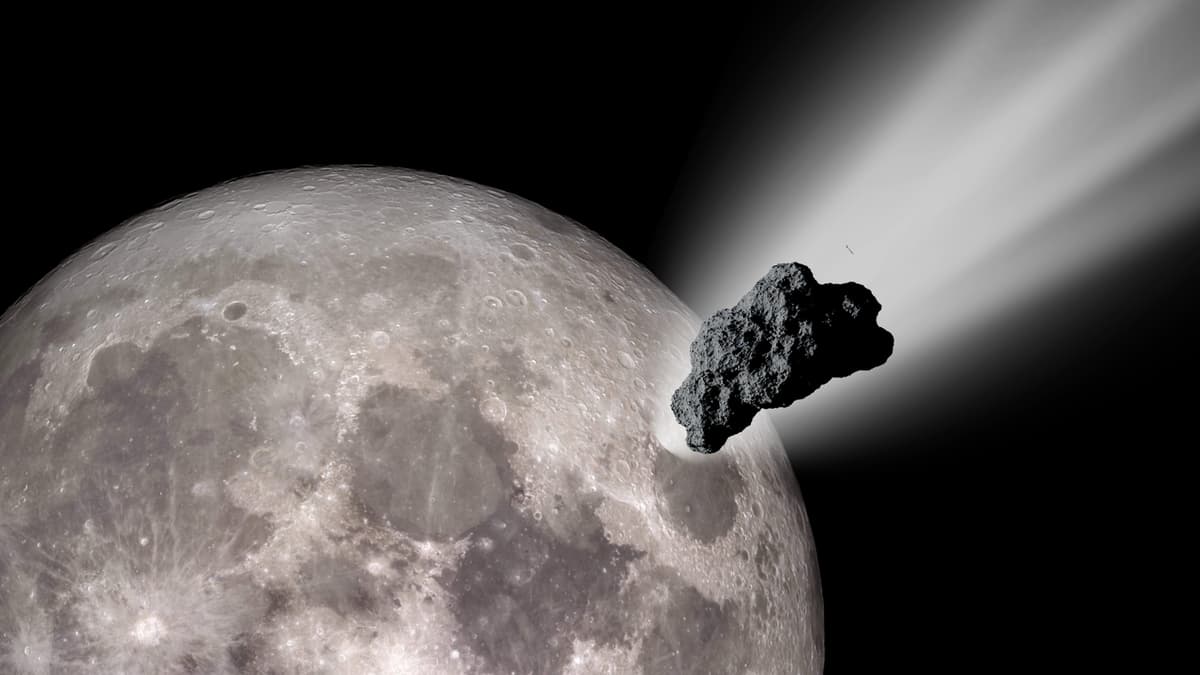
A Colossal Asteroid May Have Warped the Moon From the Inside Out
Companies Mentioned
Why It Matters
The discovery links a specific giant impact to the Moon’s long‑standing near‑far side asymmetry, reshaping models of lunar evolution and volatile distribution. It also provides a new isotopic tool for probing ancient planetary collisions.
Key Takeaways
- •Chang’e 6 samples show elevated K‑41/K‑39 ratio.
- •Impact created South Pole–Aitken Basin 4.2‑4.3 billion years ago.
- •Volatile loss explains far‑side maria scarcity.
- •Isotopic evidence links impact to mantle dehydration.
- •Findings refine Moon’s early impact history.
Pulse Analysis
The Moon’s stark contrast between its near‑side maria‑filled visage and the barren far side has puzzled scientists for decades. Recent data from China’s Chang’e 6 mission, which landed inside the Apollo crater within the massive South Pole–Aitken Basin, finally offers a tangible clue. By returning pristine basaltic rocks, the mission enabled high‑precision isotopic measurements that reveal a pronounced enrichment of the heavy potassium‑41 isotope relative to potassium‑39, a signature not seen in Apollo or meteorite samples from the near side.
This isotopic shift is best explained by the extreme conditions of the basin‑forming impact. The collision generated temperatures high enough to vaporize volatile elements, preferentially stripping the lighter potassium‑39 and leaving a heavier isotopic imprint. The same process likely expelled water and other volatiles from the far‑side mantle, curtailing melt generation and volcanic activity. Consequently, the far side developed few maria, while the near side, retaining more volatiles, experienced extensive basaltic flooding. The findings underscore how a single cataclysmic event can remodel a planetary body’s interior chemistry and surface geology.
Beyond lunar science, the study demonstrates the power of isotopic forensics in reconstructing ancient impact events across the solar system. Researchers can now apply similar techniques to Martian meteorites, asteroid samples, and future lunar missions, refining impact chronology and volatile budgets. For commercial and scientific stakeholders, understanding volatile distribution is crucial for in‑situ resource utilization and habitat planning. As more sample‑return missions launch, the potassium isotope framework may become a standard metric for assessing planetary evolution and the habitability potential of other worlds.
A colossal asteroid may have warped the moon from the inside out
Comments
Want to join the conversation?
Loading comments...