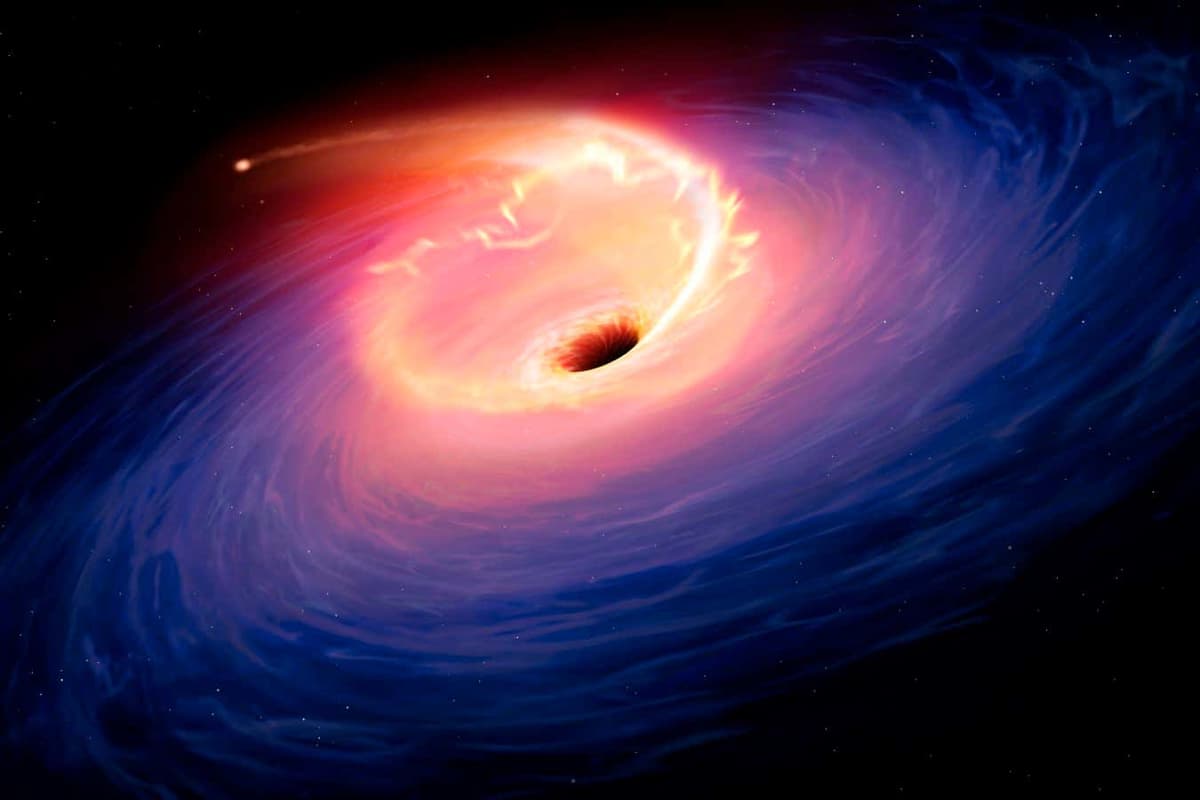
A New 'Brief History' Of the Universe Paints a Wide Picture
•February 4, 2026
0
Companies Mentioned


Why It Matters
The book revitalizes public interest in cosmology, making cutting‑edge research understandable and reinforcing the market for science‑focused popular literature.
Key Takeaways
- •New book updates cosmology for modern readers
- •Author blends particle physics with accessible narrative
- •Highlights advances since Hawking’s 1988 bestseller
- •Explores dark matter, gravitational waves, multiverse theories
- •Emphasizes humanity’s place in expanding universe
Pulse Analysis
Stephen Hawking’s *A Brief History of Time* set a high bar for popular cosmology, but the scientific landscape has transformed dramatically since its 1988 debut. Sarah Alam Malik’s *A Brief History of the Universe* arrives at a moment when discoveries—such as the detection of gravitational waves and precise measurements of cosmic microwave background—have reshaped our understanding of the cosmos. By framing these breakthroughs within a clear, narrative structure, Malik offers readers a bridge between complex particle physics and everyday curiosity, echoing Hawking’s ambition while leveraging contemporary data and visual storytelling.
The book delves into topics that were speculative or unknown in Hawking’s era: dark energy’s accelerating expansion, the intricate dance of dark matter shaping galactic structures, and the burgeoning field of exoplanet research that hints at habitability beyond Earth. Malik also tackles the multiverse hypothesis and quantum gravity, presenting them without jargon, which broadens appeal beyond academia. Her background in particle physics lends authority, allowing her to explain how collider experiments inform cosmological models, thereby linking the infinitesimally small with the astronomically large.
From a market perspective, the release underscores a growing appetite for scientifically rigorous yet readable works. Publishers are betting on titles that can capture both the curiosity of general audiences and the respect of the scientific community. Malik’s book not only revitalizes Hawking’s legacy but also positions itself as a catalyst for informed public discourse on space exploration, funding for large‑scale observatories, and the societal implications of humanity’s place in an ever‑expanding universe.
A new 'brief history' of the universe paints a wide picture
0
Comments
Want to join the conversation?
Loading comments...