Companies Mentioned

NASA
Why It Matters
Terra Hunting fills a critical gap in exoplanet science by targeting Sun‑like stars, providing the planetary candidates needed for future life‑search missions. Its success could reshape our understanding of planetary system formation and habitability.
Key Takeaways
- •Terra Hunting uses HARPS3 spectrograph, 10 cm/s precision.
- •Survey monitors 50 Sun‑like stars nightly for ten years.
- •Goal: detect at least two Earth‑like planets in habitable zones.
- •Complements global exoplanet efforts, enabling future biosignature missions.
- •Overcomes stellar noise barrier that limited prior detections.
Pulse Analysis
Over the past three decades, astronomers have catalogued more than 6,000 exoplanets, yet none match Earth’s size and orbital environment around a Sun‑like star. Traditional detection methods favor massive, close‑in planets, leaving a blind spot in the parameter space where true Earth analogs reside. This gap hampers both planetary formation theories and the search for life, because biosignature studies rely on planets with stable, temperate conditions similar to our own. The Terra Hunting Experiment directly addresses this deficiency by focusing on the subtle radial‑velocity signals of Earth‑mass worlds orbiting within the habitable zone of Sun‑type stars.
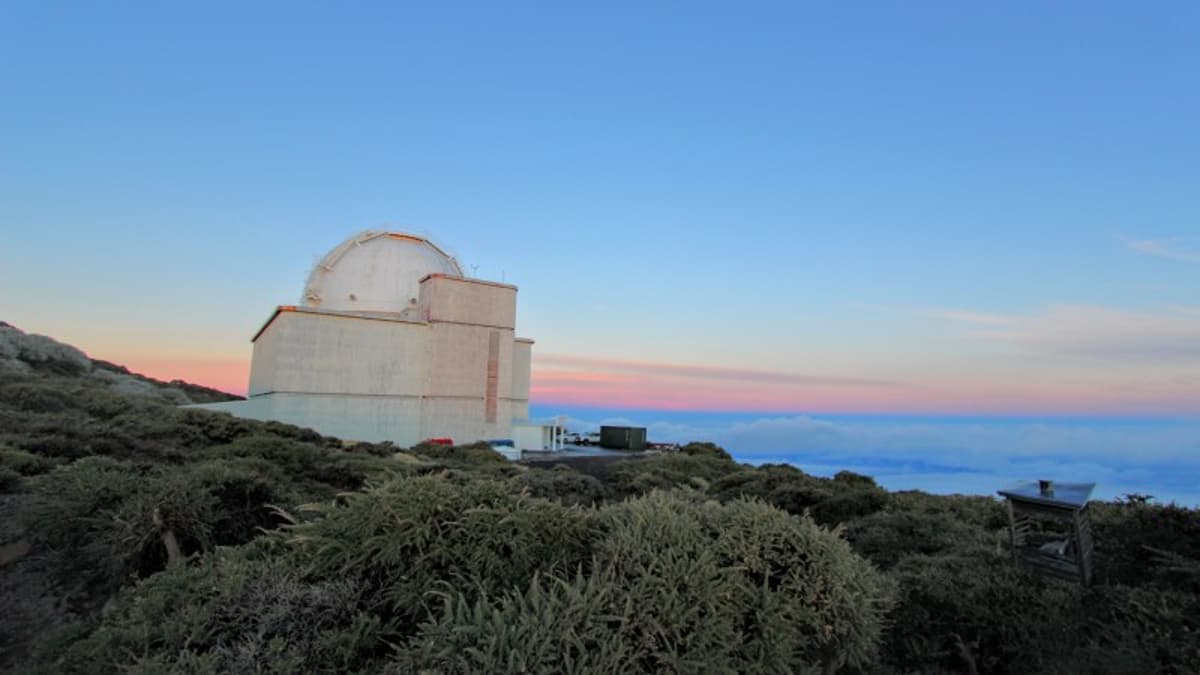
At the heart of the project is HARPS3, a next‑generation spectrograph capable of detecting stellar motions as slight as 10 cm s⁻¹—comparable to a crawling infant. Mounted on a refurbished 1960s telescope now stationed on La Palma, the instrument will observe a curated sample of up to 50 Sun‑like stars every night for ten years. This relentless cadence allows the team to average out stellar jitter and isolate the minute wobble caused by an Earth‑mass planet completing a one‑year orbit. Early modeling, based on Kepler’s statistical legacy, predicts the discovery of at least two Earth analogs, providing prime targets for upcoming missions such as NASA’s Habitable Exoplanet Observatory and the European Large Interferometer for Exoplanets.
The experiment’s impact extends beyond individual discoveries. By delivering a reliable catalog of true Earth twins, Terra Hunting will enable atmospheric characterization and biosignature detection with next‑generation telescopes, accelerating the field of astrobiology. Moreover, its collaborative model—complementing a parallel southern‑sky survey in Chile—demonstrates the global coordination required to answer one of humanity’s oldest questions: Are we alone? Success will validate the technical approach and likely spur a new generation of dedicated Earth‑analog surveys worldwide.
A new hunt for an Earth analog begins
0
Comments
Want to join the conversation?
Loading comments...