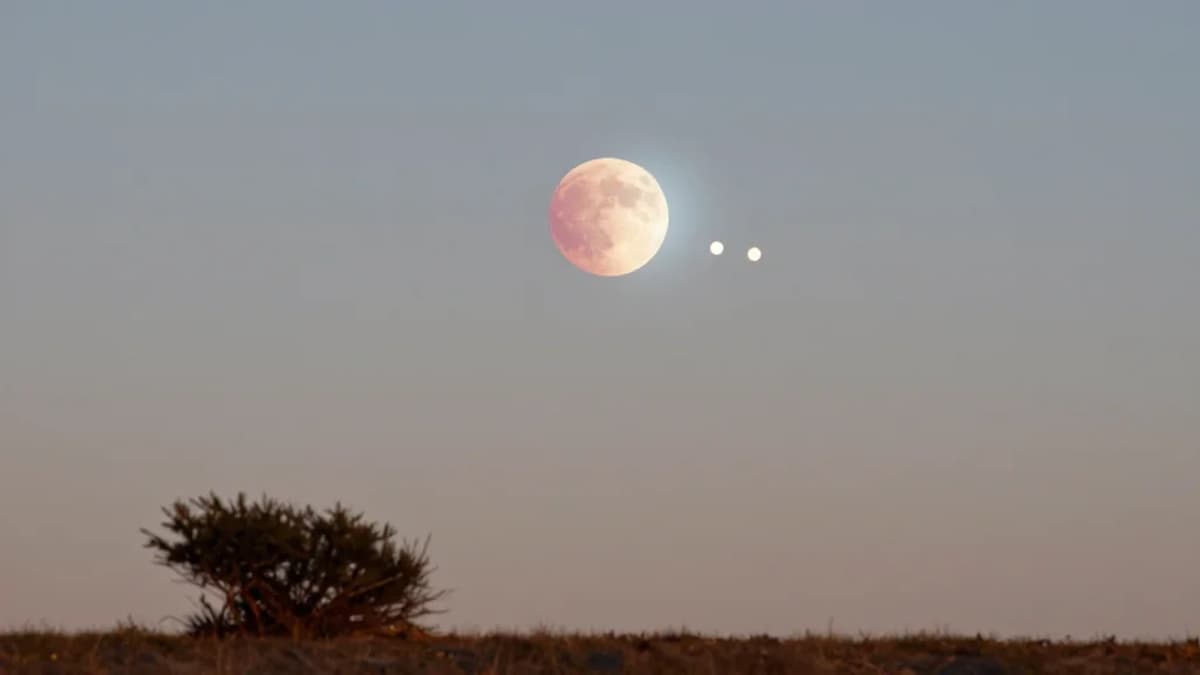
A Red Moon, a Blue Moon, a Supermoon and More: Your Guide to the Southern Sky in 2026
•January 7, 2026
0
Why It Matters
These celestial events boost astronomy tourism and public engagement, while providing valuable data points for atmospheric and planetary science research.
Key Takeaways
- •Total lunar eclipse visible across Australia and New Zealand
- •May 31 blue moon marks rare second full moon
- •December supermoon coincides with closest lunar orbit point
- •June Venus-Jupiter conjunction visible to naked eye
- •Gemini meteor shower peaks under dark December skies
Pulse Analysis
The 2026 sky calendar positions the southern hemisphere as a premier destination for both casual stargazers and seasoned astronomers. A total lunar eclipse in early March offers a dramatic red‑tinged Moon, an event that not only captivates the public but also allows scientists to study Earth’s atmospheric composition through the filtered sunlight. Coupled with a blue moon in May and a supermoon on Christmas Eve, the year provides a series of photogenic moments that can drive local tourism, fill observatory visitor logs, and enrich community outreach programs.
Beyond visual spectacle, the planetary alignments and occultations hold scientific relevance. The April cluster of Mercury, Mars, and Saturn presents a rare low‑horizon view that can refine orbital models, while the June Venus‑Jupiter conjunction offers a chance to compare atmospheric scattering across two bright planets. The November daylight occultation of Jupiter by the Moon, observable with binoculars, serves as a natural laboratory for timing measurements that improve lunar limb profiles. Meanwhile, the Geminid meteor shower, sourced from asteroid Phaethon, provides insight into asteroid‑derived debris streams and their interaction with Earth’s atmosphere, informing both planetary defense and meteoritic research.
Practical considerations make 2026 especially accessible. Light‑polluted urban dwellers can still witness most events without equipment, though a tripod and timed exposures enhance eclipse photography. Early‑morning observers should target dark sites for the Geminids, aiming northward toward Gemini’s Castor. Educational institutions can leverage these dates for curriculum tie‑ins, while local economies stand to benefit from increased night‑time activity. As the year unfolds, the blend of awe‑inspiring visuals and genuine scientific opportunity underscores why 2026 will be remembered as a standout year for southern sky enthusiasts.
A red moon, a blue moon, a supermoon and more: Your guide to the southern sky in 2026
0
Comments
Want to join the conversation?
Loading comments...